
How to Start a Pajama Business: A Manufacturer's Guide
Is a pajama business worth starting in 2026
Sleepwear has been one of the steadier corners of apparel, and the founder-led end of it keeps growing because buyers want softness, safety, and a story that a mass-market multipack does not offer. The opportunity is real, and so is the learning curve. A pajama business lives or dies on three things that have nothing to do with the print, fabric, fit, and compliance, and a manufacturing partner who treats all three as part of the job.
This guide walks the path we see founders take, from the brands we have grown alongside since 1988.
Step one, define your pajama niche and your fabric story
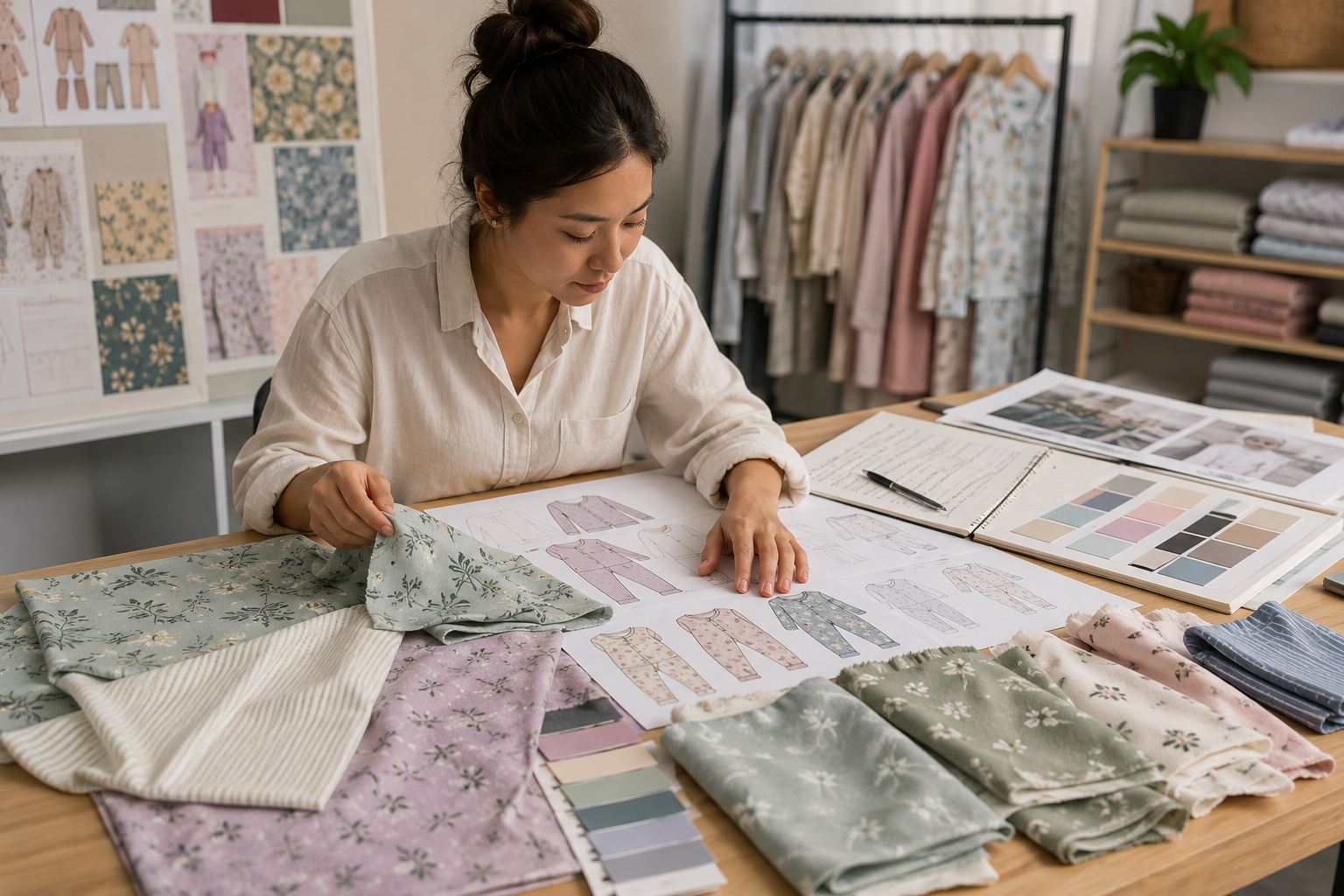
The crowded part of the market is generic. The open part is specific. Decide who you are for, babies, toddlers, big kids, adults, or the whole family, and decide what your fabric says about you. Bamboo rayon reads soft and breathable. Organic cotton reads natural and safe. A botanical rayon reads considered and a little different. Your fabric is your first sentence, so choose it on purpose rather than defaulting to whatever is cheapest.
Step two, understand MOQ before you fall in love with a design
MOQ, the minimum order quantity, is the number of units a factory will run per style and colourway. It shapes everything downstream, your cash, your inventory risk, and how many designs you can launch with. Most first-run founders are looking for a low MOQ so they can test the market without ordering ten thousand units of a print that may not land. Our full explainer on what MOQ means in garment manufacturing covers how to plan your first run around it.
Step three, get your costing right, CMT versus FOB
The number on a factory quote depends on what it includes. A CMT quote (cut, make, trim) covers labour only, you supply the fabric. An FOB quote covers fabric, trims, and finished goods to the port. They are not comparable line for line, and confusing them is how first budgets blow up. Our guides to CMT in garment manufacturing and MOQ and FOB break down what each quote actually includes.
Step four, nail compliance before your first sample, not after
If your pajamas are for children sized 9 months through size 14, they fall under the U.S. CPSIA flammability rule, and getting this wrong is the single most common cause of a recall. Decide early whether each style is snug fitting or flame resistant, and build the test plan around it. Our guide to CPSIA flammability compliance and our breakdown of why sleepwear recalls happen show exactly where founders trip.
Step five, find the right manufacturer
The right manufacturer for a new pajama brand is one who will run a low MOQ, hold real compliance documentation, and treat a small first order as the start of a relationship rather than a nuisance. If you're still evaluating options, our guide to finding a small-batch clothing manufacturer as a startup explains where to look, what minimums are realistic, and how to compare potential partners.
Honest pricing, a sampling process that protects your launch runway, and certifications you can show a retail buyer, GOTS for organic cotton, OEKO-TEX Standard 100 across fabrics, matter more than the lowest per-unit number. Our guide to finding a low-MOQ sleepwear manufacturer covers how to vet one.
Step six, sampling and your first production run
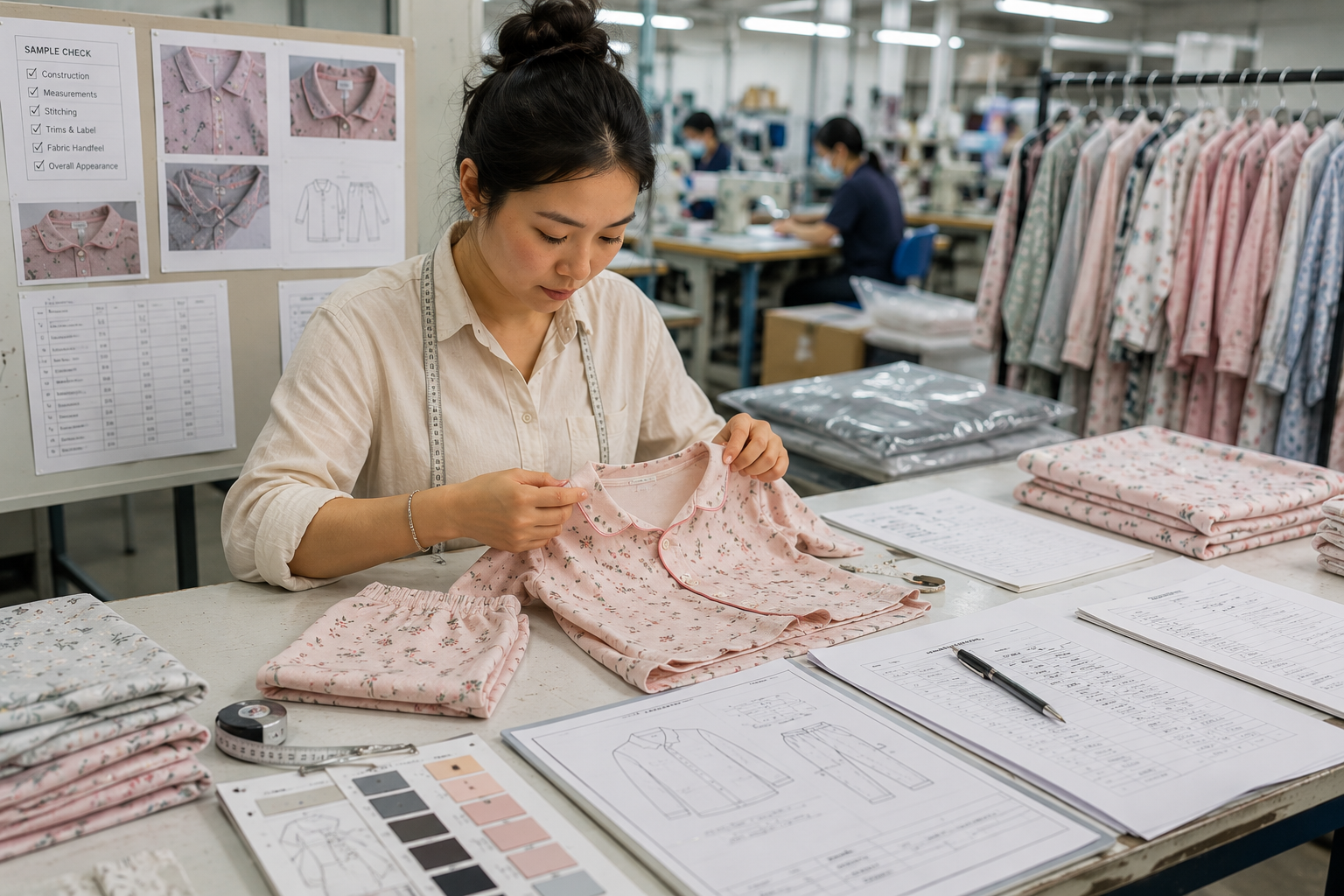
Sampling is where the design meets reality. Expect a first sample, comments, and at least one revision before a pre-production sample you sign off on. Once approved, the production run follows the tech pack exactly, which is why a clear tech pack is worth the time it takes. Build your timeline backward from the date you need stock, and add a buffer, because the brands that hit their launch dates are the ones who started the calendar early.
How much does it cost to start a pajama business
The honest answer is that it depends on your MOQ, your fabric, and your category, but the costs are knowable before you commit. Plan for fabric and production (your MOQ times your per-unit cost), sampling fees, compliance testing if you are making children's sleepwear, and your tracking labels and packaging. Our deeper look at what it actually costs to manufacture sleepwear puts numbers to each line.
FAQ
How much does it cost to start a pajama business?
It depends on your minimum order quantity, fabric, and category, but the main costs are fabric and production (MOQ times per-unit cost), sampling fees, compliance testing for children's sleepwear, and tracking labels and packaging. A low-MOQ manufacturer lets you start without ordering tens of thousands of units.
What is the MOQ for starting a pajama line?
Minimum order quantities vary by factory. Many first-run founders look for a low MOQ, often a few hundred units per style and colourway, so they can test the market before scaling. Tobimax runs from MOQ 400 per style.
Do I need compliance testing to sell children's pajamas?
Yes. In the United States, children's sleepwear sized 9 months through size 14 must meet the CPSIA flammability rule (16 CFR 1615 and 1616), through either the snug-fitting or flame-resistant path, with test reports and a Children's Product Certificate on file.
What is the difference between starting a pajama business and a sleepwear brand?
They overlap heavily. Pajamas are a category within sleepwear, so the steps are the same, niche and fabric, MOQ, costing, compliance, manufacturer, and sampling. The difference is focus, a pajama business centers on pajama sets specifically.