
What Is CMT in Garment Manufacturing?
CMT = Cut, Make, Trim. It is the labor cost of turning your fabric into finished garments: cutting the pieces, sewing them, and attaching trims. It excludes fabric, shipping, and duties.
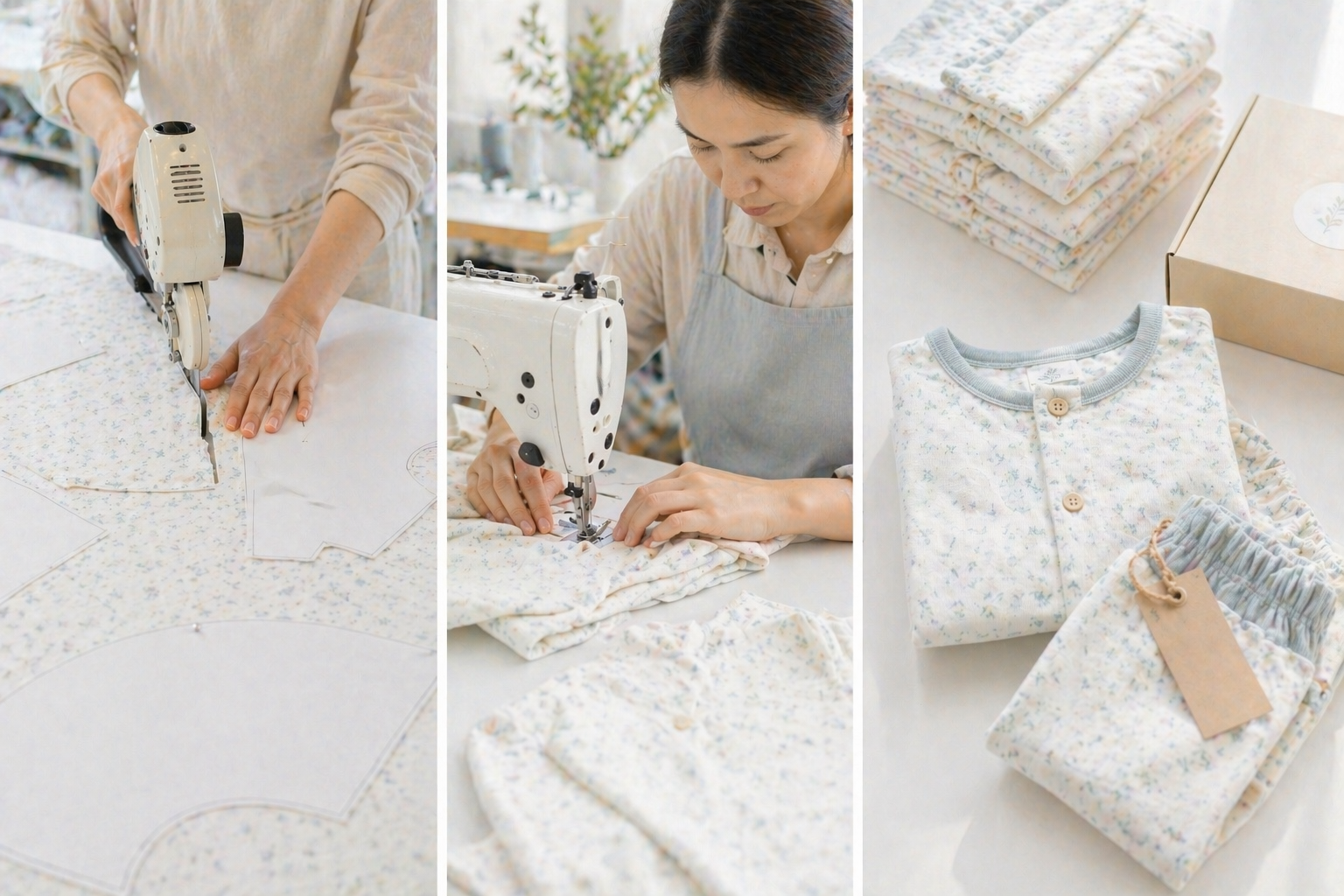
CMT in garment manufacturing stands for Cut, Make, and Trim. It refers to the labor cost of producing a garment, including cutting fabric, sewing components, and attaching trims like labels and packaging. CMT does not include fabric, shipping, or duties, and is typically quoted separately from full-package manufacturing.
In practice, CMT refers to the labor and production cost of turning raw fabric into a finished garment — cutting the fabric pieces, sewing them together, and attaching all trims such as labels, tags, elastic, zippers, and other accessories.
What's Included in CMT
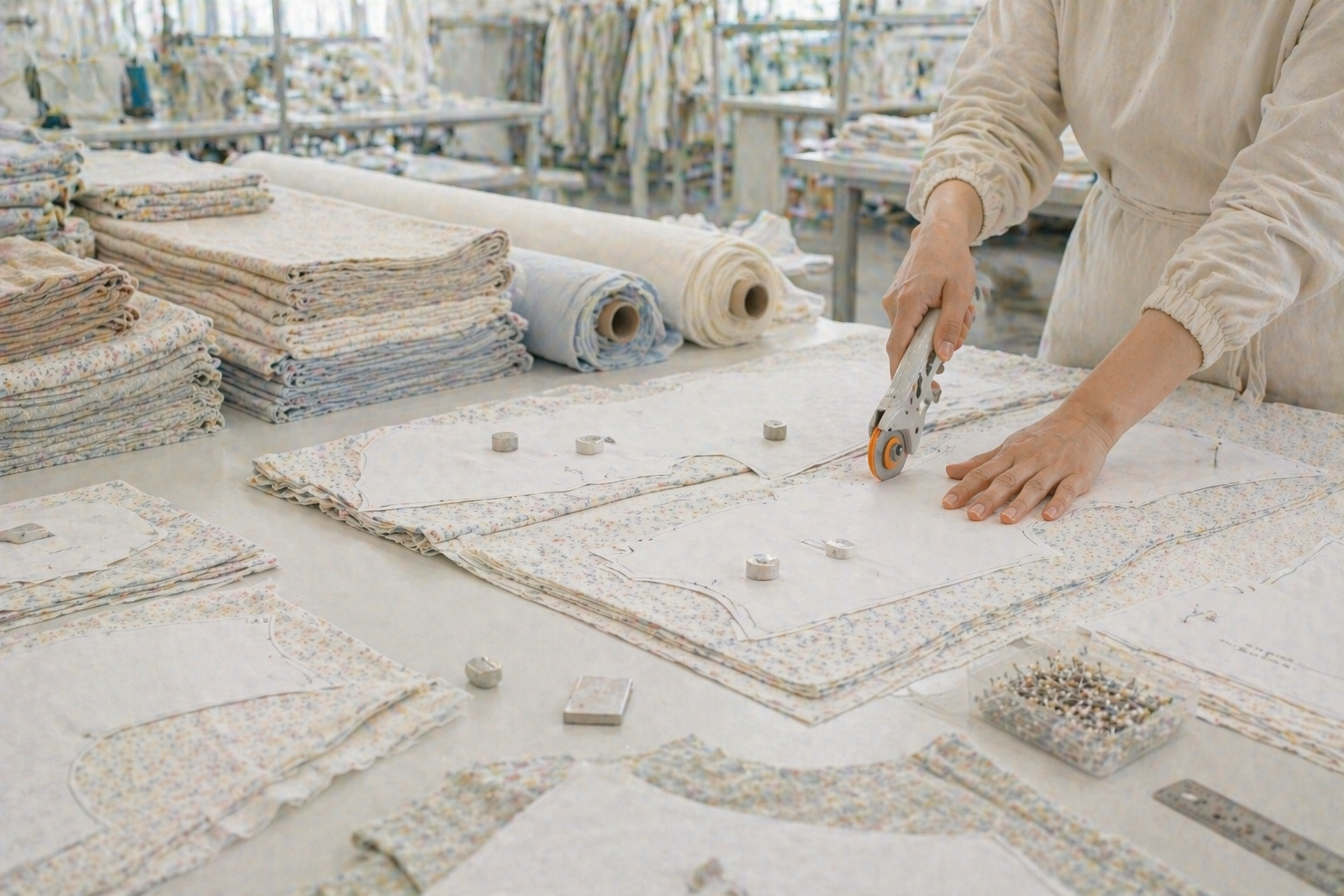
Cut covers spreading fabric on the cutting table, laying out the pattern marker (the arrangement of pattern pieces optimized to minimize waste), and cutting the fabric into individual garment pieces. For fabrics like bamboo rayon that are slippery, cutting requires specialized equipment and experienced operators.
Make is the sewing stage — assembling cut pieces into a finished garment. This includes all seaming, hemming, elastic application, and topstitching. The complexity of the garment directly affects this cost: a basic two-piece pajama set with an elastic waistband is simpler (and cheaper) than one with contrast piping, pockets, and a button placket.
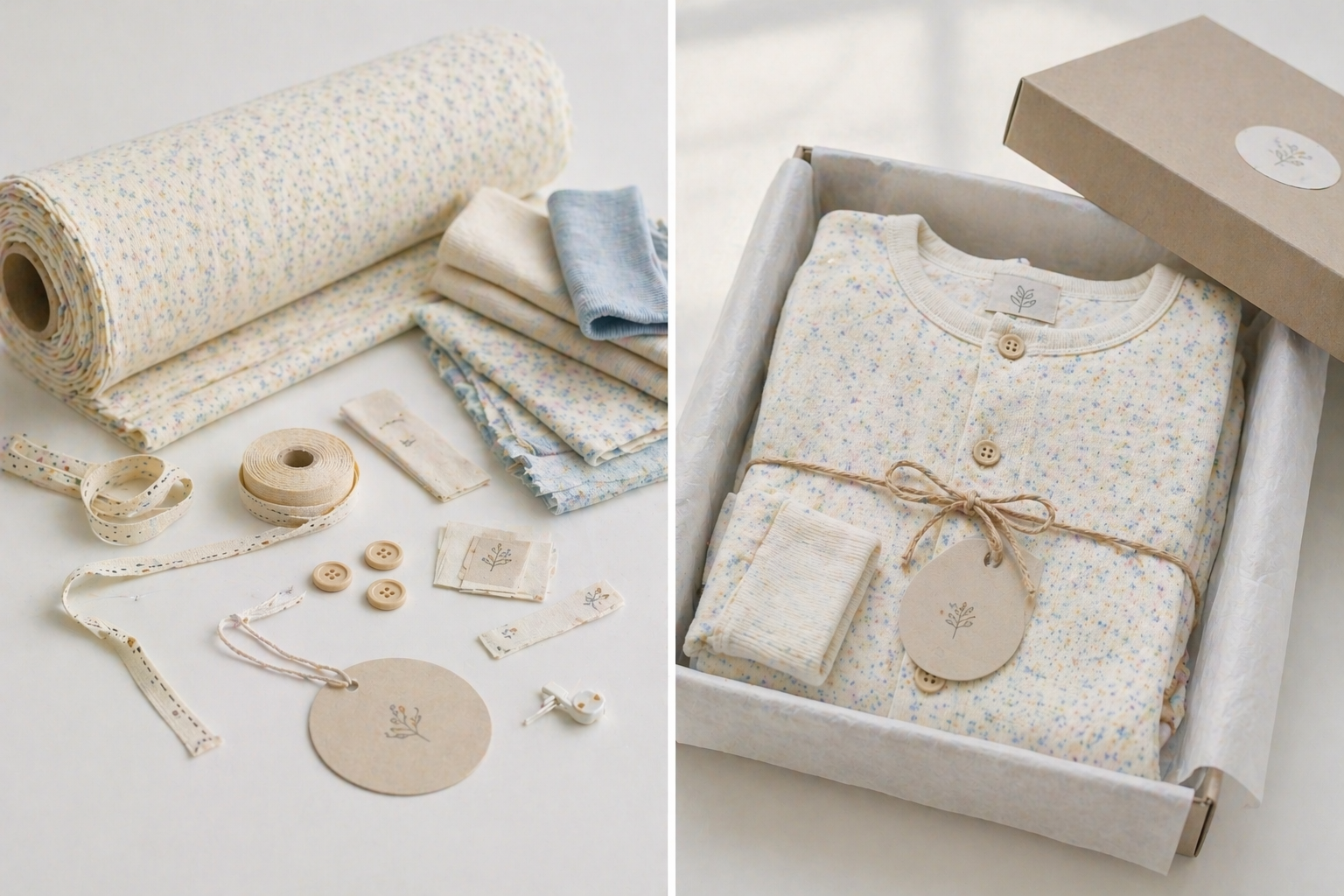
Trim covers attaching all non-fabric components: woven brand labels, care labels, size labels, hang tags, and packaging. It also includes pressing (steaming the finished garment to remove wrinkles) and folding.
What CMT Costs
For a straightforward children's two-piece pajama set manufactured overseas, CMT typically ranges from $2.00 to $4.50 per unit. More complex constructions push higher; simpler designs come in lower.
Factors that increase CMT cost include additional seams or panels, contrast piping or decorative trim, pockets (especially angled or zippered), button plackets or snap closures, and custom packaging beyond a standard poly bag.
Factors that decrease CMT cost include simple, clean construction (elastic waist, standard neckline), larger production runs (labor efficiency improves at higher volumes), and consistent reorders (the production team learns your garment and works faster on repeat runs).
CMT vs. Full-Package Manufacturing
When a manufacturer quotes "CMT pricing," they're only quoting the labor portion. You're responsible for sourcing and providing the fabric, trims, and packaging separately.
"Full-package" or "FOB pricing" includes everything — fabric, CMT, trims, packaging — in a single per-unit price. Most emerging brands prefer full-package pricing because it simplifies the process and puts fabric sourcing in the manufacturer's hands rather than yours.
When comparing quotes from different manufacturers, make sure you're comparing the same thing: CMT-only quotes look dramatically lower than full-package quotes, and confusing the two leads to bad decisions.
CMT meaning in garments
CMT in garments means Cut, Make, Trim. It's a pricing and production model where the buyer (a brand or another factory) supplies the fabric and the CMT factory handles cutting the pattern pieces, sewing the garment together, and finishing it with trims (labels, hangtags, packaging). CMT pricing excludes the cost of fabric and major trims, so the per-unit CMT quote will look significantly lower than a full-package (FOB) quote. The two aren't directly comparable.
CMT stands for Cut, Make, Trim — what each step covers
CMT stands for Cut, Make, Trim. The three steps map to three distinct factory operations:
• Cut: the factory receives the fabric, lays it according to the marker (a digital pattern layout), and cuts the pattern pieces with industrial cutting machines
• Make: sewing operators stitch the pieces together using the construction instructions in the tech pack, including any special seams, topstitching, or reinforcement
• Trim: finishing operations including thread trimming, labelling (woven or printed), hangtags, polybagging, and carton packing
CMT pricing typically reflects labour cost only, the fabric cost sits on the buyer's side. This makes CMT attractive for brands with their own fabric sourcing relationships or in-house fabric development.
CMT in garments vs FOB — when to choose each
CMT and FOB are two ways to structure a garment manufacturing relationship. For a full breakdown of how MOQ and FOB work together in a typical manufacturing quote, see our guide to both terms.
• CMT suits brands that have direct fabric sourcing relationships and want to control fabric quality, lead time, and pricing independently. The brand carries fabric inventory risk
• FOB suits brands that want a single point of accountability for the finished product. The factory handles fabric, trims, sewing, and quality. Most first-run brands start with FOB until they're ready to scale into CMT
• Hybrid CMT is also possible, the factory supplies some components (fabric or trims) and the buyer supplies others. This is common for licensed character prints or proprietary fabric blends
At Tobimax, we work with brands across all three models depending on the brand's stage and sourcing maturity.
For a full breakdown of every cost component in sleepwear manufacturing, read:
What Does It Actually Cost to Manufacture Sleepwear?
FAQ
What does CMT mean in garment manufacturing?
CMT stands for Cut, Make, and Trim. It refers to the labor cost of producing a garment, including cutting, sewing, and attaching trims.
Does CMT include fabric costs?
No. CMT only covers labor. Fabric, trims, testing, shipping, and duties are typically quoted separately.
What is the difference between CMT and full-package manufacturing?
CMT pricing includes only labor, while full-package manufacturing includes fabric, trims, production, and logistics in one per-unit cost.
We provide full-package manufacturing for sleepwear brands — fabric sourcing, CMT, compliance, and logistics in one transparent per-unit price.