
How to Find a Low MOQ Sleepwear Manufacturer
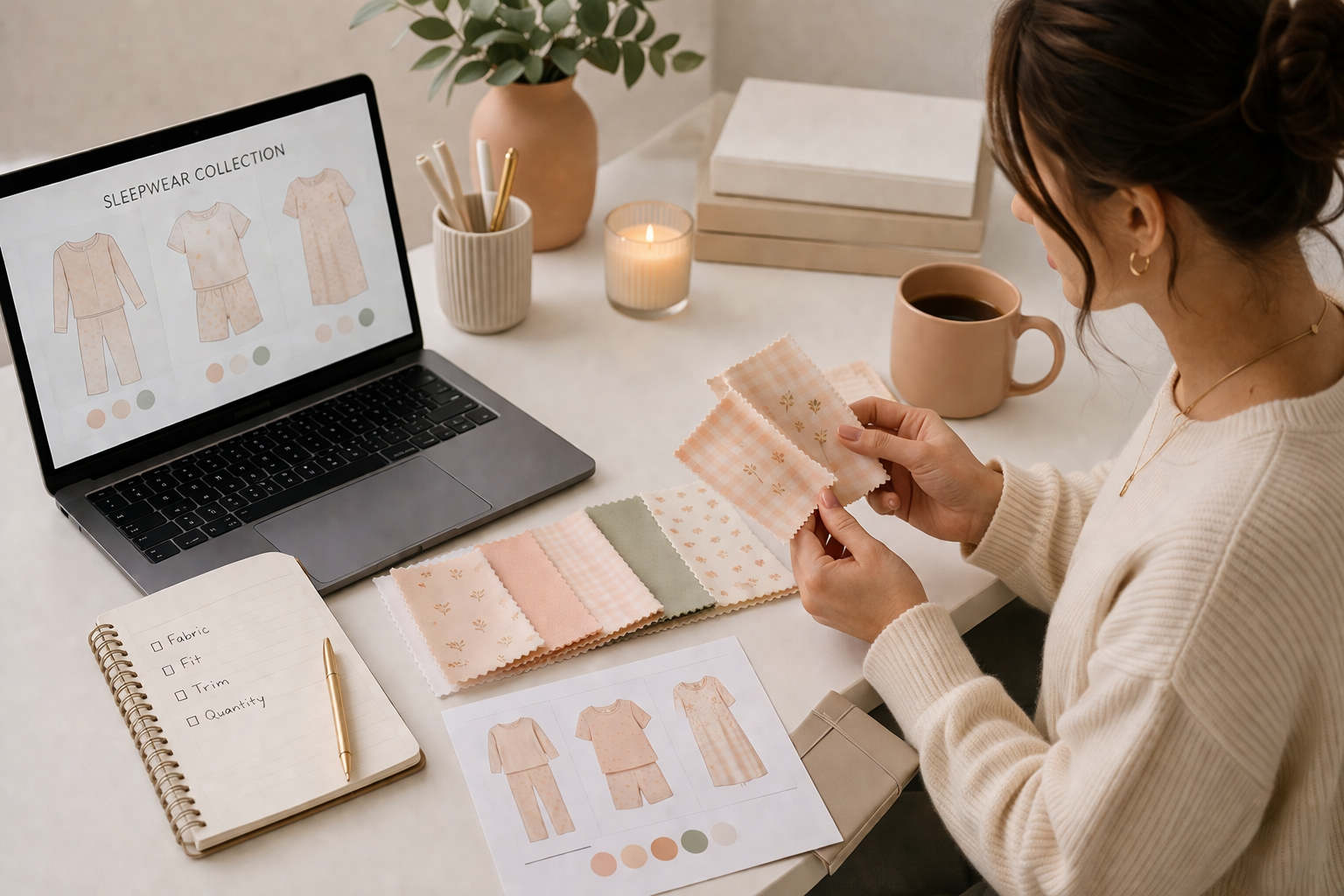
The first manufacturer you contact quotes 3,000 units minimum. The second wants 5,000. The third will do 200 units — but only in stock fabric, no custom prints, and no compliance support.
This is the low-MOQ trap that emerging sleepwear brands fall into: the factories willing to take small orders are often the ones cutting corners to make the math work. And the factories with proper infrastructure want volumes you can't justify yet.
But there's a middle ground. Some manufacturers, including those offering low MOQ in Vietnam, work with growing brands at 500 to 1,000 units while maintaining custom fabric sourcing, full compliance support, and consistent quality. Finding them requires knowing what to look for and what to avoid. The same principles apply when evaluating sourcing for Canadian brands, where manufacturing location, compliance support, and long-term scalability can matter as much as MOQ.
Why 500 Units Is the Smart Starting Point
There's a reason we recommend 500 units as the minimum for a first sleepwear production run, rather than 100 or 200.
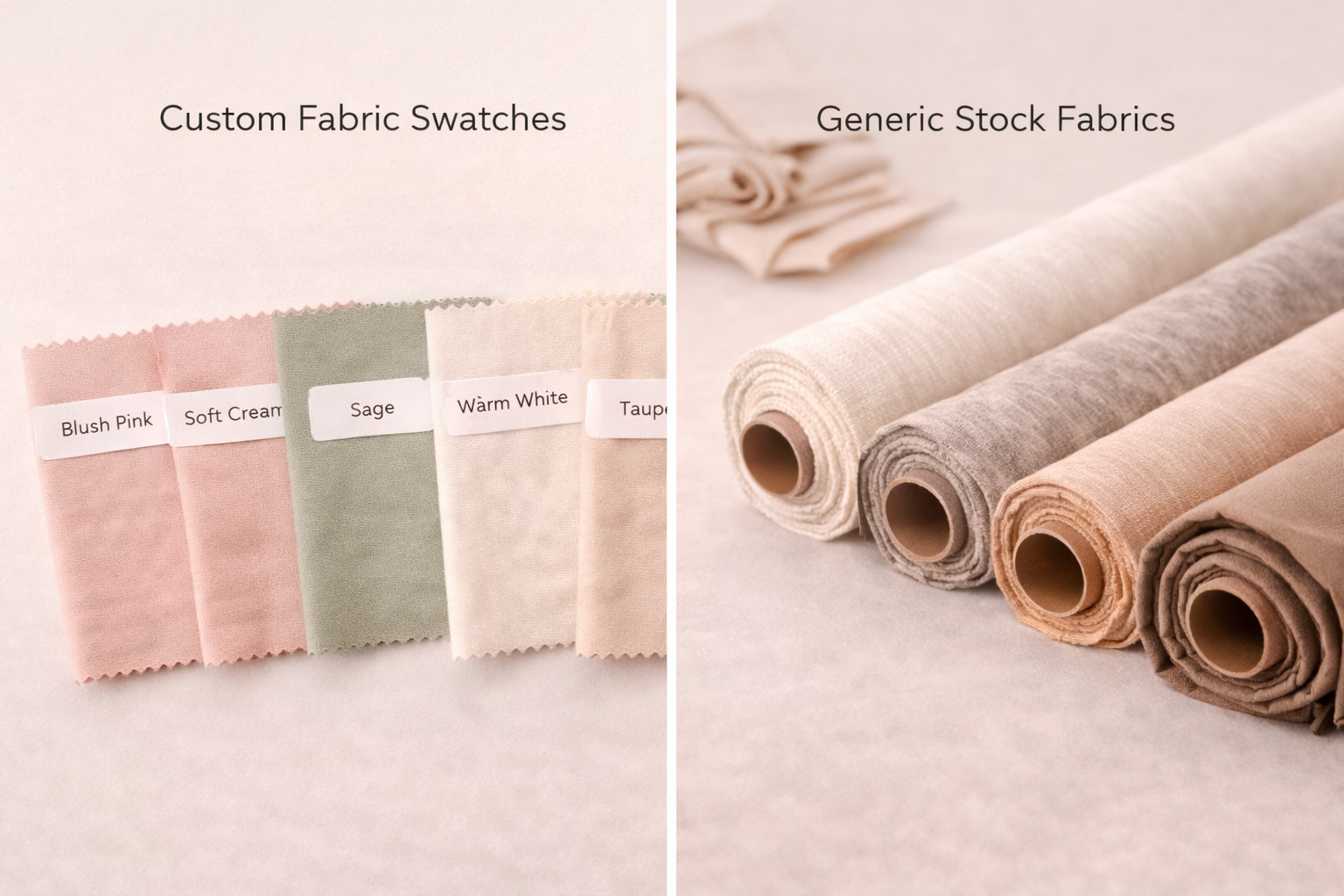
At 100 to 200 units, your options are severely limited. Most fabric mills won't fulfill a custom order below a certain yardage threshold — typically enough for 500 or more garments. So at 200 units, you're forced to use stock fabric, which means you can't choose your exact composition, weight, or color. You're building your brand around someone else's inventory.
At 500 units, you cross the threshold where custom fabric sourcing becomes viable. A manufacturer can order fabric from a mill in your specific composition (bamboo rayon/spandex 95/5 at 200 GSM, for example), have it dyed to your Pantone colors, and produce garments that are genuinely your product — not a stock garment with your label sewn in.
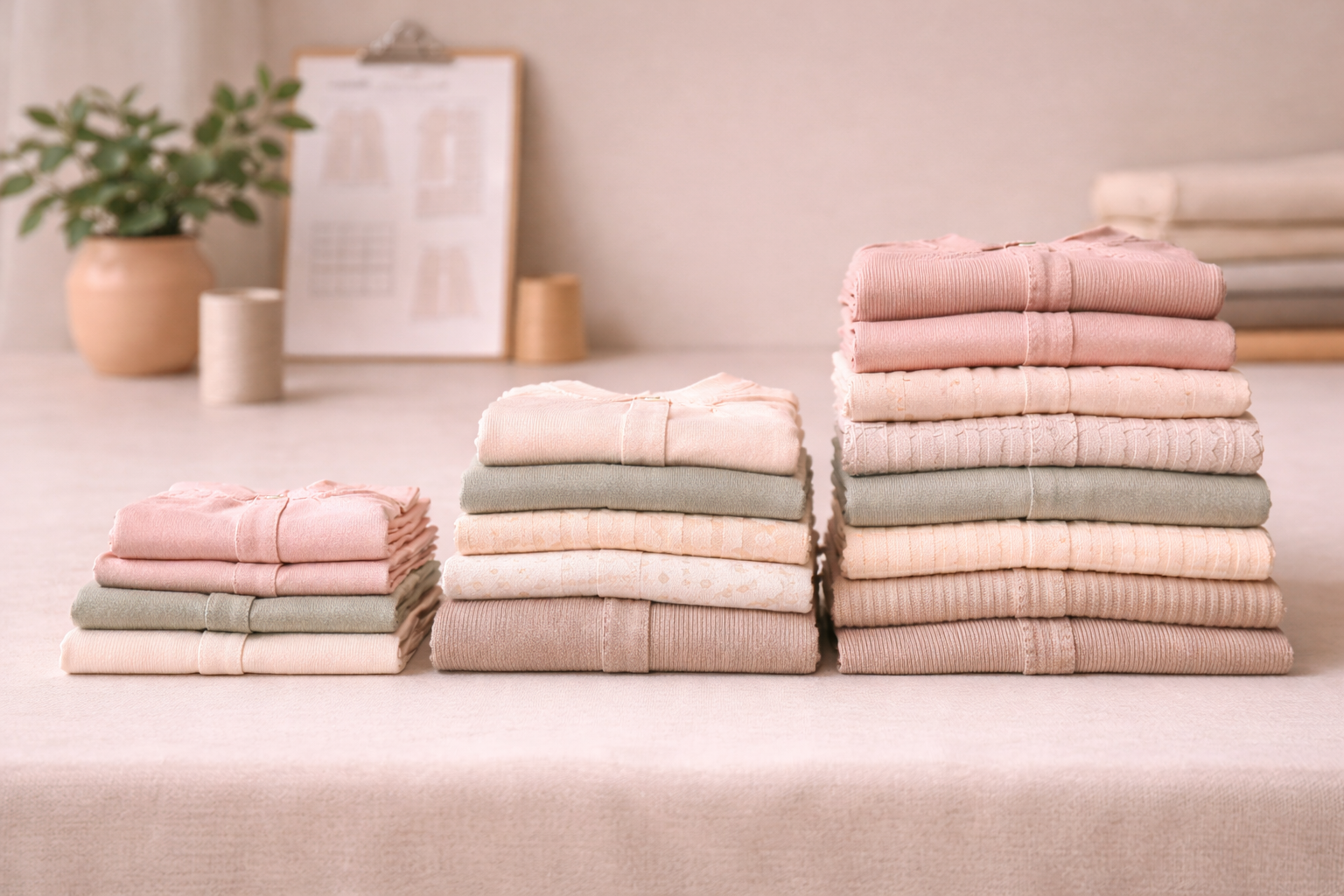
The financial difference is manageable. A 500-unit run of a children's pajama set typically requires $5,000 to $8,000 in total investment (including sampling, production, testing, and freight). That's a realistic starting budget for a funded founder or a brand bootstrapping from savings. And those 500 units give you 3 to 6 months of inventory to test the market, learn your bestsellers, and build a customer base before reordering. If you're planning your first production run, our guide on how to start a pajama business explains how to budget for manufacturing, evaluate suppliers, and build a production roadmap before placing your first order.
What Low MOQ Should and Shouldn't Mean
A legitimate low-MOQ manufacturer reduces the order quantity threshold while maintaining their standard production process. Everything else — fabric quality, pattern grading, compliance testing, quality control — stays the same as it would be for a 5,000-unit order.
What low MOQ should mean: smaller production runs (500 to 1,000 units) with the same fabric sourcing, sampling, compliance, and quality control as larger orders. Many startup brands now look for low-MOQ alternatives to mass-licensed sleepwear that provide more flexibility, transparent sourcing, and sustainable production support. Your per-unit cost will be higher (typically 15 to 25 percent above what you'd pay at 2,000 or more units) because fixed costs are spread across fewer garments. That's a fair and transparent trade-off.
What low MOQ should not mean: stock fabric only (no custom sourcing), skipped or abbreviated sampling (one round instead of two or three), no compliance support (you handle CPSIA testing yourself), relaxed quality control (higher defect rates accepted), or limited communication (small orders get deprioritized).
If a manufacturer offers low minimums but any of the above compromises are part of the deal, you're not getting a low-MOQ manufacturing service — you're getting a discount operation that happens to accept small orders.
How to Evaluate a Low-MOQ Manufacturer
Ask these questions to separate genuine emerging-brand partners from factories that treat small orders as an afterthought. Our checklist for how to vet a manufacturer's MOQ and sampling process covers the full set of questions to ask before you commit.
"What fabric options are available at my volume?" The answer should include custom compositions and colorways, not just "whatever we have in stock." If they can source bamboo rayon/spandex in your specific weight and color at 500 units, their mill relationships are strong enough to serve you properly.
"How does your sampling process work for first-time orders?" Expect 2 to 3 rounds of sampling over 3 to 6 weeks. If they offer a "fast track" that skips sampling revisions, they're prioritizing speed over getting your product right. Never approve production from a first sample — there are always adjustments.
"Do you handle compliance testing?" For children's sleepwear, this is non-negotiable. Your manufacturer should coordinate CPSIA testing with an accredited lab, verify garment dimensions against tight-fitting requirements, and guide you through the CPC documentation process. If they say "we can point you to a lab" but don't manage the process, you'll be spending hours on compliance that should be built into the production workflow.
"What's your quality control process for runs under 1,000 units?" The answer should include inline inspection (checking quality during production, not just at the end) and a final inspection report with defect rates and measurement verification. Small runs should get the same QC attention as large ones — if anything, they need more attention because there's less margin for error.
"Can I see examples of products you've made at this volume?" Physical samples from other clients at similar volume tell you more than any sales pitch. Feel the fabric. Check the stitching. Look at label placement. Wash it twice.
The Reorder Advantage
One of the most important but overlooked factors in choosing a low-MOQ manufacturer is how they handle reorders.
Your first order is expensive and complex: pattern development, sampling, compliance testing, and a learning curve for both you and the manufacturer. All of that fixed cost is amortized across your initial 500 units, pushing your per-unit cost higher.
Your second order is different. The pattern exists. The fabric source is established. Compliance testing for the specific colorways is done. The manufacturer knows your quality standards. The result is a significantly lower per-unit cost and a faster turnaround — often 4 to 6 weeks instead of 8 to 12.
The best low-MOQ manufacturers make reordering seamless: they store your patterns and specifications, maintain your fabric sourcing relationships, and can turn around a reorder with minimal back-and-forth. This is how emerging brands scale from 500 to 2,000 to 5,000 units over 12 to 18 months without the pain of re-establishing the production relationship each time.
Ask your prospective manufacturer specifically how reorders work. If every order feels like starting from scratch, you'll spend time and money unnecessarily as you grow.
Red Flags in Low-MOQ Manufacturing
Watch for these warning signs during your evaluation.
Prices dramatically below market. If a manufacturer quotes 40 percent less than every other quote at the same volume, something is being compromised — fabric quality, labor standards, or quality control. Get what you pay for.
No physical address or factory photos. Legitimate manufacturers are happy to show you their facility. If you can't verify where your garments are being produced, you can't verify anything about the process.
Pressure to skip sampling. "We can go straight to production to save you time and money" is code for "we don't want you to see the quality before we produce 500 units." Never skip sampling.
Vague answers about compliance. If a manufacturer producing children's sleepwear can't explain CPSIA requirements clearly, they shouldn't be producing children's sleepwear. Period.
No references from other brands at similar volume. If they can't connect you with a single existing client who ordered 500 to 1,000 units and was happy with the result, treat that as a data point.
The Goal Is Growth, Not Permanence
Your first manufacturer at 500 units doesn't have to be your manufacturer forever. Some brands outgrow their first partner as they scale to higher volumes — and that's fine. What matters is that your first partner gives you a quality product you can sell with confidence, a reliable production process you can learn from, and a foundation of customer feedback that informs your scaling decisions.
The brands that succeed are the ones that start at 500 units with the right partner, learn fast, and scale based on what the market tells them. Not the ones that overcommit to 5,000 units with a cheaper factory and hope for the best. For founders starting a children's sleepwear brand, understanding compliance timelines, sampling rounds, and realistic launch costs early makes scaling significantly easier.