
Children's Sleepwear Recalls: Causes and How to Prevent Them
Why children's sleepwear gets recalled in the first place
Almost every children's sleepwear recall in the United States traces back to a single root cause, a garment that does not meet the federal flammability rule for sleepwear. The U.S. Consumer Product Safety Commission (CPSC) enforces this under 16 CFR 1615 and 16 CFR 1616, the standards that govern sleepwear in sizes 9 months through size 14. When a garment sold or marketed as children's sleepwear fails to meet one of the two compliance paths, it can be recalled, and the brand carries the cost, the stop-sale, and the reputational damage. Our guide to why baby sleepwear gets recalled covers the compliance steps that keep a brand off the recall list from the first production run.
The pattern in the CPSC recall record is consistent. The garment was attractive, the fabric was comfortable, and somewhere between design and production the flammability requirement was treated as a formality rather than a gate. Recalls are rarely a surprise to anyone who tests properly. They are the predictable result of skipping a step.
The two compliance paths, and where recalls come from
There are only two legal ways to sell a garment as children's sleepwear in the United States, and most recalls come from getting one of them wrong.
Path one, flame resistant. The fabric passes an open-flame vertical burn test. Treated or inherently flame-resistant fabrics qualify here. The recall risk on this path is using a fabric that was assumed to pass but was never tested on the actual production lot.
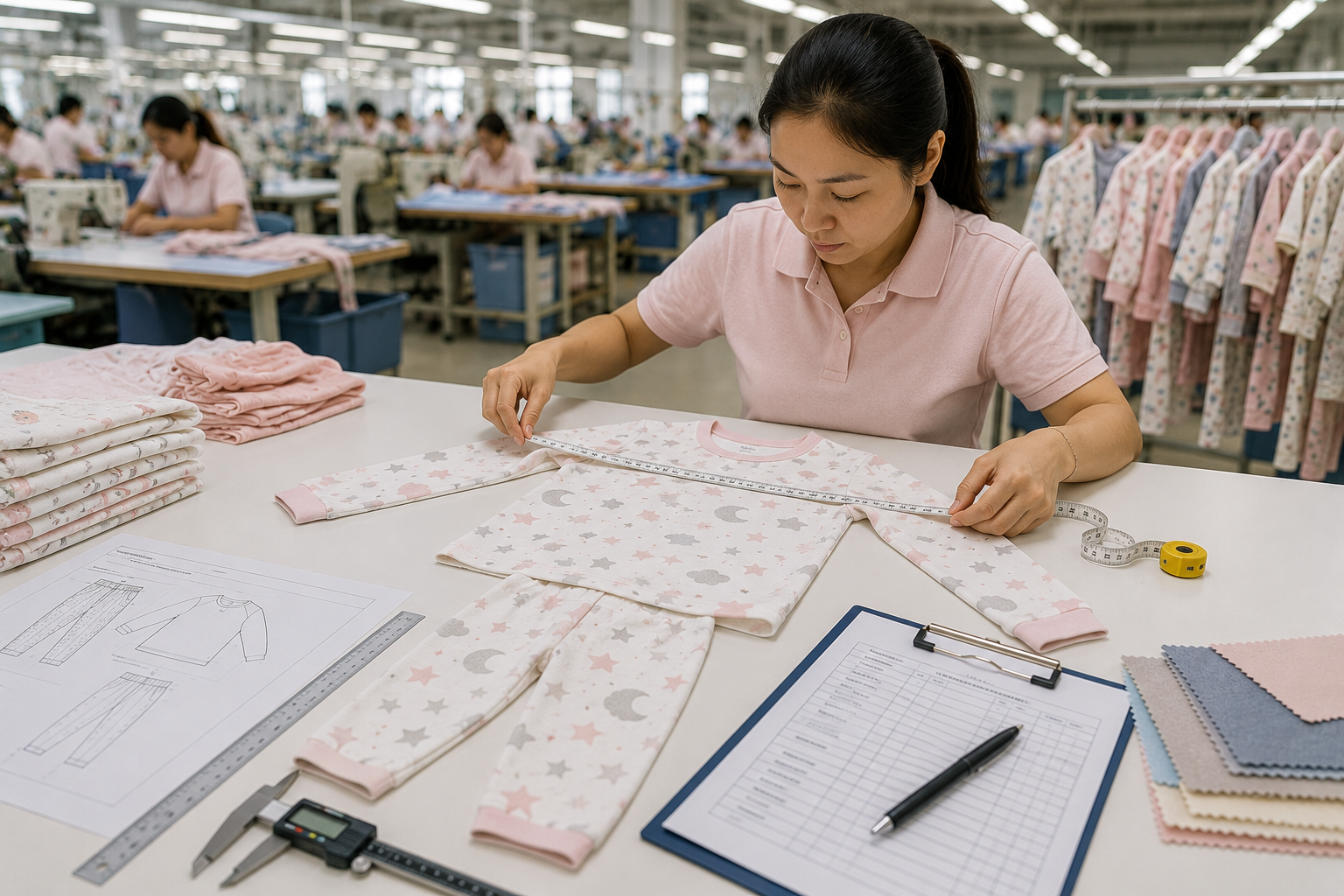
Path two, snug fitting. The garment is cut to tight dimensional tolerances published by the CPSC, on the principle that a close-fitting garment does not trap the air that feeds a flame. Most modern cotton and bamboo pajamas take this path. The recall risk here is a fit that drifts outside tolerance, a size that was graded loosely, or a "loungewear" item that is marketed as sleepwear without meeting either path.
What recalled garments tend to have in common
Reading the CPSC recall history, the recurring threads are not exotic. They cluster around a few avoidable mistakes.
- Sleepwear sold as snug fitting that measured outside the dimensional tolerances once produced at scale
- Loungewear, robes, or "lounge sets" marketed with sleep imagery, which pulls them under the sleepwear rule even when the brand did not intend it
- Fabric or trim changes made after the approved sample, without re-testing the production lot
- Missing or incomplete tracking labels and Children's Product Certificates, which turn a minor issue into a recall-and-document problem
None of these require a lab to catch. They require a manufacturer who treats compliance as part of production rather than a box ticked at the end.
How compliant manufacturing prevents a recall
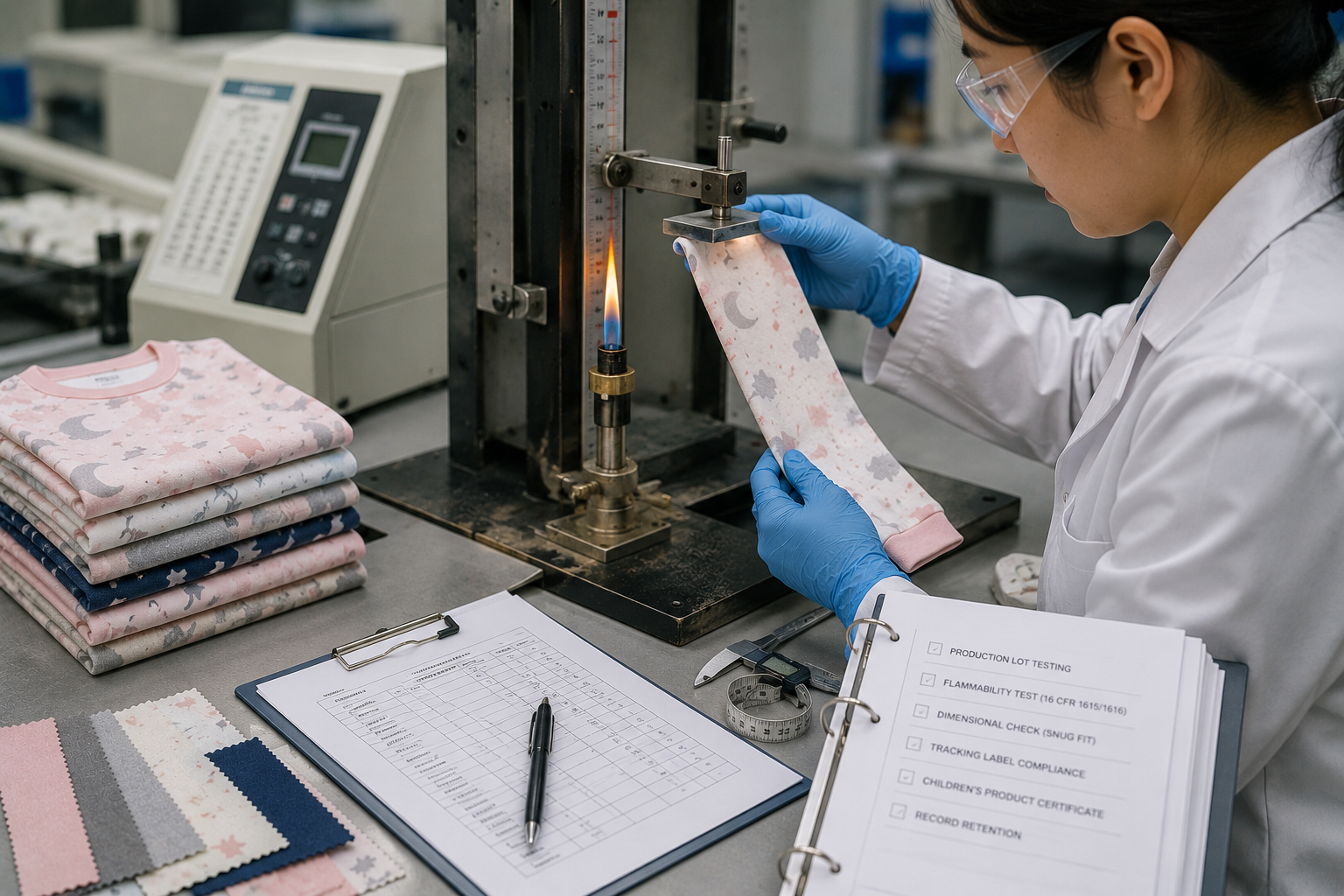
At Tobimax we have produced CPSIA-compliant children's sleepwear since 1988, across two generations of the family, and the brands we partner with (Whistle & Flute, Jax & Lennon, LS among them) came to us because the paperwork holds up when their retail buyers ask for it. Preventing a recall is a process, not a certificate, and ours runs on a few non-negotiables.
- We test the actual production fabric and dye lot, not just the sample, through CPSC-accepted independent labs
- We hold the test reports, the Children's Product Certificate, and the tracking-label records on file for every run we ship
- We flag any garment whose construction or marketing could pull it under the sleepwear rule, before it goes into production, so the fit and labelling are right from the first cut
- We keep the snug-fit grading inside CPSC tolerance across the full size range, because a recall does not care that most sizes passed
A short checklist to keep your sleepwear brand off the recall list
If you are building or scaling a children's sleepwear line, these are the questions that separate a clean record from a recall.
- Which compliance path does each style use, flame resistant or snug fitting? Decides the whole test plan. Ambiguity here is where recalls start.
- Are we testing the production lot, or only the sample? Fabric and dye lots vary. The sample passing is not the lot passing.
- Does our grading hold snug-fit tolerance across every size? A loose grade on one size can recall the whole style.
- Is anything we call loungewear marketed with sleep imagery? Sleep imagery can pull loungewear under the sleepwear rule.
- Do we hold the CPC, test reports, and tracking-label records on file? Documentation is what turns an inquiry into a non-event.
For the deeper rules behind each of these, our full guide to children's sleepwear flammability standards and CPSIA compliance walks through the testing in detail and our breakdown of snug fit versus flame resistant pajamas covers how to choose the right path for your fabric.
FAQ
What is the most common cause of a children's sleepwear recall?
Flammability non-compliance. Almost all U.S. children's sleepwear recalls involve a garment that failed to meet 16 CFR 1615 or 1616, either because it did not pass the open-flame test or because it was sold as snug fitting without meeting the CPSC dimensional tolerances.
Can loungewear be recalled as sleepwear?
Yes. If loungewear is marketed with sleep imagery or positioned for sleep, it can fall under the children's sleepwear flammability rule even if the brand did not intend it. Marketing language and imagery matter as much as the garment.
Do snug-fitting pajamas need flame-resistant fabric?
No. Snug-fitting pajamas are a separate compliance path. They do not need flame-resistant fabric, but they must meet the CPSC dimensional tolerances across every size, and the fit must hold once the style is produced at scale.
How does a manufacturer prevent a recall?
By testing the actual production lot through CPSC-accepted labs, holding the test reports and Children's Product Certificate on file, keeping snug-fit grading inside tolerance across all sizes, and flagging any garment whose construction or marketing could pull it under the sleepwear rule before production starts.
Has Tobimax had a sleepwear recall?
No. Tobimax has produced CPSIA-compliant children's sleepwear since 1988 and has never had a sleepwear recall, with test reports on file from CPSC-accepted independent labs for every fabric, dye, and construction we ship.