
Organic Baby Clothing Manufacturer: A Low-MOQ, Private-Label Guide
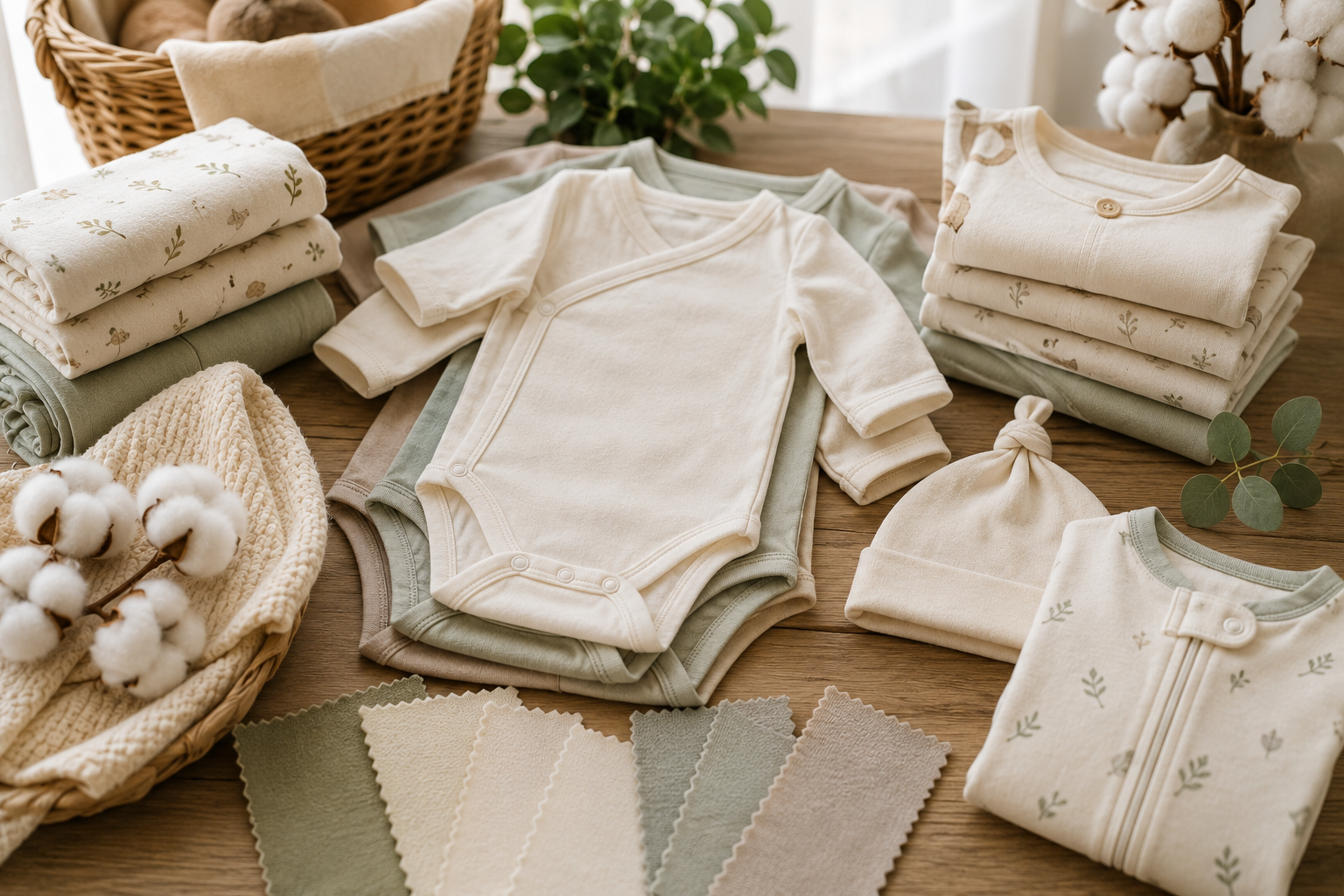
Why organic matters more for baby clothing than anything else
Newborn skin is thinner and more permeable than adult skin, which is why parents and the brands that serve them care so much about what touches it. Organic baby clothing is not a marketing flourish here. It is a response to a real concern about pesticides, harsh dyes, and finishing chemicals on fabric worn against a baby's body for most of the day. For a brand building in this space, the manufacturer's materials and certifications are the product as much as the design is.
What GOTS and OEKO-TEX actually guarantee
The two certifications that matter most for organic baby clothing are often named and rarely explained.
GOTS, the Global Organic Textile Standard, certifies that cotton is organically grown and that it stays organic through processing, including the dyes and finishes. It also carries social criteria for the people making the fabric. GOTS is the meaningful claim behind the word organic.
OEKO-TEX Standard 100 certifies that the finished fabric has been tested and found free of a long list of harmful substances. It does not certify organic farming, it certifies that what reaches the baby is clean.
A serious organic baby manufacturer can show both, GOTS for the organic supply chain and OEKO-TEX for the tested-clean fabric. Ask for the certificates by number, not by logo.
Low MOQ and private label, how a small baby brand actually starts
Most baby brands start small, and the right manufacturer makes that possible rather than punishing it. Two terms shape the early relationship.
Low MOQ, a minimum order quantity in the low hundreds per style and colourway, lets a new brand launch a focused range without burying cash in inventory. Our guide to a low-MOQ manufacturer covers how to vet one.
Private label, where the manufacturer produces garments to your design and brand rather than selling you a generic catalogue product, is how most baby brands build something distinct. You bring the brand and the design direction, the manufacturer brings the patterns, the certified fabric, and the production. Our explainer on private label children's sleepwear walks through how it works.
The compliance layer, because baby clothing is regulated
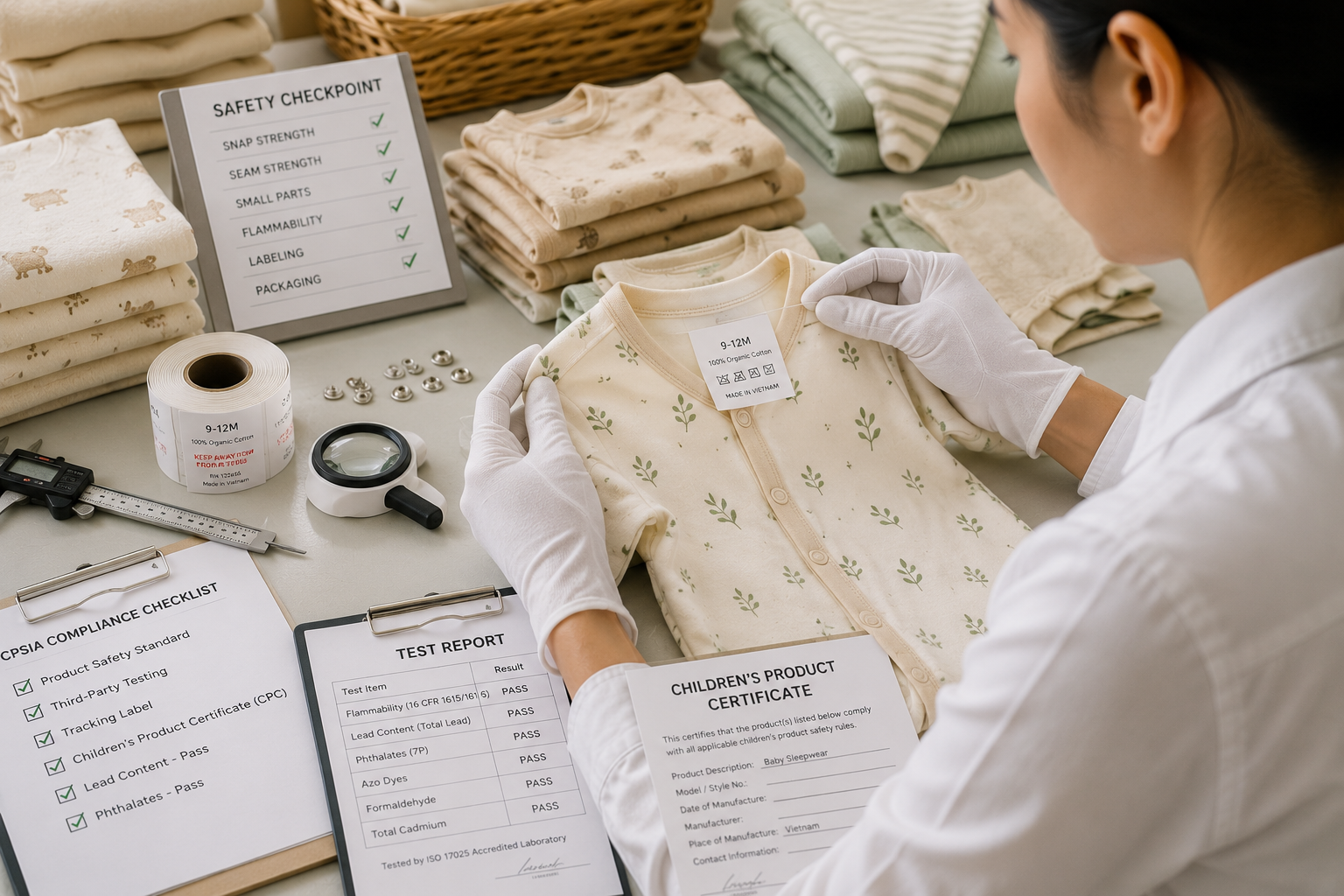
Baby clothing carries safety rules beyond the fabric. Sleepwear sized 9 months and up falls under the US CPSIA flammability standard, and all children's products require tracking labels, third-party testing, and a Children's Product Certificate. Snaps, ties, and small parts have their own safety considerations for infants. A manufacturer who builds for the baby category knows these rules cold. For the sleepwear side specifically, our CPSIA compliance guide covers the testing, and our piece on why recalls happen shows what goes wrong when this layer is skipped.
What to look for in an organic baby clothing manufacturer
- GOTS and OEKO-TEX certificates, by number: proves organic supply chain and tested-clean fabric
- Low MOQ per style: lets a small brand launch without over-ordering
- True private-label capability: lets you build a distinct brand, not resell a catalogue
- Children's compliance experience: CPSIA, tracking labels, CPC, infant small-parts safety
- Honest pricing and protected sampling: a relationship, not a transaction
How Tobimax makes for baby and children's brands
Tobimax is a family-owned, female-led ethical garment manufacturer, in operation since 1988 across two generations, with factories in Vietnam and China. We are GOTS, OEKO-TEX Standard 100, and bluesign certified. Our baby and infant fabrics include 100% organic cotton, organic cotton with a touch of spandex (95/5), and bamboo and spandex blends (95/5 and 93/7) for the softness and stretch that baby garments need, with private-label production from MOQ 200 per style. We have produced CPSIA-compliant children's apparel for decades, and the brands we partner with (Whistle & Flute, Jax & Lennon, LS among them) came to us for fabric and care most factories could not offer at their scale. When we partner, you become an extension of the family.
FAQ
What certifications should an organic baby clothing manufacturer have?
GOTS, which certifies organically grown cotton and organic processing including dyes, and OEKO-TEX Standard 100, which certifies the finished fabric is free of harmful substances. Ask for both by certificate number.
What is the MOQ for organic baby clothing?
It varies by manufacturer. A low MOQ of a few hundred units per style and colourway lets a small baby brand launch without over-ordering. Tobimax produces from MOQ 200 per style.
What is private label baby clothing?
Private label means the manufacturer produces garments to your design and brand, rather than selling you a generic catalogue product. You provide the brand and design direction, and the manufacturer provides patterns, certified fabric, and production.
Is organic baby clothing regulated for safety?
Yes. In the US, children's sleepwear sized 9 months and up must meet the CPSIA flammability standard, and all children's products require tracking labels, third-party testing, and a Children's Product Certificate, plus infant small-parts safety considerations.