
Ethical Clothing Manufacturers in Vietnam: A Guide for Small Brands
Why Vietnam became the ethical sourcing choice
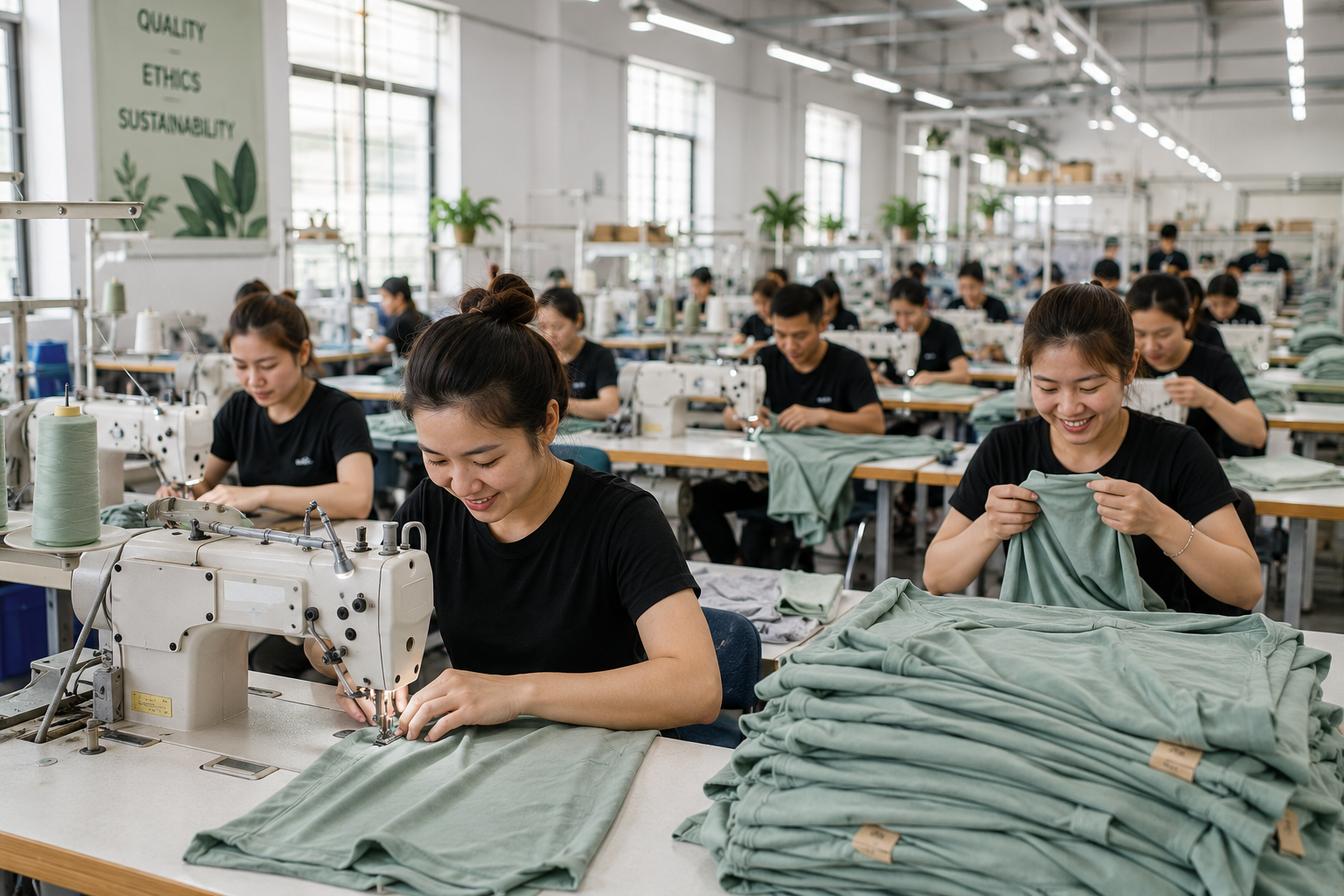
Vietnam has moved from a low-cost assembly base to a strategic manufacturing partner, and the shift is not only about tariffs. The better Vietnamese factories now build their case on transparency, sustainability, and ethical labour, which is exactly what retail buyers and conscious customers have started to require. For a small brand, that means Vietnam is no longer a compromise between price and principles. The right partner can offer both.
What "ethical" actually means in a manufacturer, beyond the word
Ethical is an easy word to put on a website and a hard one to prove. When you evaluate a Vietnam manufacturer, look past the language to the evidence.
- Fair and documented wages. Ask how wages are set and whether they can show it, not just assert it.
- Safe, audited facilities. Third-party social audits and a willingness to discuss them openly.
- Certified materials. GOTS for organic cotton, OEKO-TEX Standard 100 confirming the fabric is free of harmful substances, and bluesign for cleaner processing where it applies.
- Traceability. A manufacturer who can tell you where the yarn and fabric come from, not only where the sewing happens.
A factory that humanizes its own supply chain, the faces behind the fashion, rather than hiding behind certificates alone, is usually the one worth talking to. Our full guide on how to vet an ethical manufacturer walks through the complete checklist before you sign anything.
Low MOQ in Vietnam, and why it matters for small brands
The myth is that overseas manufacturing means enormous minimums. The reality is that the right partner will run a low MOQ so a growing brand can test the market without committing to tens of thousands of units. A low minimum order quantity, a few hundred units per style and colourway, is what lets a small brand launch responsibly, learn, and reorder what works. If you are early, the MOQ conversation matters as much as the price conversation. Our guide to a low-MOQ manufacturer that won't sacrifice quality covers how to vet this (link to /blog/how-to-find-a-low-moq-sleepwear-manufacturer-that-wont-sacrifice-quality).
The certifications to ask for before you sign anything
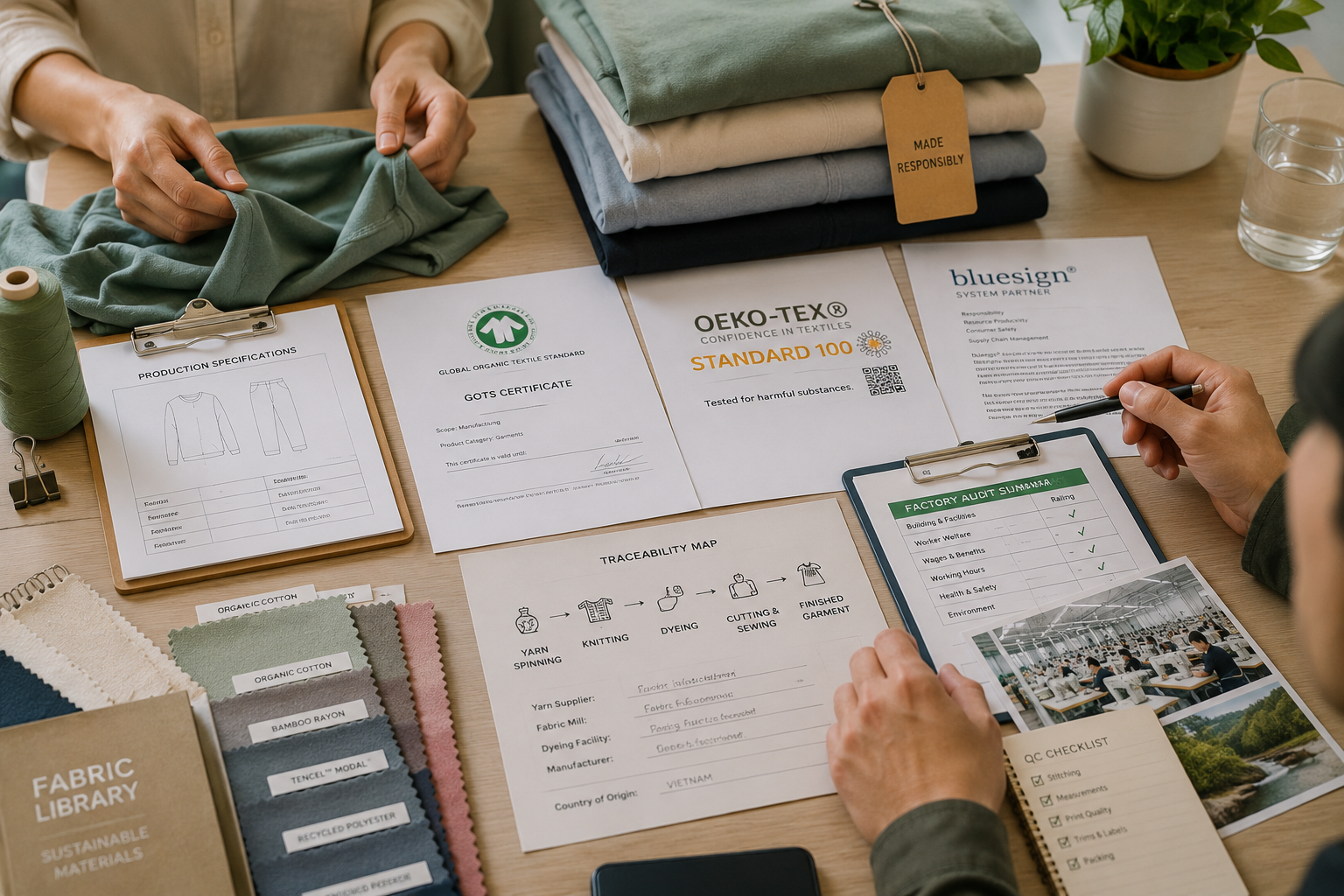
Before you commit to any Vietnam manufacturer, ask for these in writing.
- GOTS: organic cotton, processed to organic standards through the supply chain
- OEKO-TEX Standard 100: the fabric has been tested free of harmful substances
- bluesign: cleaner, safer chemical and water processing
- CPSIA test reports: for children's apparel sold in the US, flammability and safety compliance
A manufacturer who can produce these quickly is one who lives by them. A manufacturer who stalls is telling you something.
The duty advantage, where your fabric qualifies
If you are importing into Canada, Vietnam carries a structural advantage. Our full guide to finding a clothing manufacturer for Canadian brands covers how the three sourcing options compare on cost, duty, and compliance. As a CPTPP member, qualifying Vietnamese apparel can enter Canada at a 0% duty rate, against the Most Favored Nation duties of up to 18% that most apparel from China faces. The one condition is the CPTPP yarn-forward rule of origin, which generally requires the yarn and fabric to originate within member countries. Whether a given garment qualifies depends on where its fabric comes from, so confirm with your manufacturer which of your fabrics meet the rule before you build the duty saving into your pricing.
Working with Tobimax in Vietnam
Tobimax is a family-owned, female-led ethical garment manufacturer, in operation since 1988 across two generations, with factories in Vietnam and China. We are GOTS, OEKO-TEX Standard 100, and bluesign certified. We are vertically integrated from raw-material sourcing through screen printing, with a curated materials library that includes organic cotton, bamboo rayon, Tencel rayon, modal rayon, recycled polyester from clear plastic water bottles, and our botanical rayons (eucalyptus and lemon, lavender, and mint). We run from MOQ 400 per style with honest pricing, and the brands we partner with (Whistle & Flute, Jax & Lennon, LS among them) became partners because they wanted a maker who treats them as an extension of the family rather than an order number.
FAQ
What makes a Vietnam clothing manufacturer ethical?
Documented fair wages, safe and audited facilities, certified materials such as GOTS and OEKO-TEX, and real traceability of where the yarn and fabric come from. Ethical is proven through evidence, not asserted through language.
Can a small brand work with a Vietnam manufacturer at low MOQ?
Yes. The right partner runs a low minimum order quantity, often a few hundred units per style and colourway, so a small or growing brand can test the market and reorder what works. Tobimax runs from MOQ 400 per style.
Do Vietnam-made clothes enter Canada duty-free?
They can. As a CPTPP member, qualifying Vietnamese apparel can enter Canada at 0% duty, versus MFN duties up to 18% on most apparel from China. Qualification depends on the CPTPP yarn-forward rule of origin, so confirm which of your fabrics qualify.
What certifications should I ask a Vietnam manufacturer for?
GOTS for organic cotton, OEKO-TEX Standard 100 for fabric safety, bluesign for cleaner processing, and CPSIA test reports for children's apparel sold in the US.