
UV-Protective School Uniforms: The Australian Standard Reaching US Schools
The Australian benchmark
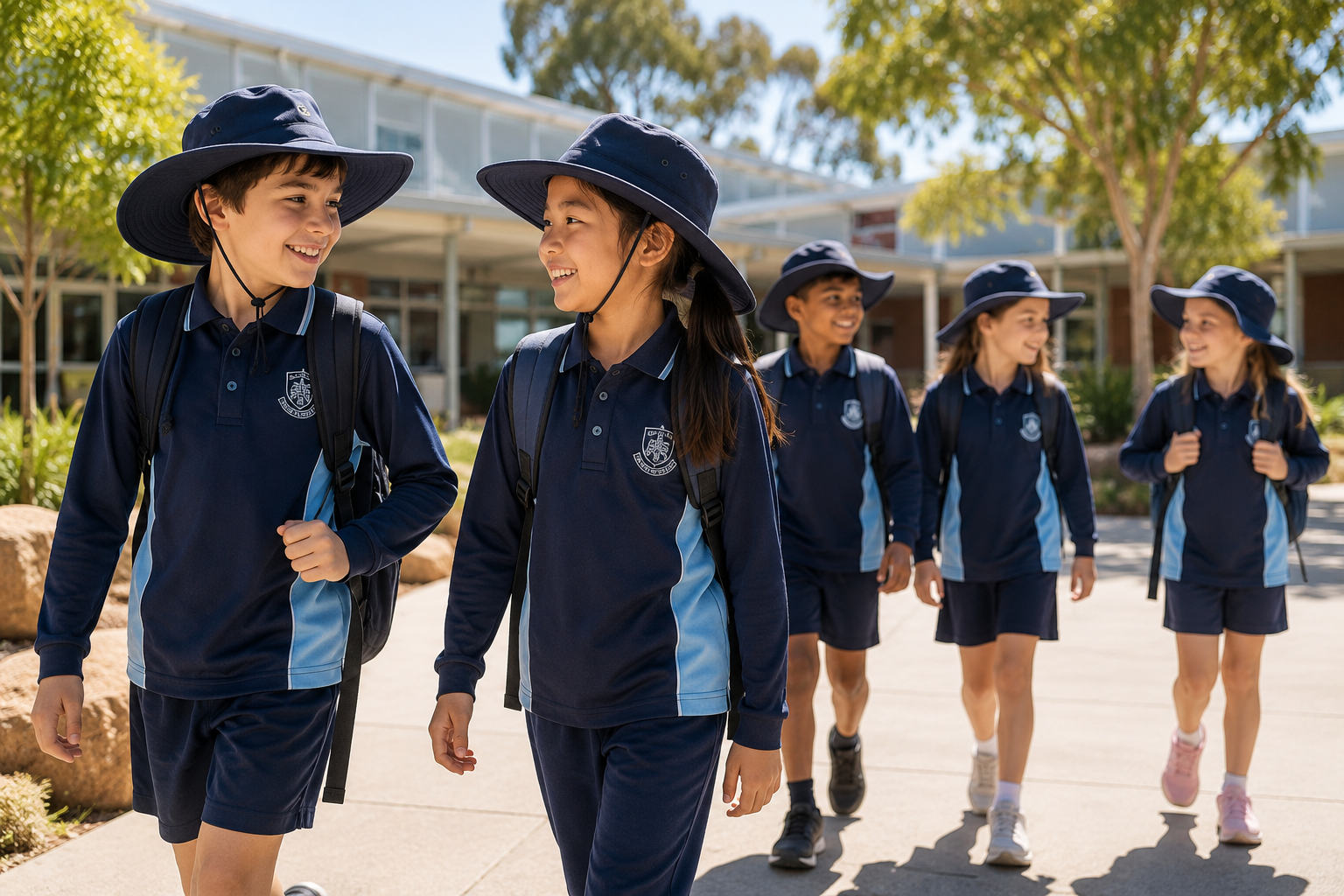
Australia has the highest skin cancer rate in the world. Two in three Australians will be diagnosed with skin cancer by age 70. Australian schools responded decades ago with the SunSmart programme, which mandates wide-brim hats outdoors, "no hat, play in the shade" policies, and UPF-rated uniforms for most primary schools and outdoor sports programmes.
The Australian school uniform standard is not a single fabric. It's a system: long sleeves where practical, high necklines on polos, UPF 50+ rated outdoor-wear fabrics, and hats designed to meet AS/NZS 4399 (the Australian sun protection standard). Schools renew uniform contracts every 3 to 5 years and the UV criteria sit alongside fit, durability, and cost.
Why US schools are starting to ask
Three drivers pulling US school programmes toward the Australian standard:
Climate shift. Average UV index readings across the US Sun Belt have risen meaningfully over the past two decades. Texas, Florida, Arizona, and California school districts are now operating in UV environments closer to coastal Queensland than to Pacific Northwest baseline.
Parent demand. Skin cancer prevention awareness has moved upstream. Parents who use UPF-rated swim shirts on family vacations expect the same protection in everyday school wear, especially for outdoor PE, recess, and field trips.
District liability framing. A growing number of school district risk assessments treat UV exposure as part of the duty-of-care conversation. Districts that mandate sunscreen application policies are the natural next adopters of UPF-rated uniform requirements.
What UPF actually means
UPF (Ultraviolet Protection Factor) measures how much UV radiation a fabric blocks. It's the textile equivalent of SPF for sunscreen, but on a different scale.
| UPF rating | UV transmission | Classification |
|---|---|---|
| UPF 15 to 24 | 1/15 to 1/24 transmits | Good |
| UPF 25 to 39 | 1/25 to 1/39 transmits | Very Good |
| UPF 50+ | Less than 1/50 transmits (98%+ blocked) | Excellent |
UPF 50+ is the standard most child-facing programmes target. The "+" is because anything above 50 is considered statistically indistinguishable from 50.
Which fabrics achieve UPF 50+ (and which need treatment)
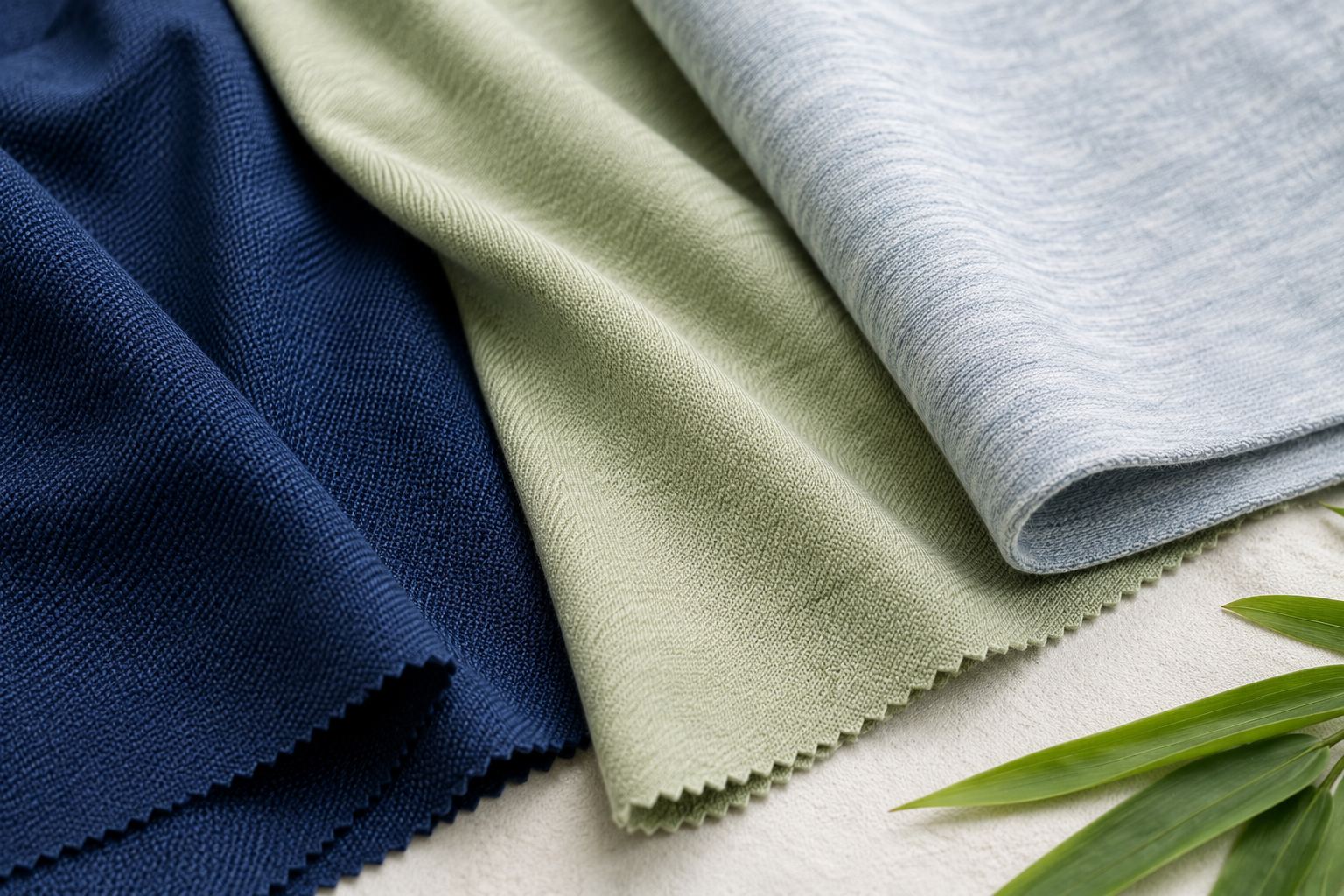
UPF performance depends on three factors: fibre type, weave density, and any UV-absorbing treatment applied.
Naturally UPF 50+ fabrics (no treatment needed):
Densely woven polyester (the standard for athletic UV wear)
Tightly knit bamboo rayon (Tobimax's bamboo rayon carries embedded UV protection per the fibre structure)
Tencel lyocell at suitable GSM
Fabrics that need UV treatment to reach UPF 50+:
Cotton (untreated cotton typically rates UPF 5 to 10)
Lightweight blends
Open-weave knits
Fabrics that hold UPF rating through laundering:
Inherent UV protection (from fibre/weave) holds for the garment's lifetime
Topical UV treatments typically hold for 20 to 40 washes before degrading
For school uniform programmes, inherent UV protection is the safer specification. A topical treatment that wears off after one school year is a renewal liability.
How to spec UV protection in a uniform program tech pack

Three lines to include in any uniform-programme tech pack where UV protection is required:
UPF rating: specify minimum UPF 50+ tested per AATCC 183 (US standard) or AS/NZS 4399 (Australian standard)
Test report requirement: require independent lab test reports per fabric lot, not factory-issued certificates
Wash durability: specify minimum 50-wash retention of UPF rating for inherent protection, or disclose if topical treatment is used
Tobimax's UV-rated uniform capability
Tobimax is a school uniform manufacturer producing UV-protective uniform programmes at UPF 30 and UPF 50+ (the two most-specified ratings), using inherent-UV fabrics (bamboo rayon, Tencel lyocell, and densely woven polyester blends) at MOQ 400 units per style and colourway. UPF testing is conducted by SGS to the AATCC 183 standard, with reports provided per production lot. Lead time is 10 to 12 weeks from approved sample.
Talk to Tobimax about UV-rated school uniforms
If you're a procurement coordinator, head of school, or district uniform programme manager evaluating a school uniform manufacturer for your next uniform cycle, [contact our team](/contact) to discuss your project. Tobimax is a family-owned ethical garment manufacturer with 30 years of low MOQ uniform production (400 units per style), factories in Vietnam and China, and UPF-rated fabric capability across bamboo rayon, Tencel lyocell, and recycled polyester. We'll share our Partner Profile, UPF test report samples, and confirm whether your uniform cycle fits our production calendar.
FAQ
What does UPF 50+ mean for school uniforms?
UPF 50+ means the fabric blocks 98% or more of UV radiation. It's the highest classification in textile UV protection, equivalent to the protection offered by SPF 50 sunscreen but measured on fabric. For school uniforms worn outdoors during PE, recess, and sport, UPF 50+ is the standard most child-facing programmes target.
Do US schools require UV-protective uniforms?
Not federally, and not yet broadly at the state level. The trend is school-district by school-district, with Sun Belt districts adopting first. Parent demand and district liability assessments are the leading drivers. Australian schools have mandated UPF-rated uniforms for two decades, which is the benchmark US schools increasingly reference.
Which fabrics provide UPF 50+ without treatment?
Densely woven polyester, tightly knit bamboo rayon, and Tencel lyocell at appropriate GSM all reach UPF 50+ without topical UV treatments. Untreated cotton typically rates only UPF 5 to 10 and requires UV-absorbing treatment to reach the 50+ threshold.
Does UPF rating wash out?
Inherent UV protection (built into the fibre and weave) holds for the garment's lifetime. Topical UV treatments typically hold for 20 to 40 washes before degrading. For school uniform programmes, inherent UV protection is the more durable specification.
What's the MOQ for UV-rated school uniforms at Tobimax?
Tobimax's MOQ for UV-rated school uniforms starts at 400 units per style and colourway. Lead time is 10 to 12 weeks from approved sample. UPF testing reports are provided per production lot from SGS, tested to the AATCC 183 standard, at UPF 30 or UPF 50+ depending on programme spec.