Private Label Clothing Manufacturer: How It Works, From a Factory
A private label clothing manufacturer makes garments to your design and specs, then ships them under your brand name, with your labels and your packaging. You own the product and the brand. Good results depend on what you send first, and on knowing the real minimums and timelines before you plan a launch.
I am Tanya Lee, VP at Tobimax Textiles. We have made garments since 1988, and we are two generations strong. This guide is the version we wish every founder read first.
What a private label clothing manufacturer does
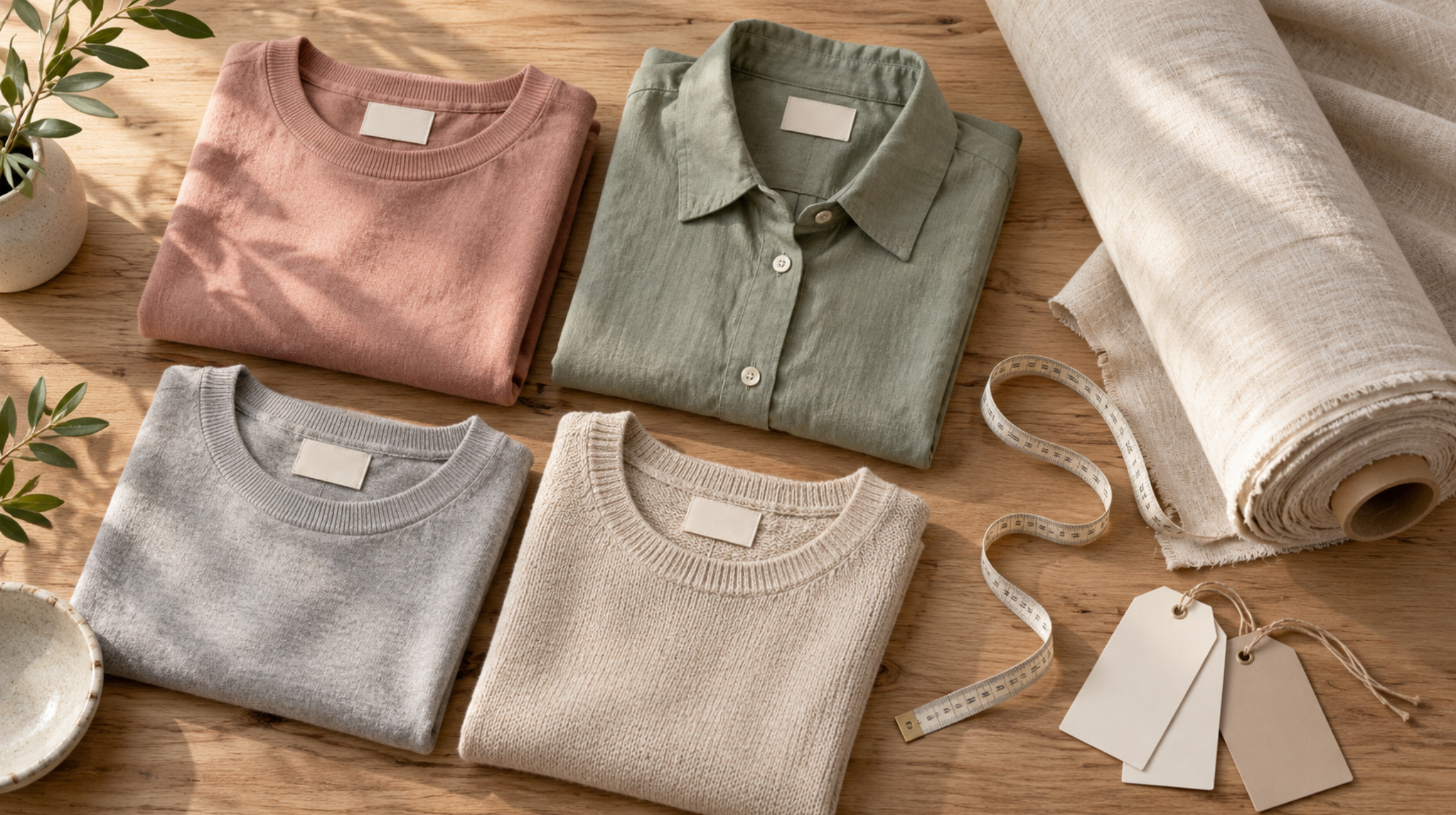
Private label means a third party factory makes garments to your own design and specifications, and you sell them under your own labels. Your logo is on the neck label, and the hangtags and polybags are yours.
In practice, a private label manufacturer (sometimes called a cut and sew manufacturer) handles some or all of these.
Turning your design into a production ready spec, or working from the tech pack you already have
Sourcing fabric and trims, or developing them to your requirements
Pattern making, pattern grading and sampling
Bulk cutting, sewing, finishing and quality checks
Attaching your labels, packing to your instructions and preparing the shipment
At Tobimax we make children's sleepwear (pajamas, sleep sacks, rompers), marathon and event merchandise (custom t-shirts, UV jackets, hats, finisher gear), and school and university uniforms (polos, pants, skirts, outerwear), plus activewear, lifestyle casual wear and maternity. Our design support covers tech pack development, pattern grading, fabric selection guidance and print or embroidery artwork preparation, and we can work from your designs or start from scratch.
Private label vs white label vs ODM vs CMT
These four terms get mixed up, and the difference decides who owns the design and who buys the fabric.
Private label. Garments made to your own design and spec by a third party factory, sold under your labels. You control fit, fabric and details.
White label. An existing or stock design that the seller rebrands with its own label. Faster, but the same garment may be sold by other brands.
ODM (original design manufacturing). The factory's own designs, offered to brands to rebrand. You choose from their range rather than bringing your own.
CMT (cut, make, trim). You supply the fabric and trims, and the factory cuts, sews and finishes. You carry the fabric sourcing risk. Our guide to what CMT means in garment manufacturing covers it in more depth.
If you want a product nobody else sells, private label is the model.
Why founders get stuck (the problem we see from the factory side)
Here is the pattern we see most often. A founder searching for a private label clothing manufacturer finds service pages that promise everything and lists of factories with no detail on how any of them work.
Neither tells the founder what the factory needs from them. So the founder sends a short email with a mood board and a one line question about price. Three factories reply with three quotes built on three different assumptions about fabric, sizing and trims. None of the quotes can be compared.
Then the problems stack up.
A sample gets approved, but the spec behind it was never written down, so bulk does not match.
The minimum quoted was per style, but the founder planned for it per order, and the colour plan doubles the commitment.
The launch date was set around a production time that did not count fabric, so it slips.
It is a gap in information, and it is fixable.
How private label manufacturing works, step by step
1. Brief and tech pack
Everything starts with a clear spec. A tech pack lists measurements, fabric, trims, construction, colours and labelling for each style. If you are new to it, read what a tech pack is and what goes in one. A good tech pack is the single biggest reason quotes become comparable.
If you do not have one, our Tech Pack Studio prepares them. The Development Pack is $800 and the Production Tech Pack is $1,500. The fee is not credited against a production order, and the tech pack is yours. It is a neutral spec with no company names or branding, so you can produce it with us or with any factory.
2. Fabric and trims
We work with GOTS organic cotton, bamboo rayon by both the closed loop lyocell and open loop viscose routes, rPET made from Taiwan post consumer bottles, and fabric with OEKO-TEX Standard 100 certification on the finished fabric. Trims include zips, buttons, elastics, thread and your woven or printed labels.
3. Sampling and approval
Sampling is where your spec becomes a physical garment. Our sampling fee is $95 per prototype, which includes 1 revision. Each round takes about 3 weeks, and it takes about 2 months to reach bulk ready. Approve the sample in writing, against the tech pack, so the factory and your team agree on what bulk must match.
4. Bulk production
Bulk is the full order. At Tobimax, bulk production takes 60 days from the approved sample, plus about 6 weeks if fabric is not in stock. Our payment terms are a 30% deposit at production start, with the balance before shipment.
5. Labels, packing and shipment
Your neck labels, care labels, hangtags and packing all go on at the factory. Agree on packing instructions and shipping terms early. Our FOB quotes name the actual port of loading, so you know exactly where your freight forwarder takes over.
A note on labels, because private label means your name is on them. In the US, the Federal Trade Commission's rules require textile products to carry fibre content and country of origin labels under the Textile Fiber Products Identification Act (16 CFR 303), and a permanent care label under the Care Labeling Rule (16 CFR 423). The label must also identify the company, by name or with an RN number. Check the FTC's guidance for your products before you order labels.
Private label MOQs: how minimums really work
Minimum order quantity (MOQ) is the smallest run a factory will produce. Here are the actual rules we work to, because the details change the size of your first order.
China factory: 400 units per style.
Vietnam factory: 3,000 units per style, for high volume programs only.
Collection flex: if you order a full range, we accept under 400 per style, with a hard floor of 200 per item.
Colour split: if you order more than 2 styles, you can split each style into 2 colours of 200. Otherwise, the minimum is 400 per colour.
Fabric only orders: 500 metres minimum.
A worked example. Say you order 3 styles, each in 2 colours. Because you ordered more than 2 styles, each style can be 200 in one colour and 200 in the other. If you ordered only 2 styles in 2 colours, each colour would need 400.
For more on how minimums and shipping terms fit together, see our guide to MOQ and FOB meaning in garments.
How long it takes (and why fabric changes the date)
This is where most launch plans go wrong.
Sampling: about 3 weeks per round, and about 2 months to bulk ready.
Fabric production: about 6 more weeks when the fabric is not in stock.
Bulk production: 60 days from the approved sample. This is garment production only.
Shipping: on top of all of the above.
The 60 days is not goods in hand. If your fabric has to be made, add about 6 weeks. Then add transit to your warehouse. Plan your launch date from the end of that chain, not from the day you approve a sample.
What it costs to get started
We do not publish unit prices, because they depend on fabric, construction and quantity, and a number without your spec would mislead you. What we can tell you is what the first steps cost, with honest pricing.
Sampling: $95 per prototype, including 1 revision.
Tech pack, if you need one: $800 Development Pack or $1,500 Production Tech Pack, not credited against an order.
Production payment: 30% deposit at production start, balance before shipment.
Your unit price comes from the quote, and the quote is only as accurate as the spec you send.
How to choose a private label clothing manufacturer (checklist)
Before you sign with anyone, ask for proof instead of promises.
Certifications you can check. Ask for the certificates behind every claim, such as GOTS for organic cotton, OEKO-TEX Standard 100 for finished fabric and bluesign for facilities. Our certifications page lists ours.
Real minimums in writing. Per style, per colour, and what happens with a collection.
A timeline that counts fabric. If a factory quotes production time without asking about fabric stock, ask again.
Who owns the tech pack and the design. Get it in writing.
Payment terms in writing. Deposit, balance and when each is due.
An FOB quote that names a port. If it does not, you cannot compare freight costs.
Testing. Ask who tests the product. Our compliance testing runs through Intertek and SGS.
Then send every shortlisted factory the same package.
Target styles and a tech pack, or reference garments
Size range
Fabric, or a reference fabric
Quantities per style and per colour
Target price
Timeline and launch date
The market you sell into (for labelling and compliance)
If you are at the start, our guide to finding a small batch clothing manufacturer as a startup goes further.
The benefits follow. Your quotes become comparable. You need fewer sample rounds. Your launch date holds because fabric was counted. You own your design. And you choose a manufacturer on proof, not on a slogan.
FAQ
What is the minimum order for private label clothing?
It depends on the factory. At Tobimax it is 400 units per style from our China factory, and 3,000 units per style from our Vietnam factory for high volume programs only. A full collection can go under 400 per style, with a hard floor of 200 per item. Fabric only orders start at 500 metres.
How much does it cost to start a private label clothing line?
Your first costs are sampling and, if you need one, a tech pack. Our sampling is $95 per prototype with 1 revision. Tech packs are $800 (Development) or $1,500 (Production). For bulk, we take a 30% deposit at production start and the balance before shipment. Unit price comes from your quote.
What is the difference between private label and white label clothing?
Private label is made to your own design and spec, then sold under your labels. White label is an existing or stock design that you rebrand with your label, which means other brands may sell the same garment.
Do I own my designs with a private label manufacturer?
You should, and you should confirm it in writing with any factory. Tech packs prepared by our Tech Pack Studio belong to you, and you can produce them with us or with any other factory.
Can an overseas private label manufacturer work with a new brand?
Yes. We work with first production runs as well as with companies producing 50,000+ units per season. Our HQ is in Taipei, with factories in China and Vietnam and a sales office in Mexico City. With collection flex, a full range can go under 400 per style.
Next step
If you have a style, a sketch or a tech pack, request a quote. Send what you have, along with quantities per style and colour and your target launch date, and we will respond within two business days.