
Small-Batch Clothing Manufacturing: Local vs Overseas for US and Canada Brands
Why "clothing manufacturer near me" rarely ends the search
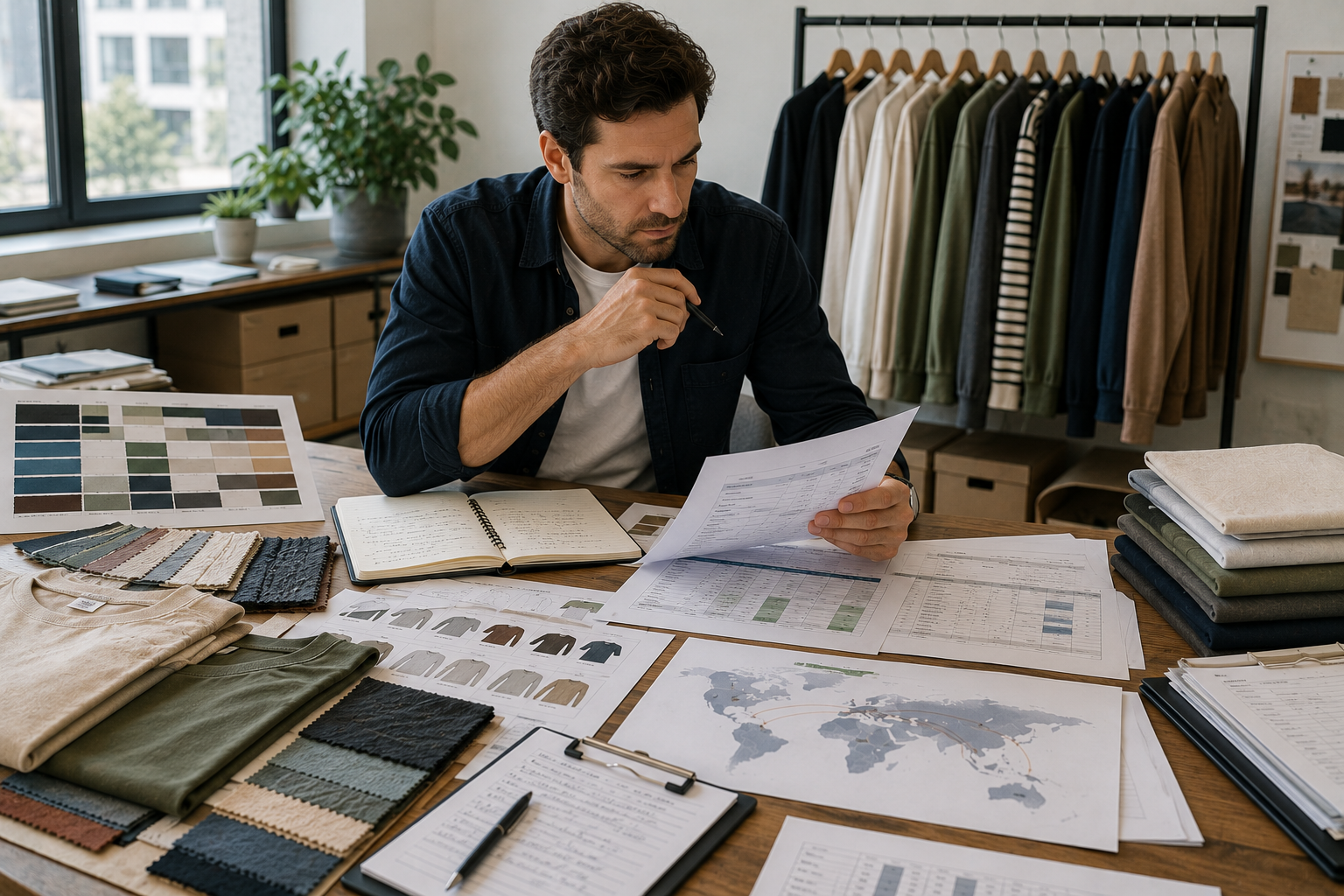
Most brand founders start the same way, typing "clothing manufacturer near me" and hoping for a factory down the road. What they usually find is a short list of local cut-and-sew shops with high minimums, a narrow fabric range, and a long waitlist. Local is not wrong, it is just one of two real options, and the right choice depends on your volumes, your fabric, and the story your brand needs to tell. This is the honest comparison.
Option one, a local cut-and-sew shop
A local shop has genuine strengths. You can visit in person, the supply chain is short, and a "made in the USA" or "made in Canada" label carries real weight with certain customers.
The tradeoffs are minimums, fabric, and cost. Local shops often need higher per-style runs to be worth their setup, the domestic fabric library is narrower, and the landed cost is higher, which your retail price has to absorb. Local works best when your customer is paying specifically for the domestic story, and less well when you are competing on shelf price or you need a specialty fabric.
Option two, a low-MOQ overseas partner
The other option is an overseas manufacturer who runs genuinely low minimums. The myth is that overseas means enormous orders. The reality is that the right partner will run a few hundred units per style, with a deep fabric library and the certifications retail buyers ask for.
The tradeoffs are distance and lead time. You are not driving to the factory, so the relationship and the communication matter more, and ocean freight adds weeks to the calendar. A good partner closes that gap with a clear sampling process, honest pricing, and documentation you can show a buyer.
The comparison that actually matters
| Factor | Local cut-and-sew shop | Low-MOQ overseas partner |
|---|---|---|
| Minimum order per style | Often higher to justify setup | A few hundred units (Tobimax from 400) |
| Fabric library | Narrower, domestic | Broad: organic cotton, bamboo, Tencel, recycled polyester |
| Certifications | Varies | GOTS, OEKO-TEX Standard 100, bluesign available |
| Landed cost | Higher | Lower, even with freight |
| Lead time | Shorter | Longer, ocean freight adds weeks |
| The story | Made local | Ethical, sustainable, certified supply chain |
How to decide which fits your brand
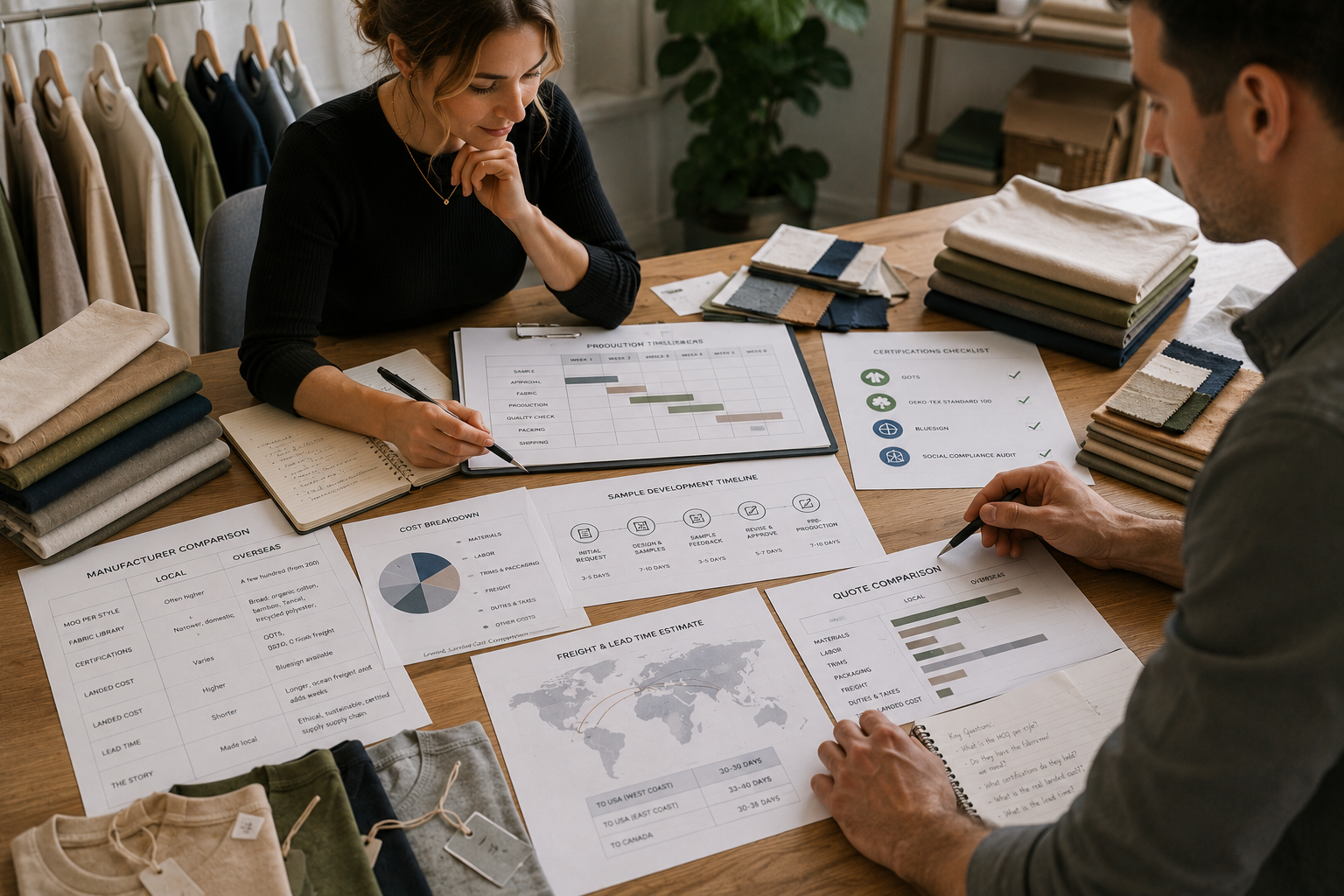
Ask three questions. Is my customer paying specifically for a made-local story, or for the product. What is my volume per style, a few hundred or a few thousand. Do my retail buyers require certifications and a specialty fabric I cannot get locally. If the answers point to low minimums, certified fabric, and competitive landed cost, a low-MOQ overseas partner usually wins. If they point to the local story above all, stay local. For a deeper walk-through of starting small, see our guide on finding a small-batch manufacturer as a startup, and on how to check any partner, our buyer's checklist for vetting a manufacturer.
Where Tobimax fits
Tobimax is a family-owned, female-led ethical garment manufacturer, in operation since 1988 across two generations, with factories in Vietnam and China. We run from MOQ 400 per style with honest pricing, a fabric library spanning organic cotton, bamboo rayon, Tencel, modal, and recycled polyester, and GOTS, OEKO-TEX Standard 100, and bluesign certification. We work with US and Canadian brands (Whistle & Flute, Jax & Lennon, LS among them) who wanted low minimums and certified fabric without the local-shop ceiling. If you are weighing local against overseas, request a quote (link to /quote) and we will show you the real numbers for your run.
FAQ
Is it cheaper to manufacture clothing locally or overseas?
For most brands the landed cost of a low-MOQ overseas partner is lower than a domestic cut-and-sew shop, even after freight, because overseas labour and fabric costs are lower. Local can still be the right choice when the customer is paying specifically for a made-local story.
What is the minimum order for small-batch clothing manufacturing?
It varies. Local shops often need higher per-style runs, while a low-MOQ overseas partner can run a few hundred units per style and colourway. Tobimax runs from MOQ 400 per style.
Can overseas manufacturers do small batches?
Yes. The myth that overseas means huge minimums is outdated. The right overseas partner runs low MOQs with a deep fabric library and full certifications, which many local shops cannot match.
What should I look for when comparing manufacturers?
Minimum order per style, fabric library, certifications (GOTS, OEKO-TEX, bluesign), landed cost including freight, lead time, and how clearly they communicate. The cheapest per-unit number is rarely the best partner.