
Recycled Polyester (rPET) for Event Merch: A Manufacturer's Honest Take
What recycled polyester actually is
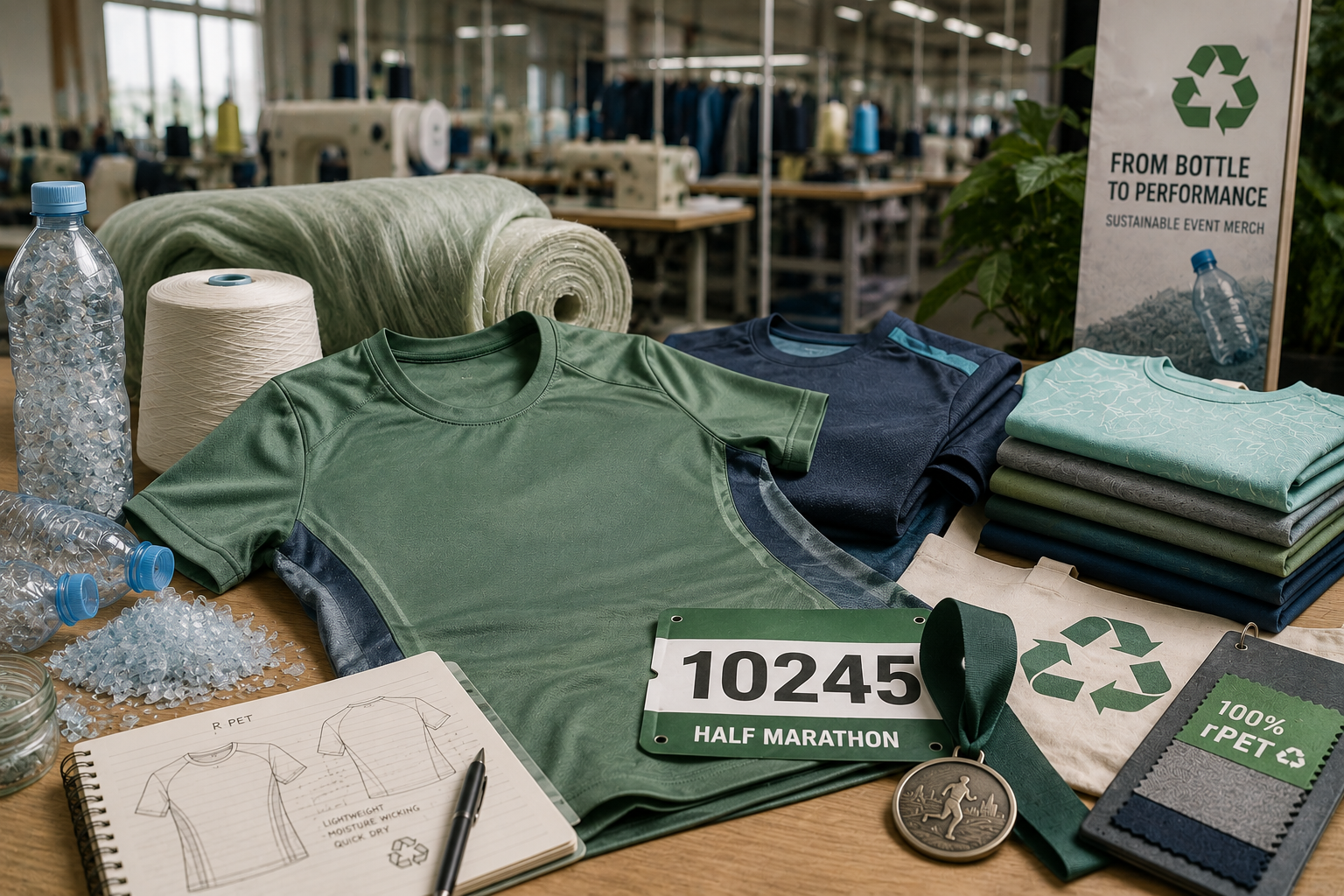
Recycled polyester (rPET) is a fibre made from post-consumer plastic waste, most commonly PET bottles, processed through one of two routes. Mechanical recycling shreds the plastic, melts it, and re-extrudes the polymer into yarn. Chemical recycling breaks the polymer back into its monomers and re-polymerises, which produces a higher-grade fibre indistinguishable from virgin polyester.
The result is the same molecular structure as virgin polyester, with the same performance characteristics. The difference sits upstream in the carbon footprint, the petroleum demand, and (depending on the recycler) the labour and water profile of the process.
Tobimax's rPET, and where the plastic comes from
As a marathon merchandise manufacturer producing for race series, charity events, and athletic team programmes, Tobimax's recycled polyester is sourced from clear plastic water bottles diverted from landfills in Taiwan. The proximity to the Taipei HQ matters for two reasons. First, supply consistency. We can audit our recycler relationships in person rather than relying on certificates alone. Second, the carbon math improves when the recycled feedstock doesn't cross an ocean before it becomes yarn.
What rPET buys you, with the numbers
The honest case for rPET, with industry data:
59% less energy required versus virgin polyester production
32% lower CO2 emissions versus virgin polyester
Diversion of post-consumer plastic from landfill or ocean
Identical performance characteristics (moisture wicking, dry time, durability, print compatibility) to virgin polyester
Compatible with most performance finishes (anti-microbial, UV protection, water repellent)
For event merch specifically, the practical advantages:
Holds sublimation and screen prints as cleanly as virgin polyester
Lighter weight per yard for the same hand feel, which reduces shipping cost on large event orders
Recovers from washing without the shrinkage cotton blends show
The honest tradeoffs (this is where most articles stop)
rPET is not a perfect material. Three real tradeoffs every buyer should price in.
Microplastic shedding. Polyester garments, recycled or virgin, shed microfibres in the wash. For event merch worn occasionally (race-day shirts, gala gifts) this is lower-impact than for daily-wear performance gear. Worth disclosing to your audience if your brand makes sustainability claims.
End-of-life. Once a bottle becomes a garment, the garment cannot easily go back into the bottle stream. Textile-to-textile recycling infrastructure is improving but is not yet at scale. rPET garments today still end up in landfill at end of life, just one cycle later than virgin polyester.
Greenwash risk. "Recycled polyester" as a label means a wide range of things. A 5% rPET blend with 95% virgin polyester gets to claim "made with recycled materials" in marketing. Honest brands specify the percentage on hangtags.
rPET vs virgin polyester vs organic cotton for event merch
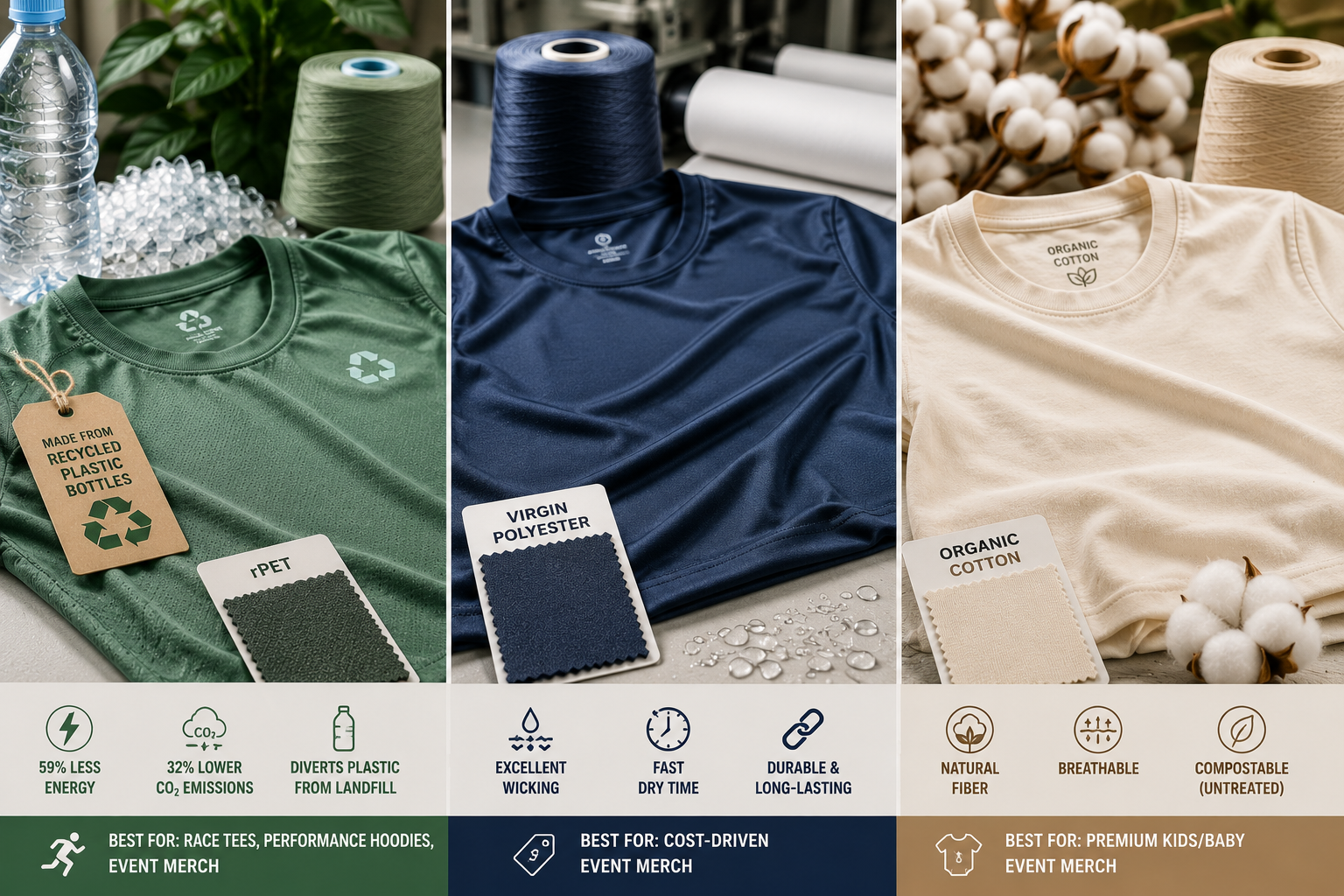
| Property | Recycled Polyester (rPET) | Virgin Polyester | Organic Cotton |
|---|---|---|---|
| Energy to produce | 59% less than virgin | Baseline | Higher (irrigation + processing) |
| CO2 emissions | 32% lower than virgin | Baseline | Variable (depends on rain-fed vs irrigated) |
| Moisture wicking | Excellent | Excellent | Poor (cotton absorbs and holds) |
| Dry time | Fast | Fast | Slow |
| Print holding | Excellent (sublimation + screen) | Excellent | Good for screen, poor for sublimation |
| Cost per unit | Slight premium over virgin | Lowest | Highest of the three |
| Microplastic shedding | Yes | Yes | None |
| End-of-life | Landfill (currently) | Landfill | Compostable (untreated) |
| Best for | Race tees, performance hoodies, event merch | Cost-driven event merch | Premium kids/baby event merch |
How to spec rPET in your tech pack

If you're moving from virgin polyester to rPET on your existing event programme, three lines to add to your tech pack:
Fibre content: specify the exact percentage of recycled content (e.g. "100% recycled polyester from post-consumer bottle stream")
Certification: require GRS (Global Recycle Standard) or RCS (Recycled Claim Standard) certificates with the order
Hangtag language: define exact hangtag claim language to avoid greenwash flags
Talk to Tobimax about rPET event programmes
If you're sourcing recycled polyester for your next race, charity event, athletic team, or branded merchandise programme, contact our team to discuss your project. As a marathon merchandise manufacturer with 30 years of family-owned production, Tobimax produces rPET event merch at low MOQ (400 units per style), with factories in Vietnam and China and Taiwan-sourced recycled feedstock. We'll share our Partner Profile, current lead times, and confirm whether your event date fits our production calendar.
FAQ
What does rPET stand for in fabric?
rPET stands for recycled polyethylene terephthalate. It's polyester fibre made from post-consumer PET plastic (commonly water bottles) rather than from petroleum feedstock. Once spun into yarn, it performs identically to virgin polyester.
Is recycled polyester actually better for the environment?
Yes, on the production-side carbon math. Industry data shows 59% less energy use and 32% lower CO2 emissions versus virgin polyester. The caveat is end-of-life. Once a bottle becomes a garment, it doesn't easily go back into the bottle stream, so the "circle" is one-and-done with current infrastructure.
Does rPET shed microplastics?
Yes. Recycled and virgin polyester both shed microfibres during washing. For event merchandise worn occasionally, this is a lower-impact category than daily-wear performance gear, but honest brands disclose this to their customers.
What's the MOQ for recycled polyester event merch?
Tobimax's MOQ for recycled polyester programmes starts at 400 units per style. For larger event programmes (1,000 to 50,000+ units), per-unit costs come down significantly. Sample lead time is 2 to 4 weeks, production 8 to 10 weeks from approved sample.
How do I verify a factory's rPET claim?
Ask for the GRS or RCS certificate with the supplier name, the recycler name upstream, and the audit date. A real rPET supply chain has paperwork two layers deep (factory + recycler). If your factory can only show their own certificate without naming the recycler, that's a flag.