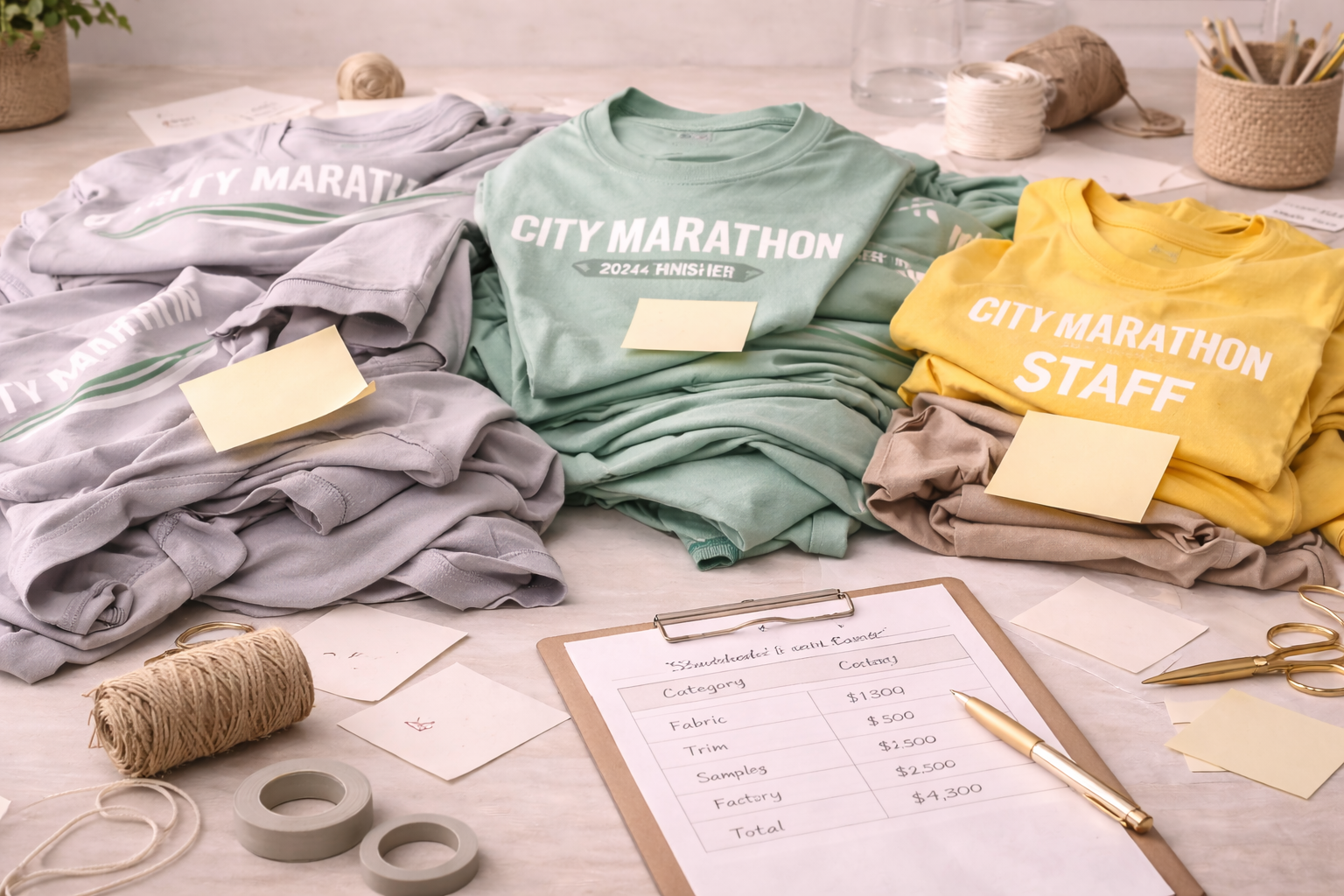
Custom Marathon Merchandise: The Race Director's Complete Planning Guide
Great race merchandise does more than check a box. It's the thing runners keep, wear for years, and post on social media. It's also the thing that makes or breaks a sponsor's perception of your event's professionalism.
But most race directors aren't apparel experts. You're juggling permits, course logistics, volunteer coordination, and a hundred other details. Merchandise planning often gets pushed to the last minute, which leads to rush fees, limited fabric options, and generic results.
This guide gives you a structured approach to planning custom marathon merchandise — from initial design to race-day distribution. We've manufactured apparel for running events of all sizes and have seen what works, what doesn't, and what race directors consistently wish they'd done differently.
Start 8 to 12 Months Before Race Day
The single most important piece of advice: start earlier than you think you need to. The ideal timeline for custom marathon merchandise is 8 to 12 months before your event.
That sounds like a lot, but here's why. Custom fabric manufacturing takes 6 to 8 weeks. Sampling and design approval take 2 to 4 weeks. Production takes 4 to 6 weeks. Shipping (if manufactured overseas) takes 3 to 5 weeks by sea. Compliance testing and quality inspection add 1 to 2 weeks.
Add those up, and you need 16 to 25 weeks of production time — roughly 4 to 6 months. Factor in revisions, sponsor logo approvals, and the inevitable delays, and starting 8 to 12 months out gives you comfortable margin.
Race directors who start 3 to 4 months before the event end up choosing from limited stock fabric options, paying rush fees, and accepting whatever their supplier can deliver on time. Those who plan ahead get custom fabrics, better pricing, and merchandise that actually reflects their event's identity.
Choosing the Right Apparel for Your Event
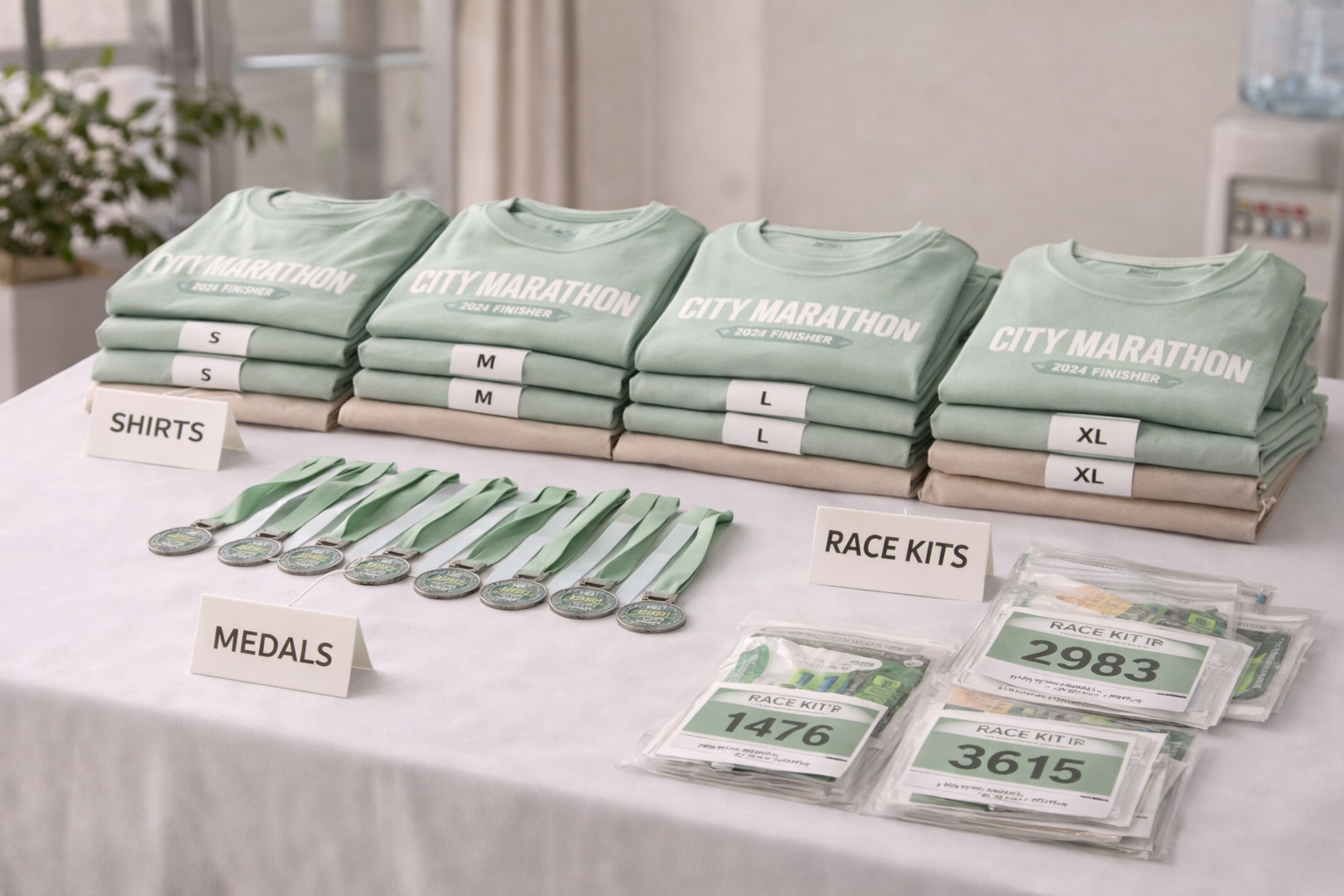
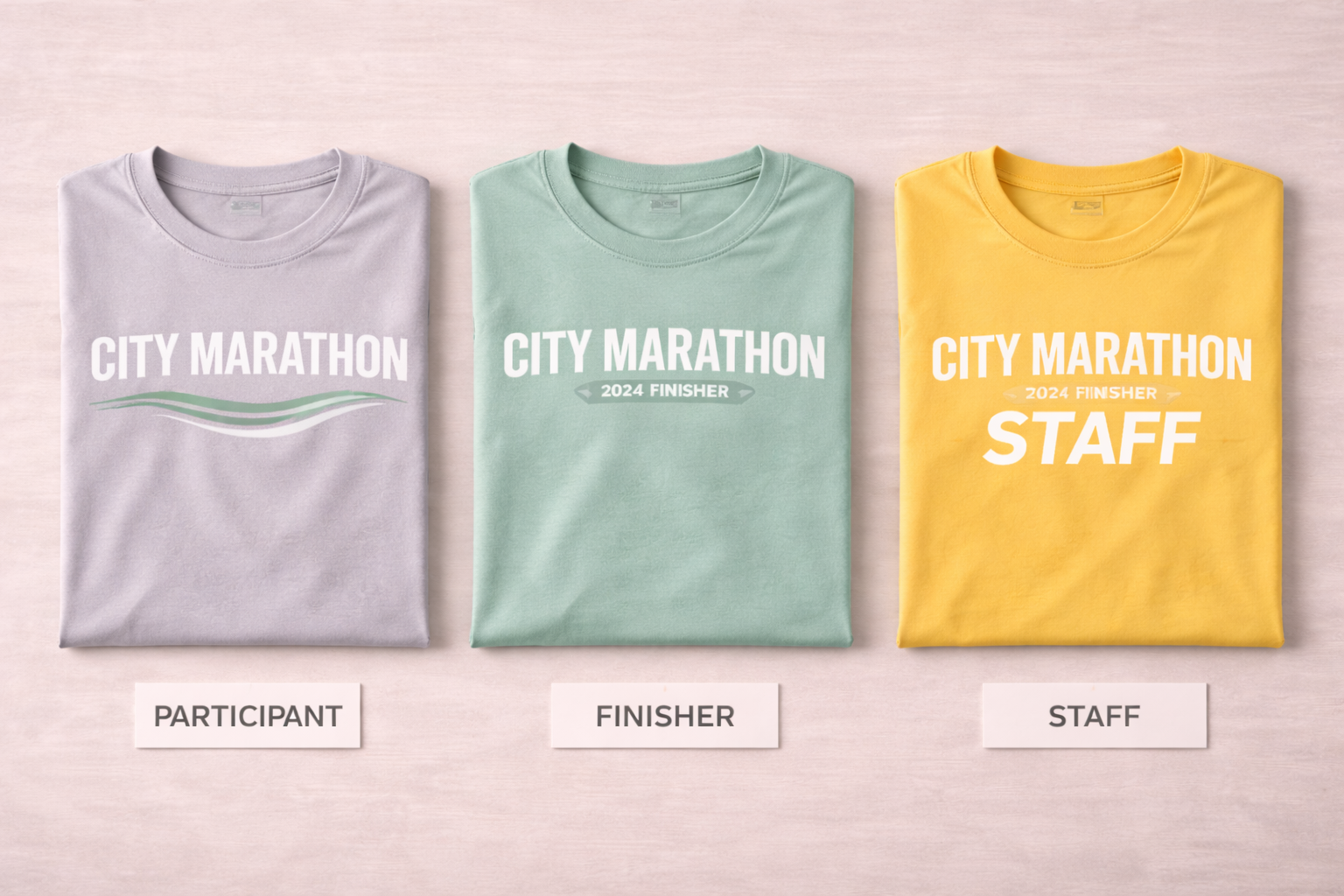
The standard marathon merchandise kit includes a participant shirt (either a tech tee or tank top, given to all registered runners), a finisher shirt or medal (for runners who complete the race), and staff and volunteer shirts (usually a different color or design from participant apparel).
Beyond the basics, many events now offer premium merchandise for sale: hoodies, jackets, long-sleeve performance shirts, and running accessories. These generate additional revenue and serve as year-round brand ambassadors for your event.
For the participant shirt, fabric choice matters more than most race directors realize. Here's what to consider.
Polyester performance fabric (moisture-wicking) is the standard for race-day shirts. It's lightweight, dries quickly, and handles sweat well. Most runners expect a tech shirt as part of their registration. Go for a minimum 130 to 150 GSM weight — anything lighter feels cheap.
Polyester/cotton blends offer a softer hand-feel than pure polyester and are popular for casual wear after the race. The trade-off is less moisture-wicking performance. These work better for 5K fun runs and casual events than for serious marathons.
Premium options like bamboo/polyester blends or recycled polyester are increasingly popular for events that want to differentiate. They feel better, have a sustainability angle, and create merchandise that runners actually want to wear outside of race day. They cost more per unit, but the perceived value — and social media visibility — is higher.
Design and Branding Considerations
Your race merchandise is a mobile billboard for your event and your sponsors. Get the design right and runners will wear your shirt for years. Get it wrong and it goes straight to the donation pile.
Principles that work: keep the design clean and wearable, not cluttered with every sponsor logo at maximum size. Put the event name and date prominently on the front. Group sponsor logos tastefully on the back or sleeve, organized by tier. Use colors that are visible during the race (for photography) and wearable afterward. Consider the design on both light and dark shirt colorways.
Sponsor logo management is where things get complicated. Major sponsors typically have strict brand guidelines about logo size, placement, and color. Build time into your schedule for sponsor approvals — this step alone can add 2 to 4 weeks if sponsors are slow to respond. Get logo files (in vector format) and placement approval in writing before you send anything to production.
For finisher shirts and premium merchandise, the design approach shifts. These items should feel like a reward and a memento — not a walking sponsor page. Runners want to show off that they finished your race. Make the finisher merchandise feel special and exclusive.
How to Choose a Manufacturing Partner
Race directors typically choose between three types of suppliers, each with trade-offs.
Print-on-demand and screen print shops are the most common choice for small to mid-size events. They buy blank garments from wholesale suppliers and print your design onto them. This is fast and simple, but you're limited to whatever blank garments are in their catalog. Customization beyond the print (custom fabric, custom cut, custom trim) isn't available.
Full-service apparel manufacturers produce the garment from scratch — fabric sourcing, cutting, sewing, printing, and finishing. This gives you complete control over fabric choice, construction quality, and design. It's the right choice for events that want premium, differentiated merchandise or for large events where the volume justifies custom production.
Promotional products companies handle everything including design, but the garment quality is typically basic. Fine for fun runs and corporate events, less suitable for serious running events where participants care about performance.
When evaluating any supplier, ask for physical samples of their work — not just photos. Feel the fabric. Check the stitching. Wash it twice. This tells you more than any sales pitch.
Budgeting for Race Merchandise
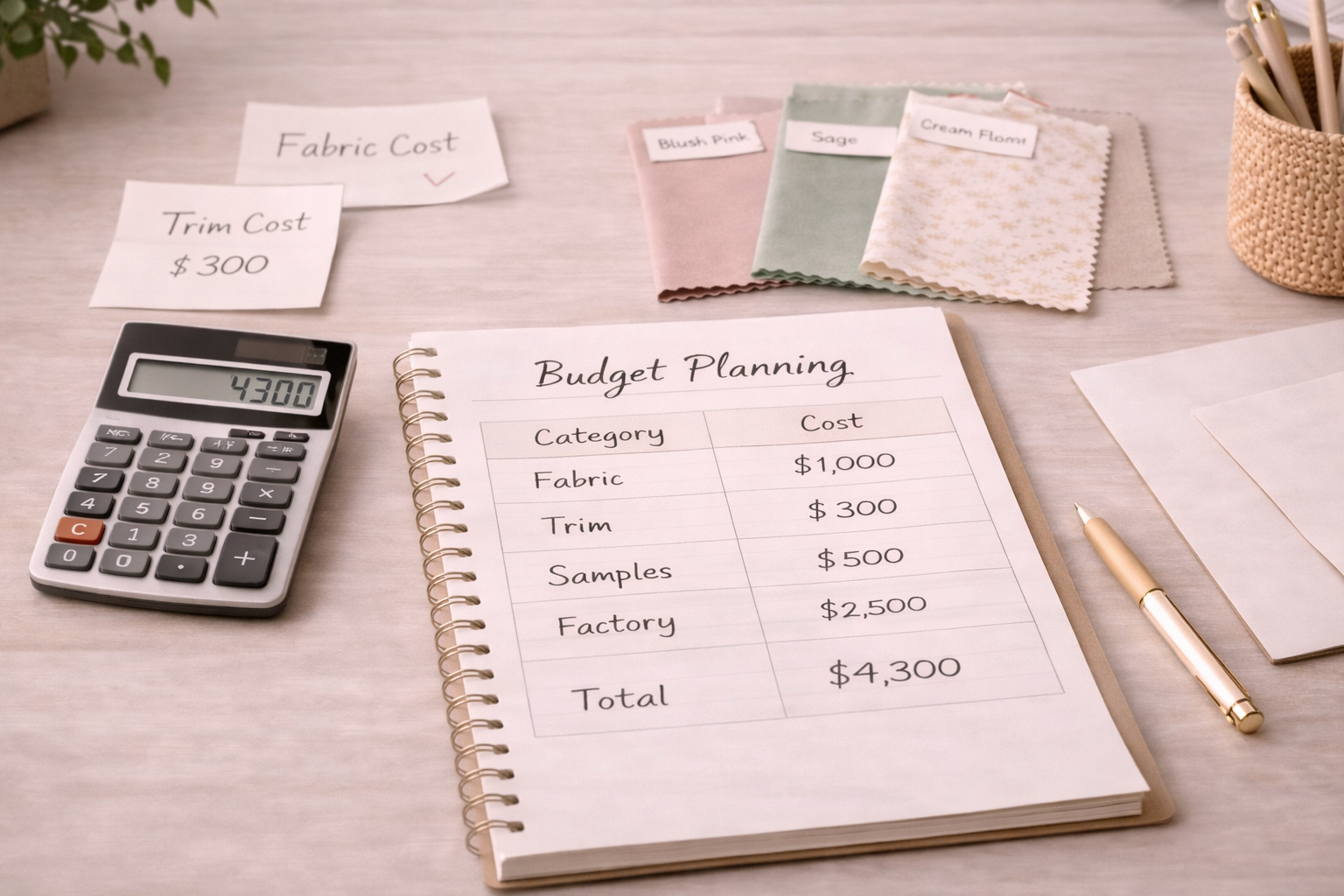
Here's a realistic cost framework for marathon merchandise, assuming custom manufacturing.
Participant tech shirts (polyester performance, custom sublimation print) typically run $5 to $9 per unit at volumes of 1,000 or more. At 500 units, expect $8 to $12. Finisher shirts cost roughly the same, sometimes slightly more if they have a different design or premium fabric. Staff and volunteer shirts are usually the same base garment in a different colorway.
Premium merchandise for sale — hoodies, jackets, long-sleeve performance shirts — runs $12 to $25 per unit wholesale, depending on the garment. These are typically sold at $35 to $65 retail, providing a healthy margin.
Design costs vary. Some manufacturers include design support; others charge $200 to $500 for custom design work. If you have a graphic designer on your team or through your event agency, you'll only need the manufacturer to create print-ready files from your artwork.
For a 2,000-runner event, a typical total merchandise budget (participant shirts, finisher shirts, staff shirts, and a small run of premium merchandise for sale) runs $15,000 to $30,000.
Production and Logistics Checklist
Use this timeline to keep your merchandise on track.
12 months out: begin conversations with manufacturers, collect sponsor logos and brand guidelines, establish your merchandise budget.
8 to 10 months out: finalize your apparel selections (fabric, style, colors), approve designs for all merchandise items, place your production order.
6 to 8 months out: approve pre-production samples, production begins.
3 to 4 months out: production complete, quality inspection, freight shipping begins (if overseas).
6 to 8 weeks out: merchandise arrives at your warehouse or distribution point. Begin sorting and packing by size.
2 to 4 weeks out: volunteer kits assembled, race-day distribution plan finalized.
Race day: merchandise distributed at packet pickup and finish line.
Common Mistakes to Avoid
Getting the size distribution wrong is the most expensive mistake race directors make. If you order 50 percent medium and 20 percent large, but your actual runners are 35 percent large and 25 percent XL, you'll have boxes of unsold mediums and unhappy runners. Use registration data to guide your size split, and if you don't have historical data, err toward larger sizes.
Underestimating the number of finisher shirts is another common issue. Not all registered runners finish, but the percentage is higher than you might think — typically 85 to 95 percent for organized marathons. Order finisher merchandise at 90 percent of your registration count to be safe.
Not ordering extras for volunteers, sponsors, VIPs, and media. Plan for an additional 5 to 10 percent beyond your registered runner count.