Modal vs Tencel vs Bamboo: A Manufacturer's Sleepwear Fabric Guide
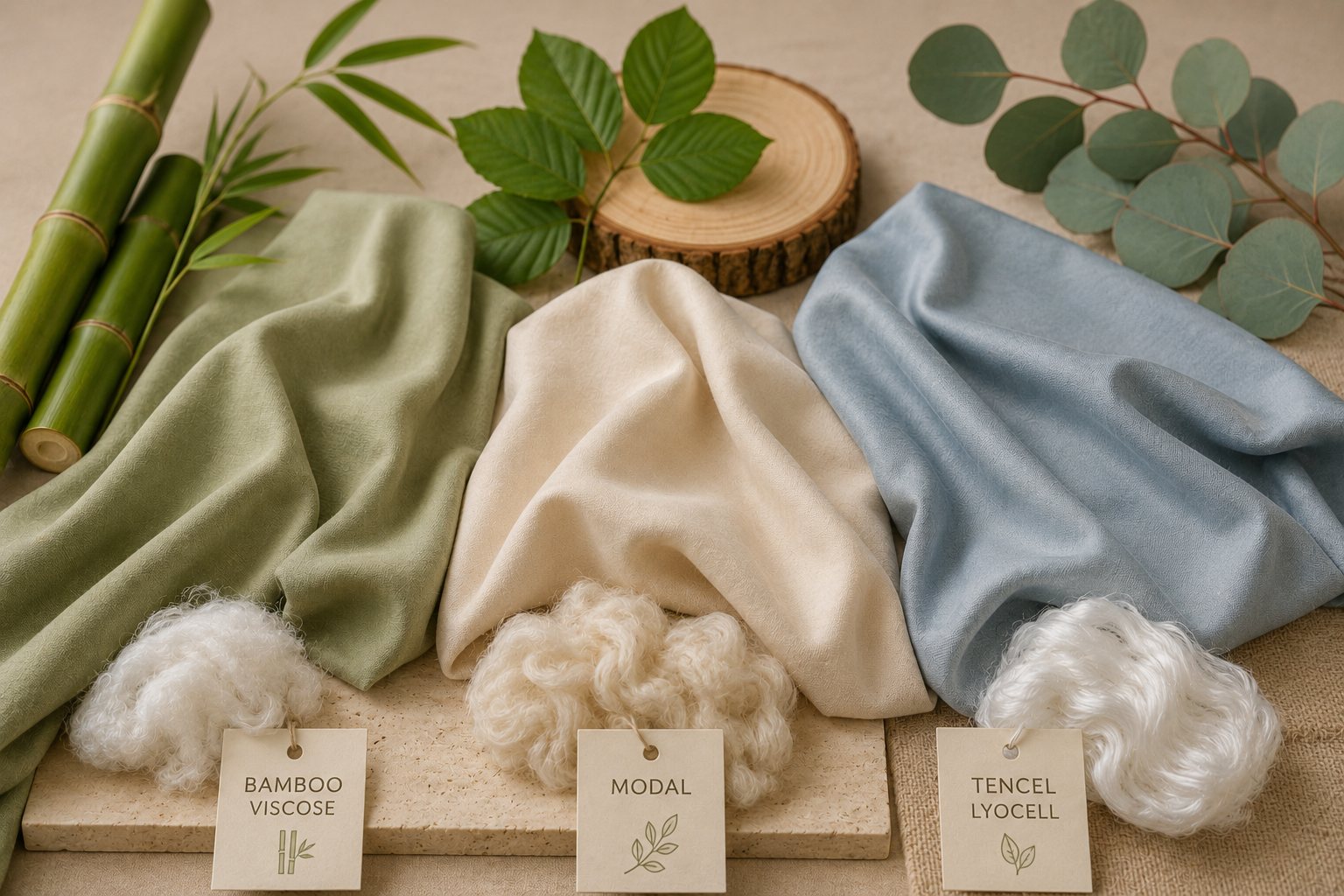
Modal and Tencel are both regenerated cellulose fibres from wood pulp. Modal comes from beech wood in a modified viscose process. Tencel is Lenzing's brand name, most often for TENCEL Lyocell, which is spun in a closed loop solvent process, but Lenzing also sells TENCEL Modal. So "Tencel" on a quote does not tell you which fibre you are buying.
That is the problem we see most with founders building a sleepwear line. A mill quote says "Tencel" or "bamboo", the price looks fine, and nobody can say exactly which fibre it is, how it will wear after repeated washing, or what the care label is allowed to say. This guide sorts it out from the factory side.
Modal vs Tencel: why the names confuse everyone
Most "modal vs Tencel" comparisons treat Tencel as a fibre. It is not. TENCEL is a Lenzing trademark that covers two different fibres:
TENCEL Lyocell, a lyocell fibre made in Lenzing's closed loop solvent process.
TENCEL Modal, a modal fibre made from beech wood in a modified viscose process.
Generic modal and lyocell can come from any producer. So "modal or Tencel?" is really two questions:
Modal vs lyocell. Two different fibres, two different processes, two different hand feels.
Generic modal vs TENCEL Modal. The same fibre type, but one carries Lenzing's brand and its documentation.
The second is what "Lenzing modal vs Tencel" is asking. Ask the mill which fibre it is, and if it is sold as TENCEL, ask for the Lenzing certification documentation. If the supplier cannot produce it, treat the fabric as generic.
What is modal?
Modal is a regenerated cellulose fibre made from beech wood pulp. It is produced in a modified version of the viscose process. Lenzing describes its TENCEL Modal process as having "high recovery rates of chemicals". That is not the lyocell closed loop, so be wary of any page that calls modal closed loop.
In our experience, modal is soft with good wash durability and colour retention. It drapes less heavily than bamboo viscose and is often blended with spandex or cotton.
You will also see micromodal on quotes, a finer version of the modal fibre.
What is Tencel (lyocell)?
Lyocell is made by dissolving cellulose in an organic solvent and spinning it into fibre. The US Federal Trade Commission rules (16 CFR 303.7) put it this way. Rayon is a manufactured fibre of regenerated cellulose, and where the cellulose is precipitated from an organic solution with no chemical intermediates formed, "the term lyocell may be used as a generic description."
TENCEL Lyocell is Lenzing's branded version, typically from wood pulp, often eucalyptus. Lenzing states that its TENCEL Lyocell process recovers 99.8% of the solvent.
Typically, lyocell feels smooth and cool to the touch, with a lighter drape than modal or bamboo viscose.
Where bamboo fits
Bamboo fabric in sleepwear is bamboo rayon. It is made from bamboo cellulose by one of two routes, the open loop viscose route or the closed loop lyocell route. We produce both at Tobimax. Typically, bamboo viscose has the heaviest, most fluid drape of the three, which is why it suits flowing pyjama silhouettes.
The name matters more than the plant. Under FTC rules, textiles made of bamboo rayon must be labelled and advertised as rayon (for example "rayon made from bamboo" or "viscose made from bamboo"), not simply "bamboo". In April 2022 the FTC announced civil penalties of $2.5M against Kohl's and $3M against Walmart over bamboo claims. Our bamboo rayon supplier guide covers the full label wording and the questions to ask a mill.
Modal vs lyocell (Tencel): side by side
Modal
Wood source: beech
Process: modified viscose process (Lenzing says "high recovery rates of chemicals" for TENCEL Modal)
Drape: medium, softer and more fluid than lyocell
Cool touch: less pronounced than lyocell
Wash durability: in our experience, holds up well through repeated washing and keeps colour
Typical sleepwear use: snug-fit kids pyjamas, everyday stretch sets, loungewear
GOTS blend share: up to 10% in a GOTS "made with organic" blend, and that 10% is shared with any spandex
Label name: modal (a rayon-family fibre under FTC rules)
Lyocell (including TENCEL Lyocell)
Wood source: wood pulp, often eucalyptus
Process: cellulose dissolved in an organic solvent and spun; Lenzing reports 99.8% solvent recovery for TENCEL Lyocell
Drape: lighter, smooth
Cool touch: pronounced, cool and smooth to the touch
Wash durability: depends heavily on yarn and knit, so wash test your sample
Typical sleepwear use: premium summer sets, women's loose nightwear, blends with merino or cotton
GOTS blend share: up to 30% in a GOTS "made with organic" blend, from certified sources
Label name: lyocell, with TENCEL added only under a Lenzing licence
Bamboo vs modal
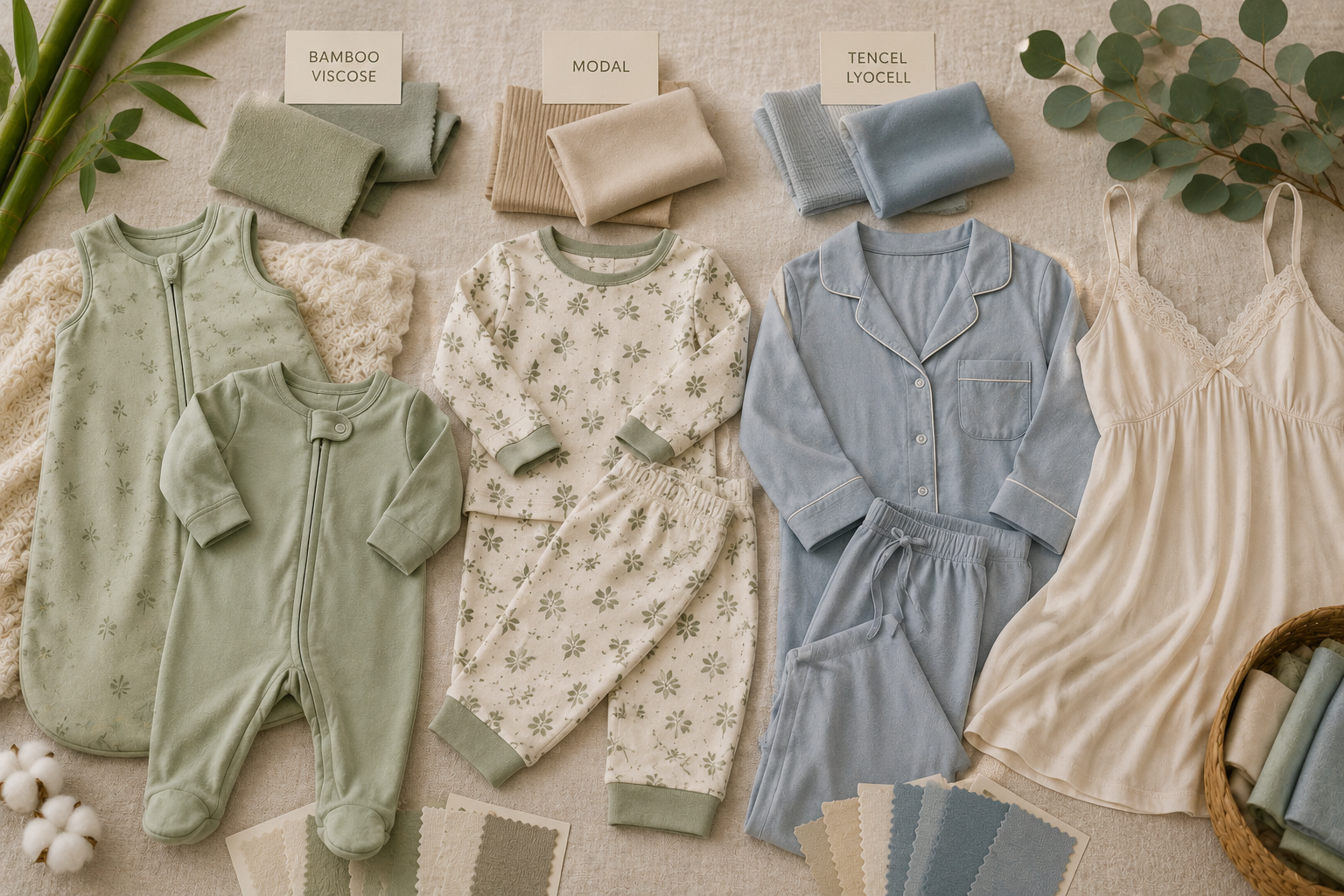
Bamboo viscose and modal are both rayon-family fibres under FTC naming, so the label rules are similar. The difference shows up in the garment. Bamboo viscose typically gives the heavier, more fluid drape that loose pyjamas need. Modal gives a little less drape but, in our experience, holds up better through wash cycles and keeps colour well.
For a kids line that gets washed constantly, modal blends are often the safer pick. For a drape-forward women's set, bamboo viscose often fits better.
Bamboo vs Tencel
This comparison is usually bamboo viscose vs TENCEL Lyocell. Bamboo viscose is the heavier, drapier, open loop option. Lyocell is cooler, smoother and lighter, and made in a closed loop process.
Note that "bamboo lyocell" also exists. It is bamboo cellulose run through the lyocell route, which is one of the two routes we produce. If a quote says "bamboo", ask which route it is before you compare prices.
How to label modal, Tencel and bamboo sleepwear
Founders often learn this only when a retailer or lab flags it. This is general guidance, not legal advice, so confirm your final label with your testing lab.
Use generic fibre names. FTC rules (16 CFR 303.7) use generic names for manufactured fibres, such as rayon and lyocell, and also refer to the generic names in the ISO 2076 standard. Modal and lyocell are rayon-family fibres under FTC rules. Ask your lab which exact name to print for your fabric.
Bamboo is labelled as rayon or viscose. Write "rayon made from bamboo" or "viscose made from bamboo", never just "bamboo". The bamboo rayon guide has the detail.
TENCEL on a label needs a licence. Lenzing's licensing rules, as summarised by the UK Fashion & Textile Association, require a product licence to use the TENCEL name on a product label, and that needs your fabric supplier's Lenzing certification number. Using TENCEL on a website or in marketing needs a separate marketing licence. Applications go through Lenzing's E-Branding Service.
The generic name still comes first. Even with a licence, the fibre composition uses the generic name, with TENCEL added as extra information. Confirm the details with Lenzing directly.
Can these fabrics be GOTS certified?
Not as organic fibres. Modal, lyocell and bamboo rayon are regenerated fibres, so they cannot be GOTS organic on their own. They can appear in a GOTS organic cotton blend, within limits.
Under GOTS 7.0, the "made with organic" grade needs at least 70% certified organic fibre. Up to 30% may be additional fibres, which can include lyocell from certified organic, recycled or sustainably certified forest sources (such as FSC or PEFC). Modal and viscose fall in a separate 10% group that also covers virgin spandex. So a stretch modal knit cannot pass as GOTS, and the "organic" grade allows only 5% non-organic fibre. This rule decides which regenerated fibre a GOTS sleepwear line can use, and at what share.
For finished fabric, OEKO-TEX Standard 100 is the usual safety certificate, and it is what we work to on finished fabric. Our guide to GOTS, OEKO-TEX and eco certifications explains what each one covers.
Which fabric for which sleepwear product
In our own quote history, bamboo is the fibre we quote most for sleepwear, then modal, then Tencel lyocell. Here is how that breaks down by product.
Sleep sacks. Bamboo viscose is the common choice for lighter, drapey sleep sacks. Lyocell suits a premium, cool-touch positioning. Modal is less common in this category.
Snug-fit children's pyjamas. Every children's sleepwear style we make is snug fit, with no flame retardants. Stretch is essential, so modal and spandex blends work well. One we have quoted is 92% modal / 8% spandex at 290 GSM. Bamboo blends also work. Compare them in our bamboo vs cotton pyjamas guide.
Women's loose nightwear. Bamboo viscose for drape-forward silhouettes, lyocell for a cooler, smoother hand.
Other blends we have quoted (fibre content only, no client names):
63% modal / 37% corn-based polyester at 220 GSM
76% lyocell (Tencel) / 18% merino / 6% spandex at 270 GSM
70% cotton / 18% lyocell (Tencel) / 12% spandex
How to order these fabrics from a factory
The problem. Vague fabric lines cause most surprises. "Tencel jersey" could be TENCEL Lyocell, TENCEL Modal or generic lyocell. The sample feels right, then bulk arrives slightly different and the label is wrong.
The solution. Write the exact fibre on the fabric line of your tech pack:
The generic name and the brand, for example "TENCEL Lyocell" or plain "lyocell", never just "Tencel".
The full fibre content and the weight in GSM. Our GSM guide for sleepwear explains what weight to ask for.
For bamboo, the route (viscose or lyocell).
The certificates you need, such as OEKO-TEX Standard 100 on the finished fabric and, for TENCEL, the supplier's Lenzing certification.
What working with Tobimax looks like. Tobimax has been a family manufacturer since 1988, two generations strong, with factories in China and Vietnam.
MOQ is 400 units per style in our China factory. Ordering more than 2 styles unlocks 2 colours x 200 per style; otherwise it is 400 per colour.
Sampling is $95 per prototype, with 1 revision and about 3 weeks per round.
Bulk production is 60 days from approved sample, plus about 6 weeks if fabric is not in stock.
Fabric is OEKO-TEX Standard 100 certified on the finished fabric, and we produce bamboo rayon by both routes.
The benefit. You get one fibre description that the mill, the factory and your label all agree on, honest pricing on the fabric you actually specified, and fewer surprises between sample and bulk. See our sleepwear manufacturing page, or request a quote with your fabric line and we will tell you which fibre and blend fits your product.
FAQ
Is Tencel the same as modal? No. TENCEL is Lenzing's brand name for two fibres, TENCEL Lyocell and TENCEL Modal. Generic modal from another producer is not Tencel, and TENCEL Lyocell is not modal.
Which is softer, modal or Tencel lyocell? Modal is commonly described as softer with more drape, while lyocell is usually described as cooler and smoother. The yarn, knit and weight change the feel a lot, so compare physical samples before you decide.
Is Tencel modal a natural fibre? It is usually called semi-synthetic. The raw material is plant cellulose from beech wood, but it is made in a chemical process. FTC rules class modal and lyocell with the rayon family of manufactured fibres.
Can modal or Tencel be GOTS certified? Only as part of a GOTS organic cotton blend. In the "made with organic" grade, lyocell from certified sources may make up to 30%, while modal and viscose share a 10% limit with spandex.
Is modal or Tencel better for children's pyjamas? Either can work. Our children's sleepwear is snug fit with no flame retardants, so stretch blends matter. Modal holds up well to frequent washing, lyocell suits a cooler, premium feel. Send us your style and we will recommend a blend.