
Private Label Children's Sleepwear: How to Build Your Own Branded Pajama Line From Scratch
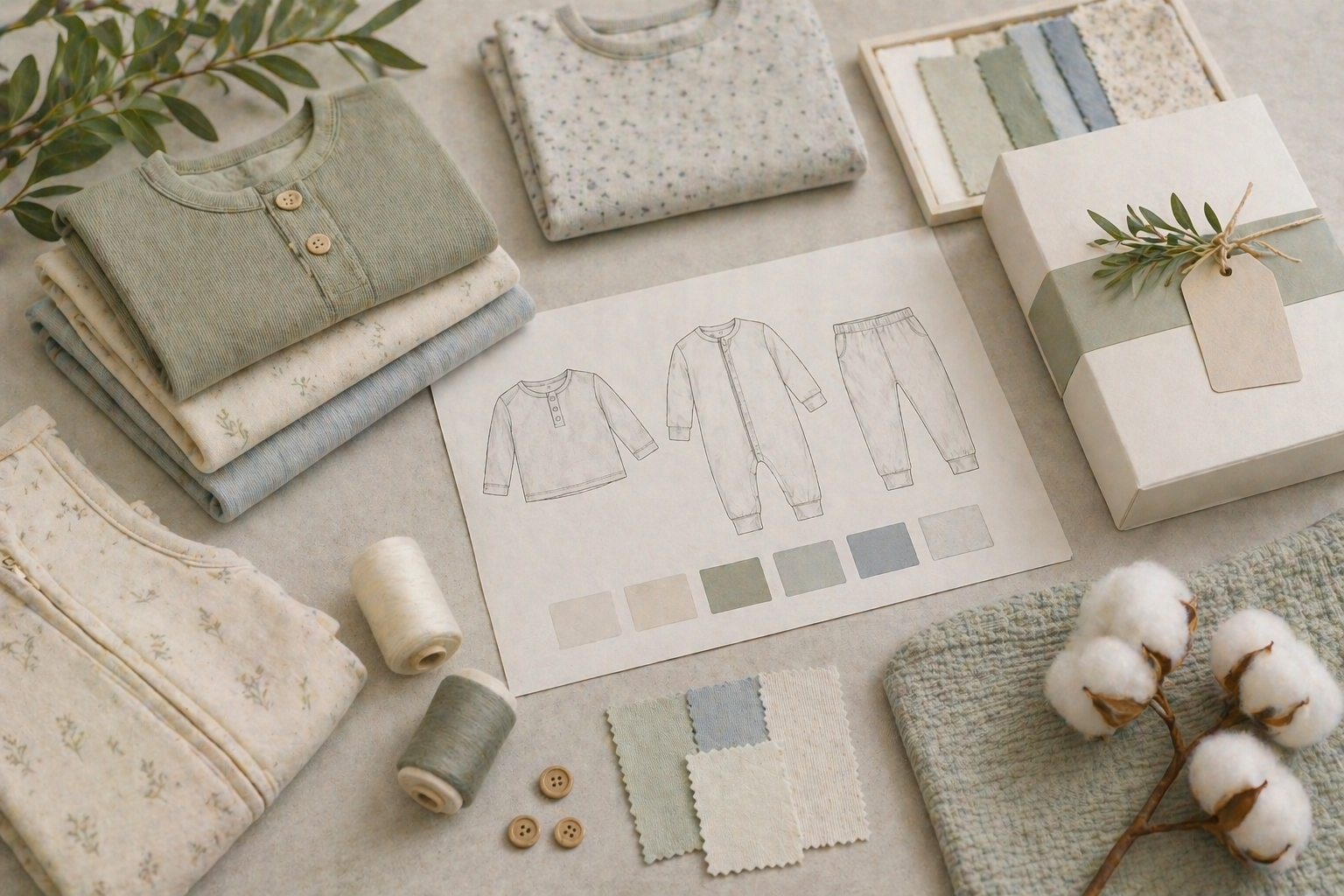
Private label sleepwear is one of the most accessible entry points into the children's apparel market. You're not inventing a new product category — parents already buy pajamas regularly, children outgrow them constantly, and the market rewards brands that combine quality fabric with distinctive design.
Many brands that start with sleepwear later expand into categories like private label school uniforms, where consistent sizing, durability, and repeat orders become even more important. Brands focused on the infant segment often start by sourcing organic baby clothing before expanding into a broader private label range.
What "private label" means in practice is that you design and brand the product, but a manufacturing partner produces it. You own the brand, the customer relationship, and the margins. The manufacturer owns the production process, the equipment, and the supply chain expertise.
This model lets you launch a sleepwear brand without building a factory, hiring a production team, or spending years learning garment construction. But it only works if you understand the process well enough to make smart decisions at every step.
Here's the complete roadmap.
Phase 1: Define Your Brand and Product Concept
Before you contact a single manufacturer, get clear on what you're building.
Your brand positioning determines everything that follows. A luxury bamboo sleepwear brand for newborns requires different fabric, different price points, different packaging, and a different manufacturer than an affordable organic cotton pajama line for toddlers.
Decide on your target age range. Newborn through 24 months is a distinct market from 2T through size 8, which is different again from tween sizes 10 through 14. Each range has different sizing complexity, different compliance requirements, and different purchasing behavior (parents buying for babies prioritize softness and safety; parents buying for older kids prioritize durability and style).
Choose your fabric direction. This is your brand's identity. Bamboo rayon says luxury and softness. Organic cotton says natural and eco-conscious. Modal says silky and premium. You can offer multiple fabrics later, but start with one that anchors your brand story.
Define your initial collection. We recommend 1 to 2 core styles in 3 to 4 prints or colors for your launch. A two-piece pajama set (long-sleeve top and matching pants) is the most universal starting style. Add a zippered sleeper or sleep sack if your market is infant-focused.
Phase 2: Develop Your Tech Pack
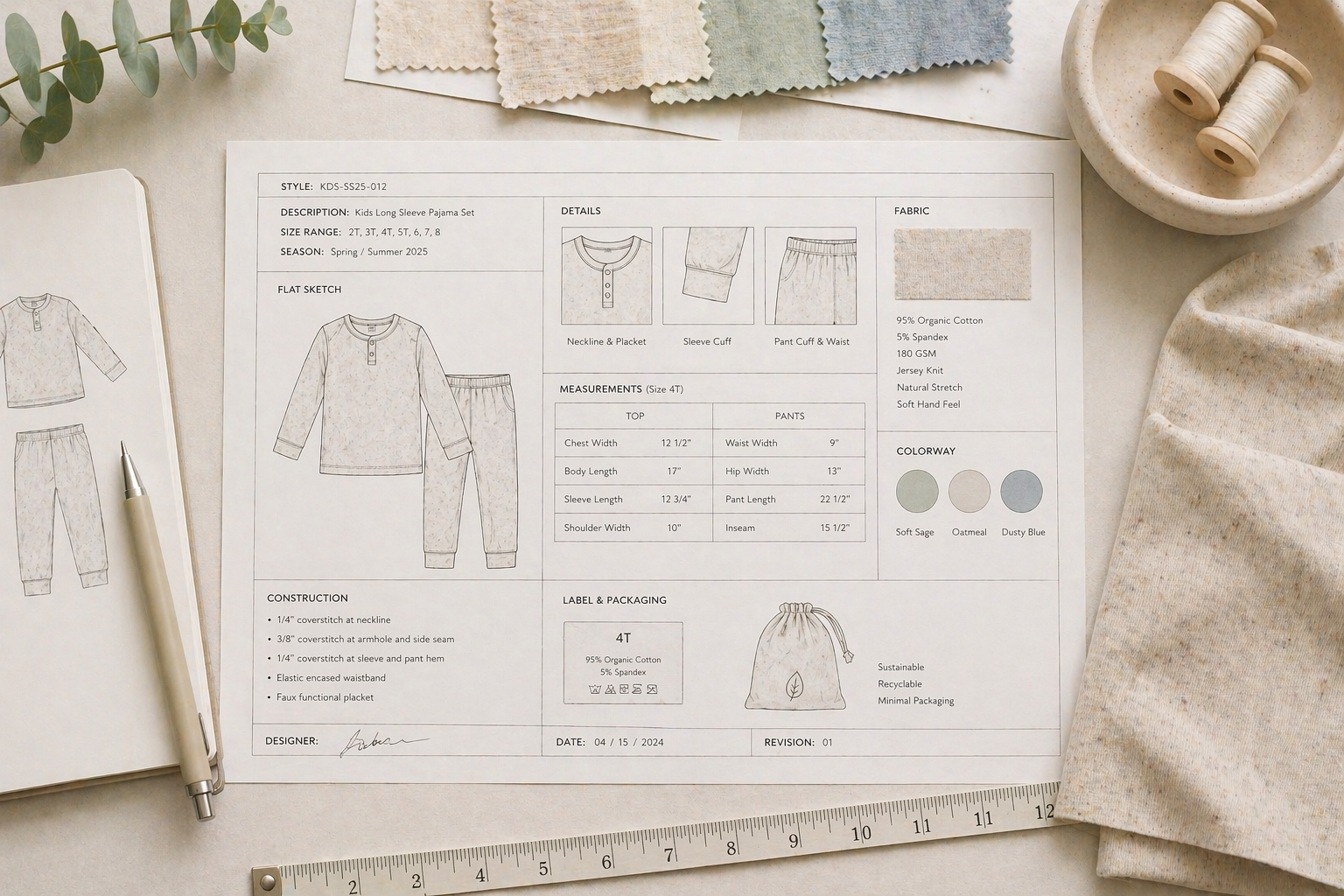
A tech pack is the blueprint that tells your manufacturer exactly what to produce. It's the most important document in the private label process, and it's where brands either set themselves up for success or create expensive confusion.
Your tech pack should include flat sketches or technical drawings of each garment (front, back, and detail views), fabric specifications (composition, weight, stretch requirements), trim details (elastic type and width, label placement, zipper specifications if applicable), color references (Pantone numbers for solid colors, artwork files for prints), measurement specifications by size, construction details (seam types, stitch counts, topstitching), and packaging requirements (poly bag, tissue, hang tags, care labels).
If you don't have a tech pack, a good manufacturer can develop one with you based on a reference garment (a competitor's product that represents the fit and construction you want) or a detailed conversation about your vision. This is a service many private label manufacturers offer, and it's worth paying for rather than guessing.
Phase 3: Find Your Manufacturing Partner
With your concept and tech pack in hand, you're ready to evaluate manufacturers. For children's sleepwear specifically, you need a partner with demonstrated experience in children's garments and CPSIA compliance, custom fabric sourcing capability (not just stock fabric), minimum order quantities that match your launch budget, transparent communication and production processes, and the ability to scale with you as your brand grows.
Request quotes from 3 to 5 manufacturers. Provide each one with the same information so you can compare apples to apples. The lowest price isn't always the best value — factor in quality, communication, lead time, and compliance support.
Phase 4: Sampling and Refinement
Once you've selected a manufacturer, the sampling phase begins. This is your opportunity to validate every aspect of the product before committing to production.
Your first sample (the proto sample) will reveal whether the manufacturer understood your tech pack. Expect it to need revisions — that's normal. Evaluate the fabric hand-feel, weight, and stretch. Check the fit against your measurement specifications. Inspect construction quality including seam strength, elastic recovery, and label placement. Test the print quality, color accuracy, and washability.
After providing feedback, your manufacturer produces a revised sample. It typically takes 2 to 3 rounds to arrive at a sample you're completely happy with. Don't rush this phase. Every shortcut in sampling becomes a problem in production.
The final pre-production sample (PPS) should represent exactly what will be manufactured. Approve it in writing before production begins, and keep the PPS as your quality reference standard.
Phase 5: Branding and Packaging
Your private label isn't just about the garment — it's about the complete brand experience. During the sampling phase, finalize your branding elements.
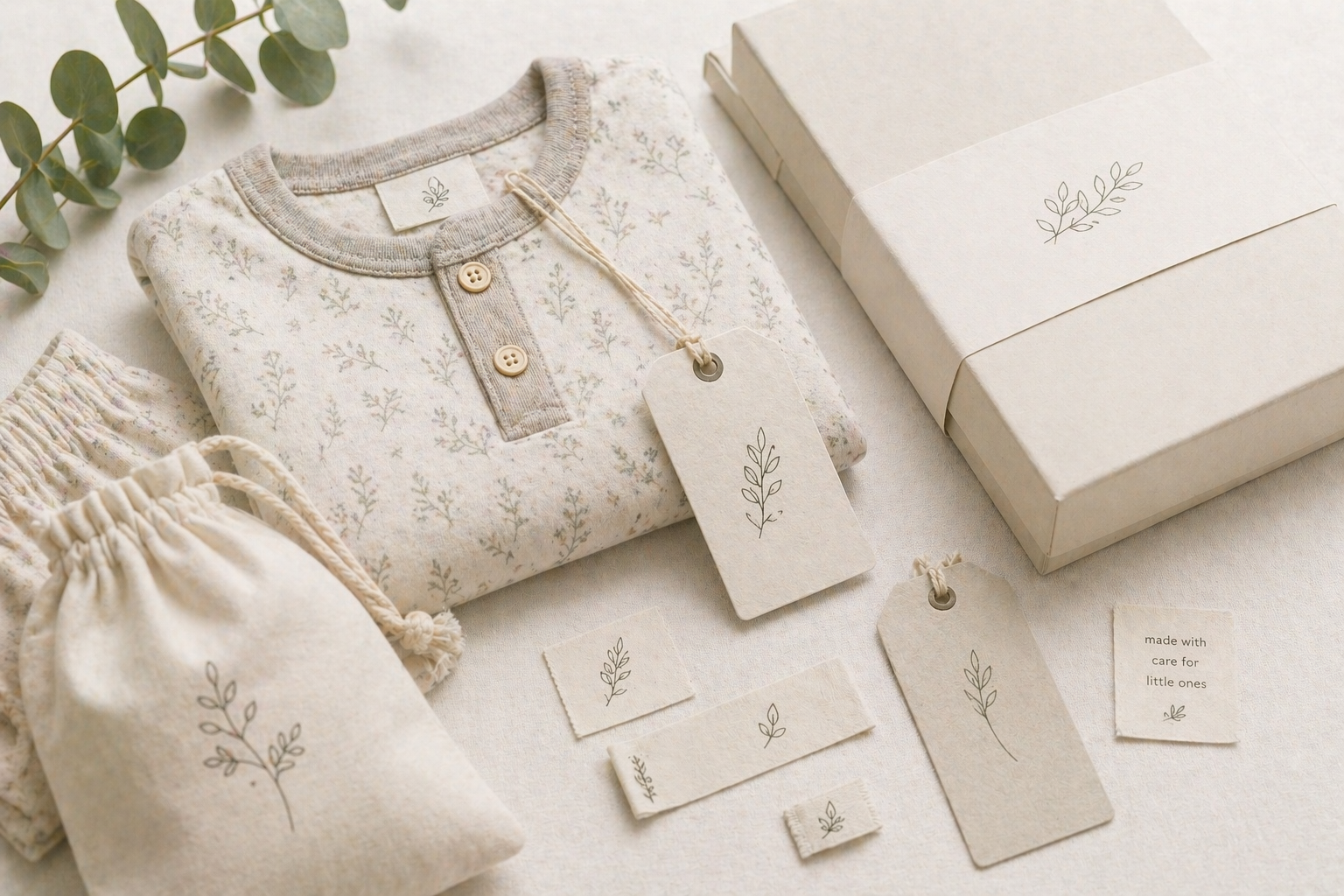
Woven labels (sewn into the neck or side seam) carry your brand name and should feel soft against the skin. For children's sleepwear, avoid woven labels that could irritate — heat transfer labels or printed labels are increasingly popular for comfort.
Care labels must include fiber content, country of origin, care instructions, and your company identification (RN number or company name). For children's sleepwear sold in the U.S., they must also include the "Wear snug-fitting. Not flame resistant." statement if you're using the tight-fitting exemption.
Hang tags are your first impression at retail or in an unboxing. Include your brand story, fabric features, sizing information, and care highlights.
Packaging (poly bags, tissue paper, branded boxes or mailers) affects both the customer experience and your shipping costs. Start simple — a branded poly bag and hang tag are sufficient for launch. Premium packaging can come later as your brand matures.
Phase 6: Compliance and Testing
For children's sleepwear, compliance testing must be completed before you sell a single unit. Your manufacturer should coordinate this, but you need to understand what's happening.
Each colorway of each style needs testing from a CPSC-accepted lab. For tight-fitting sleepwear, the lab verifies that finished garment dimensions meet CPSC requirements. For fabric flammability, they test fabric specimens against the char-length standard.
Once testing is passed, you issue a Children's Product Certificate (CPC) for each product. This document lives on file and is provided to retailers and customs upon request. Your manufacturer should guide you through the CPC process or issue it on your behalf.
Budget $200 to $500 per colorway for testing, and build 2 to 3 weeks of testing lead time into your production schedule.
Phase 7: Production and Quality Control
With your PPS approved and compliance testing passed, production begins. A typical production timeline for a children's sleepwear order of 500 to 2,000 units is 4 to 8 weeks, depending on fabric availability and production complexity.
During production, your manufacturer should conduct inline quality inspections — not just a final check when everything is already sewn and packed. Inline inspection catches problems early when they can be fixed, rather than at the end when your only option is to accept substandard product or delay shipment.
Request a final inspection report before goods ship. This should include defect rates, measurement verification against your specifications, and photos of finished product.
Phase 8: Launch and Learn
Your first production run is a learning experience as much as a product launch. Pay attention to what sells quickly and what sits, which sizes you run out of first, what customers say about fit, fabric, and quality, and what your actual return rate looks like.
This data informs your second order — which styles to keep, which to revise, how to adjust your size ratios, and whether to add new prints or colors.
The most successful private label sleepwear brands treat their first year as a continuous refinement process. Each reorder gets better — better size distribution, better print selection, better packaging, and lower per-unit costs as volume increases.
The Economics of Private Label Sleepwear
Here's a realistic financial model for a private label children's bamboo pajama set.
Total landed cost per unit (including fabric, production, testing, freight, and duties): $10 to $14.
Wholesale price (to boutique retailers): $16 to $20 per unit. Wholesale gross margin: 30 to 40 percent.
DTC retail price: $32 to $42 per unit. DTC gross margin: 60 to 70 percent.
At 500 units with a mix of DTC and wholesale sales, first-year revenue is typically $12,000 to $18,000. By the second year, with proven styles and growing demand, brands often scale to 2,000 or more units and $40,000 to $80,000 in revenue.
Private label sleepwear won't make you rich overnight. But it builds a real asset — a brand with loyal customers, repeat purchase behavior, and growing margins — that compounds over time.
Start your private label sleepwear project — get a free consultation
We are a full-service private label sleepwear manufacturer working with emerging and growing brands. From concept development through compliant production, we handle every step so you can focus on building your brand.