
Do Children's Pajamas Need Fire Testing?
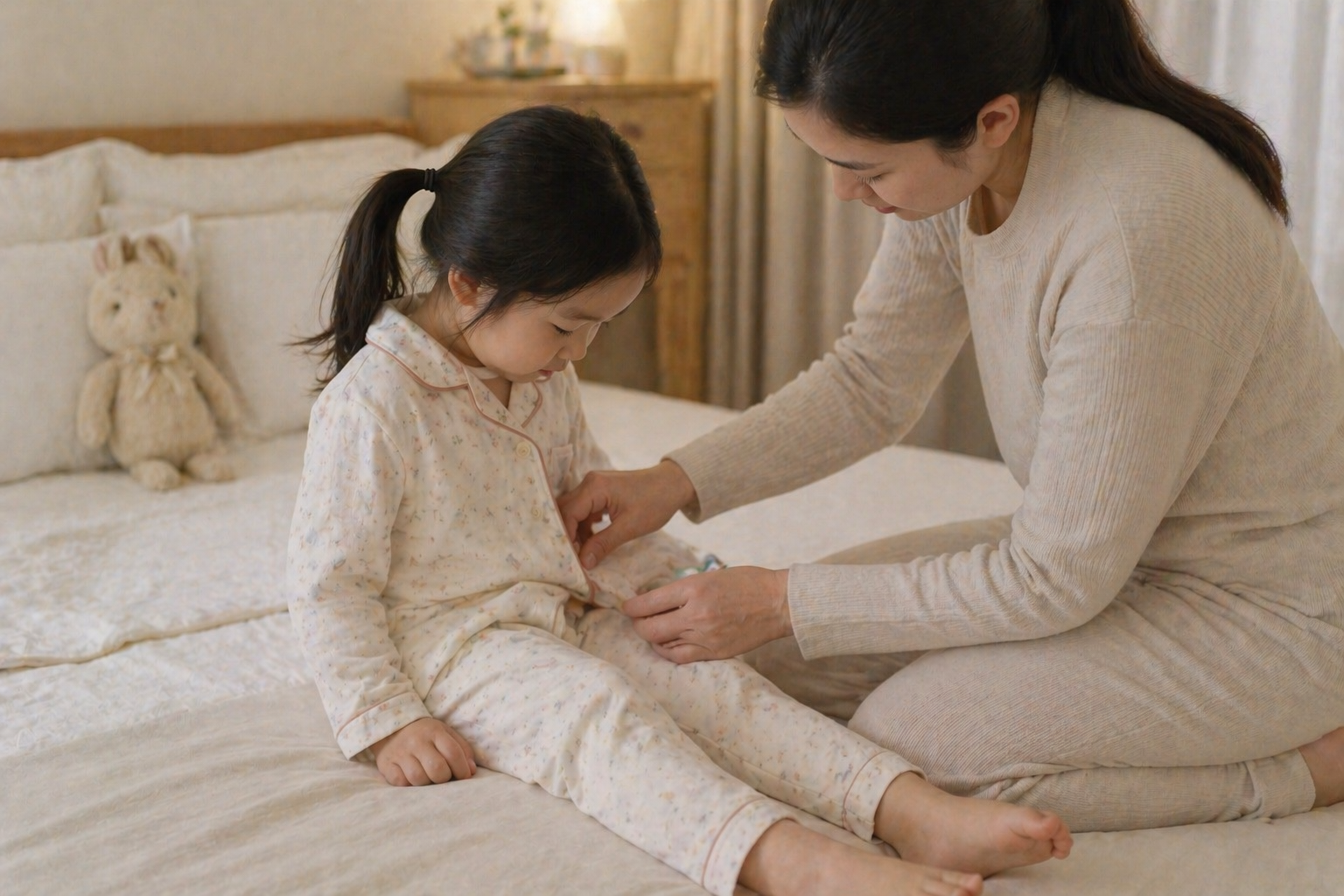
Yes. In the United States, all children's sleepwear in sizes 9 months through 14 must comply with flammability standards under 16 CFR Parts 1615 and 1616. This is a legal requirement enforced by the Consumer Product Safety Commission, and selling non-compliant children's sleepwear can result in recalls, fines, and liability.
There are two paths to compliance, and most modern sleepwear brands choose the second one.
Path 1: Pass the Flammability Test
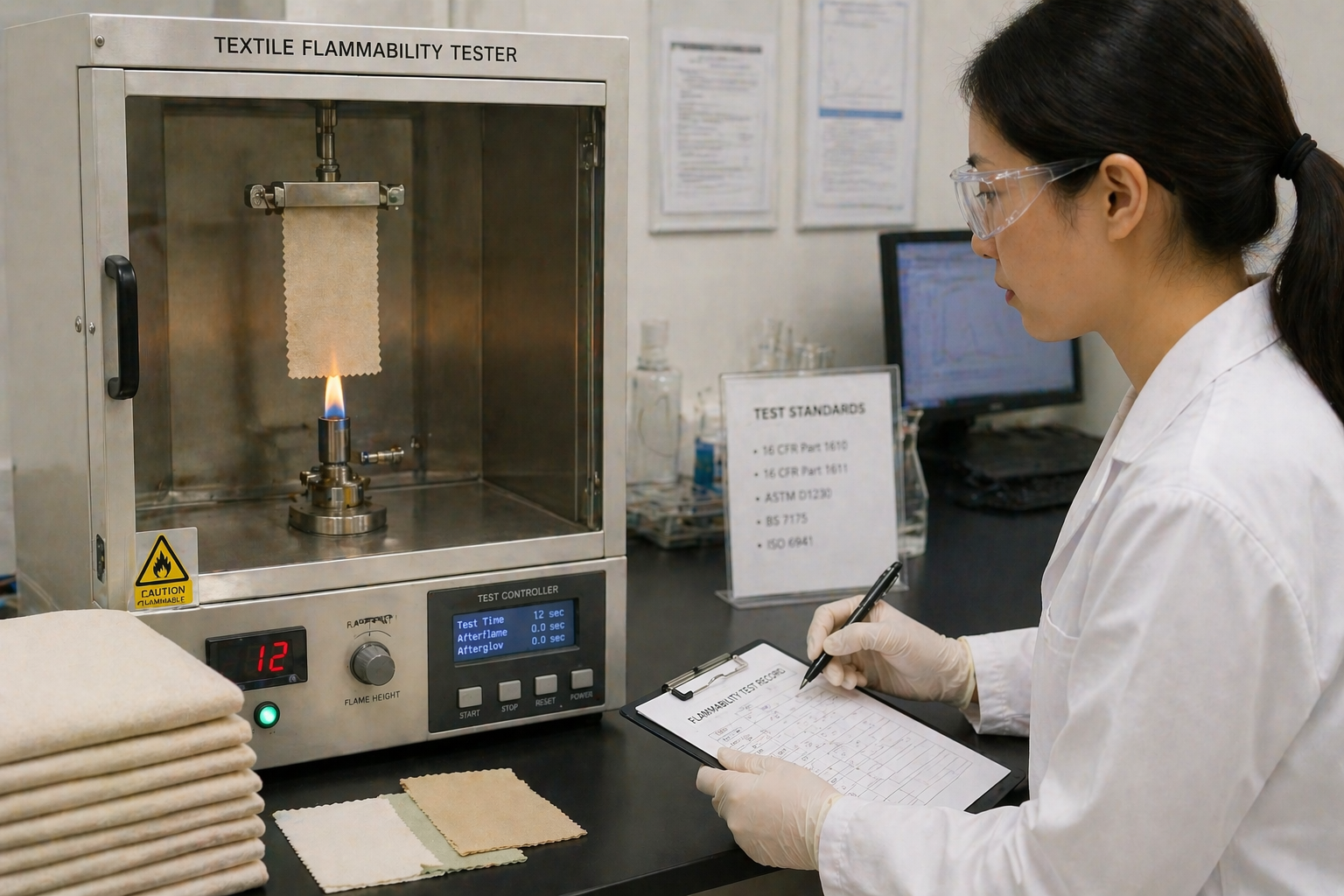
The standard flammability test measures how far a flame travels up a vertically suspended fabric sample. To pass, the average char length must not exceed 7 inches. This typically requires fabric that is inherently flame-resistant or has been treated with flame-retardant chemicals.
Most children's sleepwear brands avoid this path because flame-retardant treatments raise health concerns among parents, and marketing pajamas as "chemically treated" is not commercially attractive. Many modern brands now market chemical-free holiday pajamas that comply through snug-fit construction instead of FR-treated fabric. For brands comparing construction methods and chemical treatments, the snug-fit vs FR pathway decision affects cost, fabric selection, and silhouette flexibility.
Path 2: The Tight-Fitting Exemption (Most Common)
The far more common approach is to design sleepwear that qualifies as "tight-fitting." Snug-fitting garments are exempt from the flammability test because they're less likely to contact an ignition source and less likely to sustain a flame.
To qualify, your garments must meet specific maximum dimensional measurements at every size point — chest width, waist width, seat width, sleeve width, and other key measurements. These dimensions are published by the CPSC and your manufacturer should be working from them during pattern development.
Tight-fitting sleepwear must be permanently labeled with the statement: "Wear snug-fitting. Not flame resistant."
What Testing Costs
Each colorway of each style requires testing from a CPSC-accredited lab. For tight-fitting sleepwear, the lab verifies that finished garment dimensions meet the requirements. Testing typically costs $200 to $500 per colorway and takes 2 to 3 weeks.
Before selling your first unit, you must also issue a Children's Product Certificate documenting compliance.
For a complete walkthrough of every compliance requirement, read our full guide:
CPSIA Compliance for Children's Sleepwear: Everything Your Brand Needs to Know

We build CPSIA compliance into every children's sleepwear production run — from pattern development through final testing. It's part of our standard process, not an add-on.