
How to Choose a Children's Sleepwear Manufacturer: 9 Questions Every Brand Should Ask
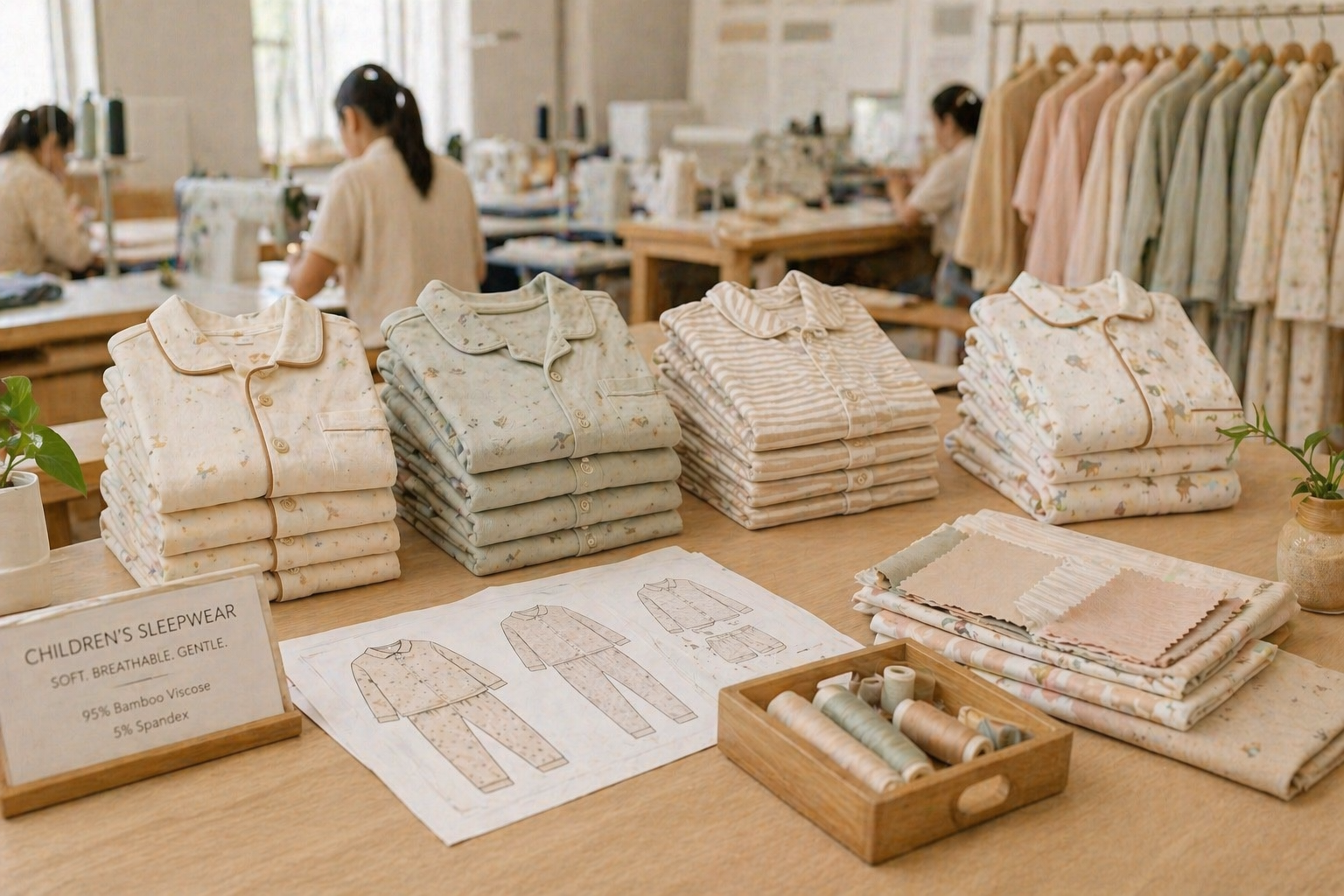
Choosing a manufacturer is one of the highest-stakes decisions you'll make as a sleepwear brand. Get it right and you have a production partner who helps you grow for years. Get it wrong and you're dealing with quality issues, missed deadlines, compliance problems, and the expensive process of switching manufacturers mid-stream. Before you commit, our guide on how to vet an ethical manufacturer covers the certifications, labor evidence, and compliance questions to ask first.
The challenge is that every manufacturer's website says the same things: "high quality," "low MOQ," "fast turnaround," "custom solutions." The difference between a great partner and a nightmare only becomes clear once you're in production — which is too late.
These are the 9 questions that actually separate a strong children's sleepwear manufacturer from one that will cost you time, money, and sleep. We know because brands that come to us after a bad experience almost always had the same unasked questions.
1. Have You Manufactured Children's Sleepwear Before? Show Me Examples.
This is the most important question and the one most founders skip. General apparel manufacturing and children's sleepwear manufacturing are not the same thing.
Children's sleepwear has specific compliance requirements (CPSIA, flammability standards), unique pattern grading challenges (toddler proportions are not just scaled-down adult patterns), and fabric performance requirements (softness, durability through frequent washing, colorfastness) that a factory producing t-shirts or adult loungewear may not understand.
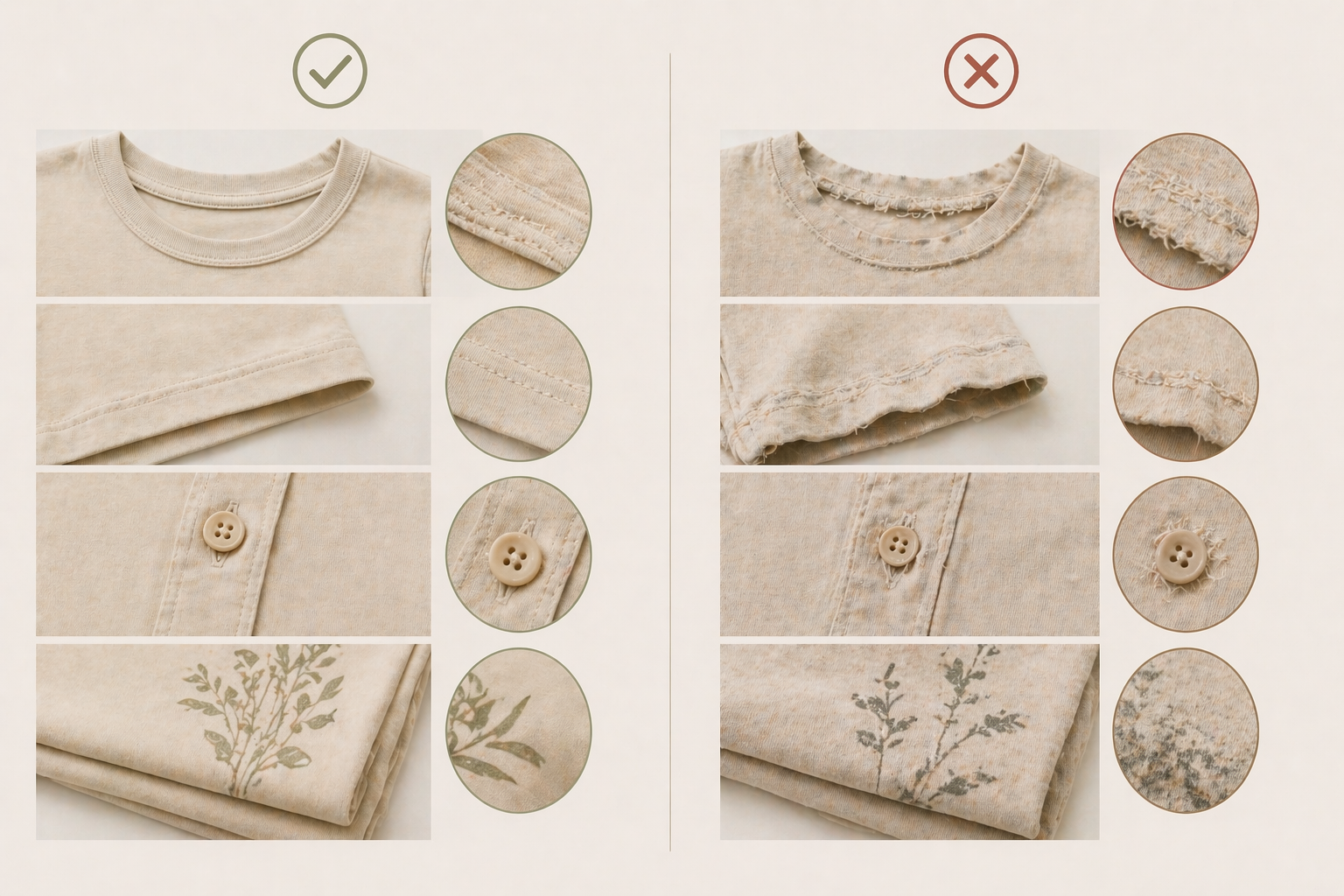
Ask for physical samples of children's sleepwear they've produced. Not photos — actual garments. Feel the fabric. Check the stitching on the interior seams (children have sensitive skin; rough interior seams cause complaints). Look at the elastic quality on waistbands and cuffs. Wash it twice and see how it holds up.
If a manufacturer can't produce a physical sample of children's sleepwear they've made for another brand, that's a significant risk flag.
2. How Do You Handle CPSIA Compliance and Flammability Testing?
If the answer to this question is anything other than a detailed, confident explanation of their process, keep looking.
A qualified children's sleepwear manufacturer should be able to explain the tight-fitting exemption and the dimensional requirements, have established relationships with accredited testing labs, build compliance testing into their production timeline (not treat it as an add-on), and guide your pattern development to ensure dimensional compliance before production begins.
Manufacturers who say "we can help you with that" but can't explain the specifics are manufacturers who'll leave compliance in your hands — which means delays, additional costs, and risk.
3. Can You Source My Specific Fabric, or Am I Limited to Stock Options?
This question reveals whether you're working with a full-service manufacturer or an assembly operation.
Stock fabric means the manufacturer buys whatever fabric is available from local suppliers and produces your garments from that selection. Your options are limited, and you can't differentiate your product on fabric quality or composition.
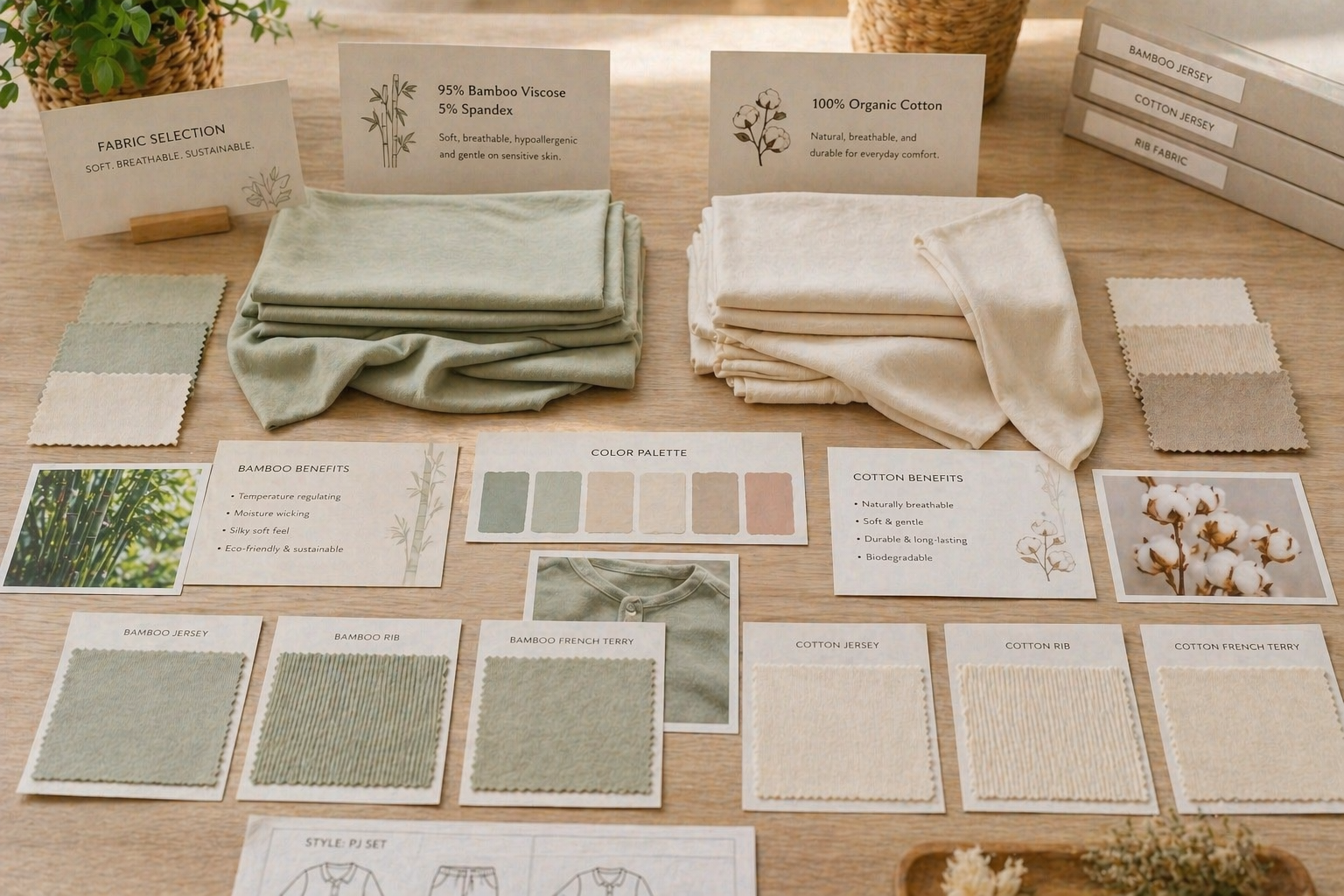
Custom fabric sourcing means the manufacturer has relationships with fabric mills and can order specific compositions (bamboo rayon/spandex 95/5, organic cotton/elastane 93/7, etc.) in your chosen weight, color, and finish. This is essential if you want to build a brand around a specific fabric story.
The best manufacturers do both — they have preferred fabric suppliers they know and trust, and they can source specialty fabrics when a brand needs something specific. They should also be able to advise you on fabric selection based on your product requirements and budget.
4. What Is Your Actual Minimum Order Quantity?
"Low MOQ" means different things to different factories. Some advertise 100-piece minimums but the quality and fabric options at that volume are significantly compromised. Others quote 500-piece minimums but require 500 per color per style, which effectively means 2,000 or more units if you're launching in 4 colorways.
Get specific: what is the minimum per style, per color? Is there a total order minimum across all styles? Are there different minimums for printed versus solid fabric? Do minimums change for reorders versus first orders?
Understanding the true minimum helps you plan your launch budget and avoid surprises.
5. What Does Your Sampling Process Look Like?
Sampling is where you validate fit, fabric, construction, and overall quality before committing to a full production run. A solid sampling process typically involves an initial sample (also called a proto or development sample) based on your tech pack or reference garment, a fit correction round where you provide feedback and the manufacturer revises, and a pre-production sample (PPS) that represents exactly what will be produced.
Ask how much sampling costs, how long each round takes, and how many rounds are typical. Expect to pay $50 to $150 per sample garment and plan for 2 to 3 rounds over 3 to 6 weeks.
Manufacturers who rush past sampling or try to skip rounds are manufacturers who don't value getting it right. Every revision caught in sampling saves you thousands in production.
6. What Is Your Defect Rate and Quality Control Process?
Every manufacturer has defects. The question is what percentage and how they handle them.
Ask about their inline inspection process (checking quality during production, not just at the end), their acceptable defect rate (industry standard is 2 to 3 percent for minor defects), and their policy on defective units — do they replace them, credit you, or expect you to absorb the loss?
A transparent manufacturer will answer these questions directly. One that gets evasive or claims zero defects isn't being honest.
7. Can I See Your Production Timeline for an Order Like Mine?
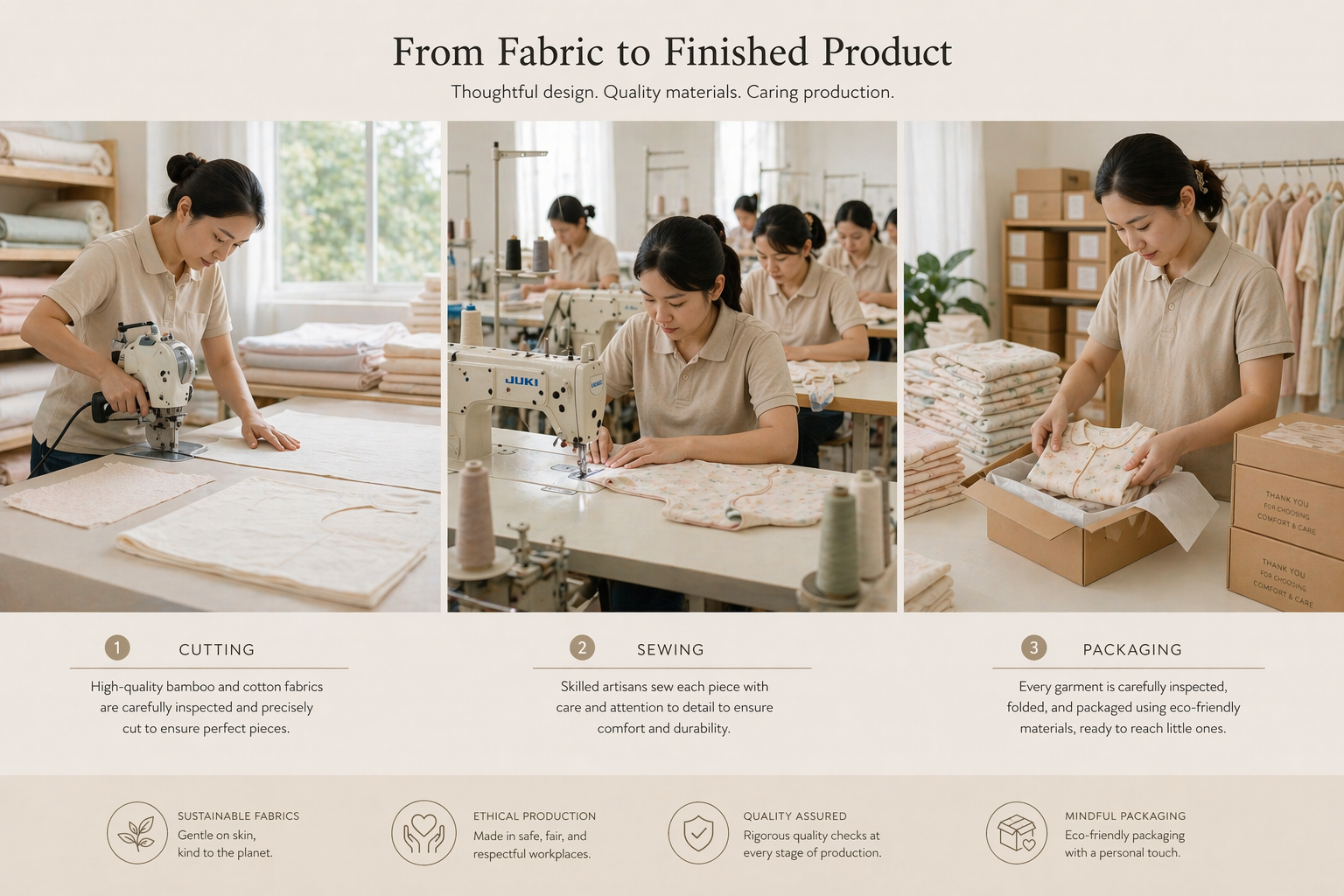
Lead time varies dramatically by manufacturer, season, and order complexity. A vague "6 to 8 weeks" isn't useful. Ask for a detailed timeline broken down by stage: fabric sourcing and dyeing, cutting and production, quality inspection, packing and shipping.
For children's sleepwear, add compliance testing to the timeline — that's typically 2 to 3 weeks that often gets forgotten in the initial estimate.
Also ask about their current production capacity. If they're running at full capacity, your order might get pushed. Manufacturers who are transparent about their schedule are manufacturers who deliver on time.
8. How Do You Communicate During Production?
Communication style is the most underrated factor in choosing a manufacturer. A factory that produces great garments but goes silent for weeks during production will cause you more stress than a slightly less polished factory that sends you weekly updates.
Ask how they communicate (email, WhatsApp, project management tool), how often you'll receive production updates, who your primary point of contact will be, and what happens if there's a problem mid-production (fabric delay, quality issue, etc.).
The best manufacturers proactively flag issues before they become problems. The worst ones surprise you at delivery.
9. What Happens When I Need to Reorder?
Your first order is the beginning of the relationship, not the end. Ask how reorders work: do you need to go through the full sampling process again? Can they hold your patterns and grading on file? What's the lead time for a repeat order versus a new style? Is there a price break for repeat orders?
A manufacturer who makes reorders easy and efficient is one that values long-term relationships. One that treats every order like a new customer is a manufacturer you'll eventually leave.
Red Flags to Watch For
Over the years, we've heard from brands who had bad manufacturing experiences. The warning signs were usually there early. Watch for: prices that are dramatically lower than every other quote you received (you'll pay for it in quality), reluctance to provide references or samples from existing clients, vague or evasive answers about compliance and testing, high-pressure sales tactics (good manufacturers don't need to hard-sell), inability to explain their quality control process, and communication delays during the quoting process (if they're slow now, imagine mid-production).
The Right Partnership
The best manufacturing relationship feels like a partnership, not a transaction. Your manufacturer should understand your brand, care about your product quality, and be invested in your growth — because your success is their repeat business.
Take the time to evaluate thoroughly, ask every question on this list, and trust your gut. The right manufacturer will make every other part of building your sleepwear brand easier.
Contact us for free consultation to discuss your sleepwear project
We are a children's sleepwear manufacturer specializing in bamboo rayon, organic cotton, and custom fabric programs. We work with emerging and growing brands across North America, Australia, and beyond.