
Bamboo vs Cotton Pajamas: A Manufacturer's Comparison
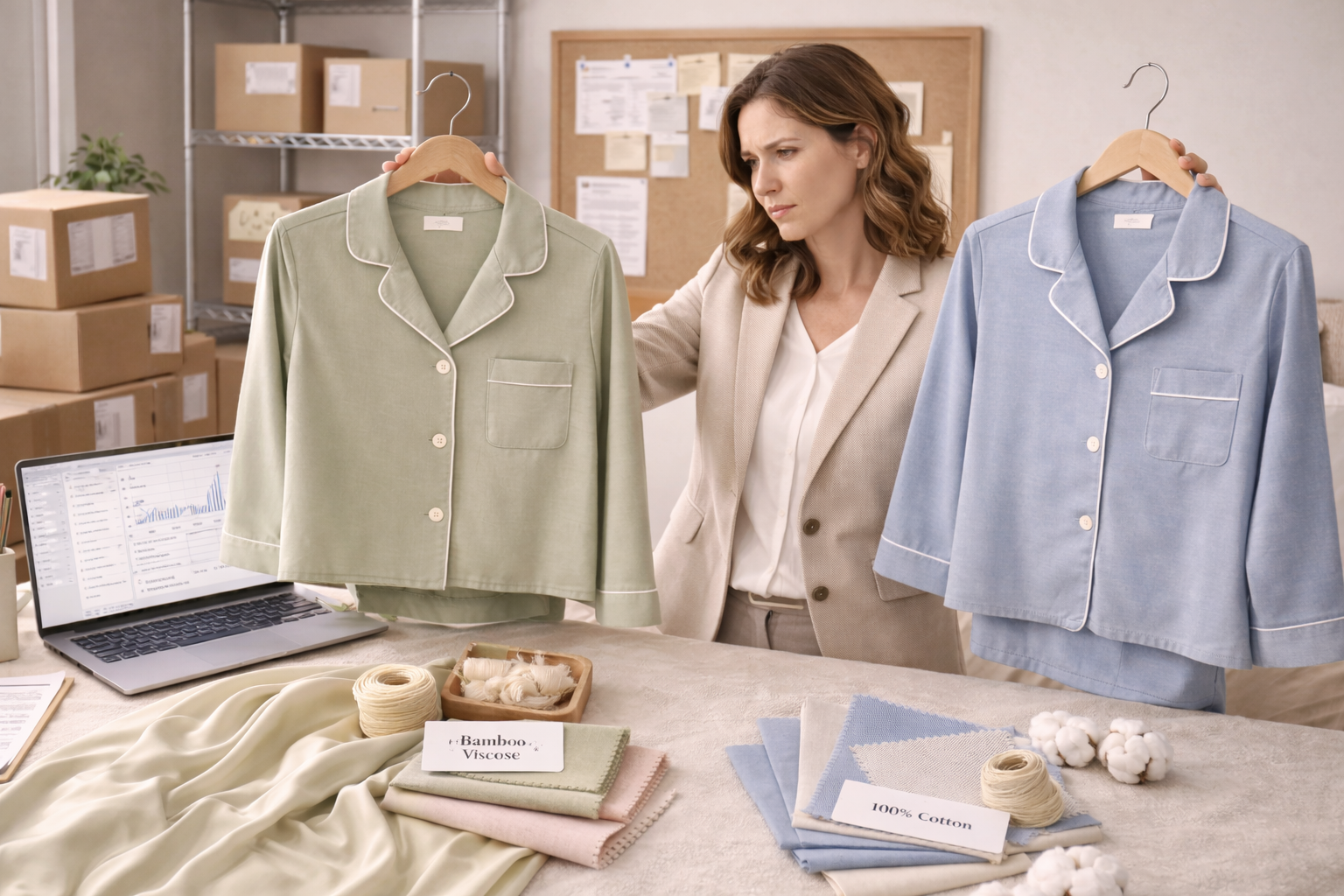
Bamboo and cotton pajamas differ in comfort, cost, and performance. Bamboo rayon is softer, more breathable, and better at regulating temperature, while cotton is more affordable, durable, and easier to manufacture. The right choice depends on your brand positioning, target customer, and price point.
Every sleepwear brand we work with eventually faces the same question: bamboo or cotton?
It sounds simple, but the answer affects your cost structure, your brand story, your manufacturing process, and ultimately how your customer feels when they put on your product. Both fabrics make excellent sleepwear. Neither is universally "better."
Here's the honest comparison from a manufacturer who works with both every day.
The Basics: What Each Fabric Actually Is
Cotton is a natural fiber harvested from the cotton plant. It's been used in textiles for thousands of years and remains the most widely used natural fiber globally. Conventional cotton is affordable and readily available. Organic cotton (certified under standards like GOTS) is grown without synthetic pesticides or fertilizers, which costs more but supports a sustainability narrative.
Bamboo fabric is more nuanced. When brands say "bamboo pajamas," they almost always mean bamboo viscose or bamboo rayon — a semi-synthetic fabric made by dissolving bamboo pulp in a chemical solvent and regenerating it into fiber. The result is incredibly soft, but the manufacturing process means it's technically a regenerated cellulose fiber, not a "natural" fiber. The FTC has specific guidelines about how you can label bamboo viscose products, and getting this wrong can result in fines. You cannot legally label bamboo rayon as simply "bamboo" — it must be identified as "rayon" or "viscose from bamboo."
There's also bamboo linen (mechanically processed bamboo), which is genuinely natural but rough and stiff, not suitable for sleepwear. And bamboo lyocell, which uses a closed-loop solvent process that's more environmentally friendly than the viscose process. Some brands also evaluate essential-oil treated rayon as a third option when comparing specialty sleepwear fabrics beyond traditional bamboo and cotton programs.
Hand-Feel and Comfort
This is where bamboo wins decisively, and it's why bamboo sleepwear has exploded in popularity.
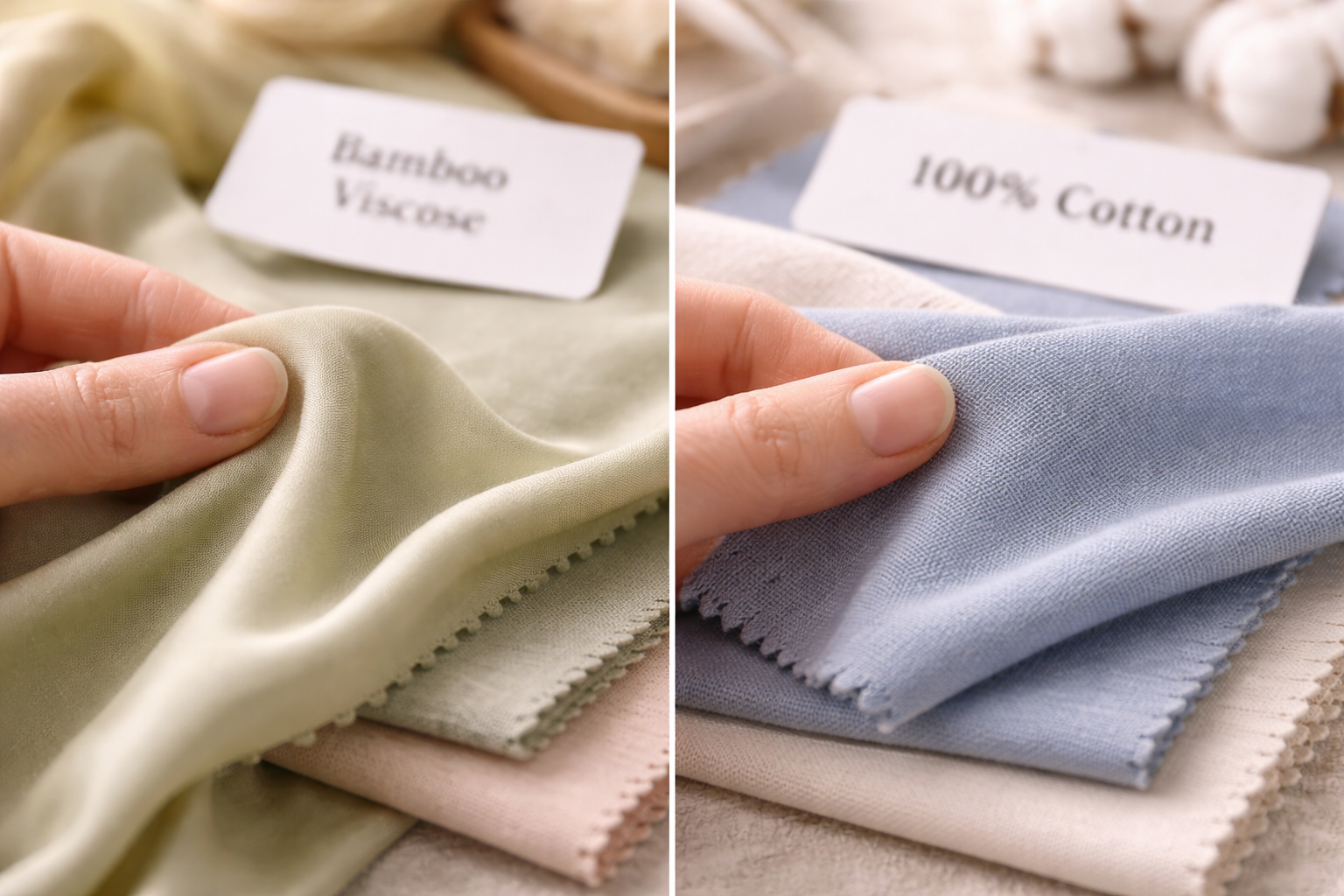
Bamboo rayon has a silky, buttery hand-feel that cotton simply can't match. It drapes beautifully, feels luxurious against the skin, and has a subtle sheen. Customers who try bamboo pajamas for the first time almost always comment on the softness.
Cotton is soft too — especially high-quality long-staple cotton or Pima cotton — but it has a different character. It's more matte, more structured, and gets softer with washing rather than starting soft. Many consumers describe cotton as "comfortable" and bamboo as "luxurious."
For children's sleepwear specifically, bamboo's softness is a major selling point for parents of babies with eczema or sensitive skin. The hypoallergenic properties of bamboo rayon are a genuine advantage, not just marketing. The differences become even more noticeable for sleep sacks specifically, where thermal regulation and fabric drape matter more.
Temperature Regulation and Performance
Bamboo rayon is naturally temperature-regulating and moisture-wicking. It pulls moisture away from the skin and allows it to evaporate, which keeps the wearer cool in summer and comfortable in winter. This makes it an excellent year-round sleepwear fabric.
Cotton absorbs moisture well but doesn't wick it away as efficiently. It can feel damp and clingy when the wearer sweats. Cotton is breathable but tends to run warmer than bamboo.
For sleepwear specifically, bamboo's thermoregulation is a meaningful performance advantage. Parents of babies who run hot or who live in variable climates gravitate toward bamboo for this reason.
Cost Comparison
Here's where cotton has the clear advantage.
On a per-yard basis, bamboo rayon/spandex blends typically cost 30 to 50 percent more than comparable cotton/spandex blends. Organic cotton falls somewhere in between — more expensive than conventional cotton, often comparable to bamboo.
For a children's two-piece pajama set, the fabric cost difference might translate to $1.50 to $3.00 more per unit at the manufacturing stage. That sounds small, but across a 2,000-unit production run, it's $3,000 to $6,000 in additional fabric cost alone.
The cost premium is offset by pricing power. Bamboo sleepwear consistently commands higher retail prices than cotton sleepwear. The market has established that bamboo equals premium, and consumers expect to pay more for it. A cotton pajama set might retail for $24 to $32, while a comparable bamboo set retails for $32 to $48.
If your margins are tight or you're targeting a price-sensitive segment, cotton makes more financial sense. If you're positioning as premium or eco-conscious, bamboo's higher cost is justified by higher retail pricing.
Sustainability Considerations
This is where the conversation gets complicated, because neither fabric has a simple sustainability story.
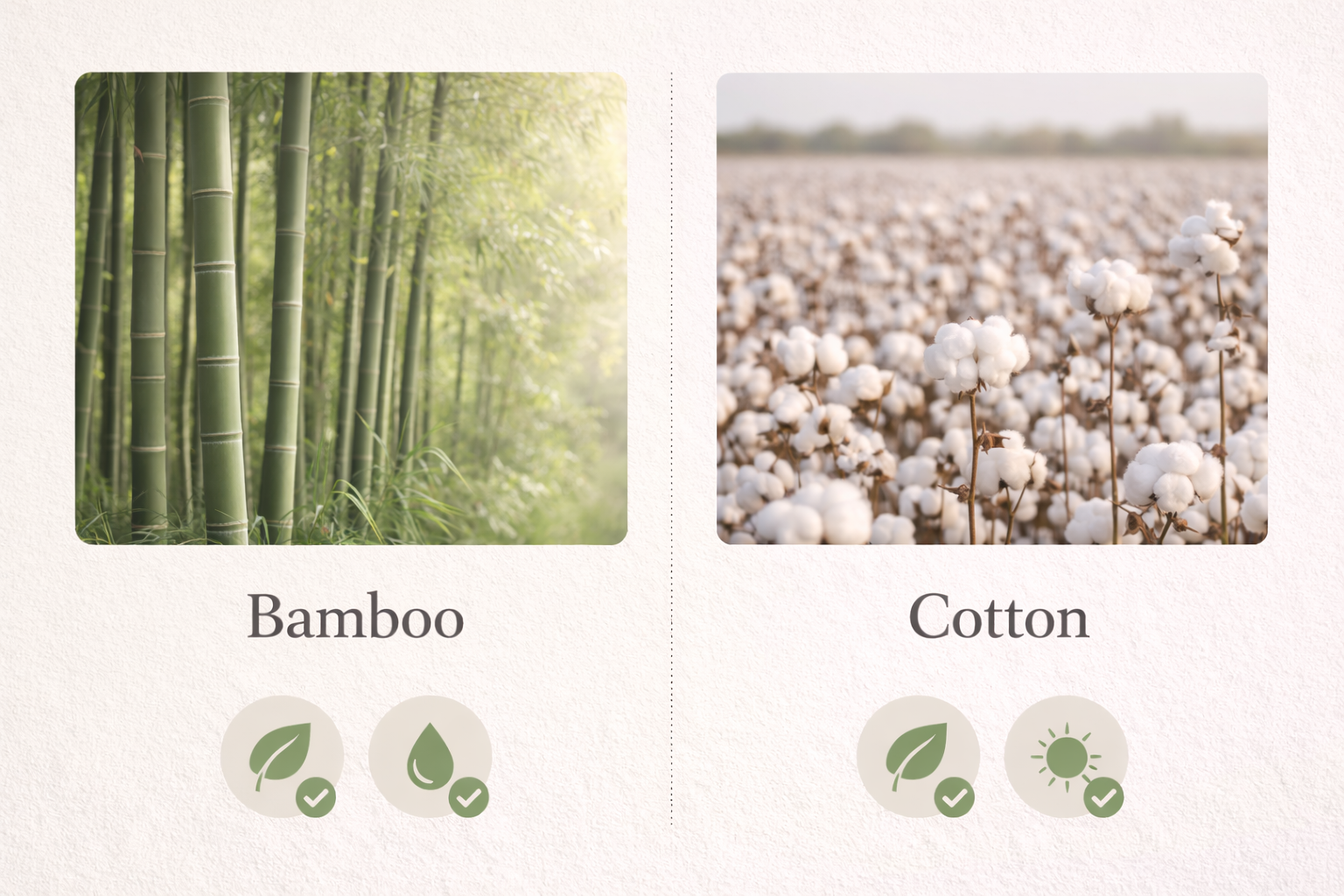
Bamboo the plant is genuinely impressive from an environmental standpoint. It grows extremely fast (up to 3 feet per day), requires no pesticides, needs minimal water compared to cotton, and regenerates from its root system without replanting. As a raw material, bamboo is about as sustainable as it gets.
Bamboo viscose the fabric is a different story. The conventional viscose process uses carbon disulfide, a toxic chemical solvent. The environmental impact depends heavily on whether the factory has a closed-loop system (recovering and reusing the solvent) or an open system (releasing it). The best bamboo viscose producers have invested in cleaner processes, but it's not automatic .Brands evaluating bamboo fabrics should understand how to vet a bamboo rayon supplier, including questions about processing methods, certifications, solvent recovery, and traceability.
Conventional cotton is one of the most water- and pesticide-intensive crops in agriculture. It accounts for roughly 10 percent of all agricultural chemicals and 25 percent of insecticides used globally.
Organic cotton eliminates the chemical inputs but still requires significant water. Its environmental advantage over conventional cotton is real, and GOTS certification provides verification.
For your brand story, any of these fabrics can support a sustainability narrative — but you need to be honest and specific about what your sustainability claims actually are. "Made from bamboo" is not a sustainability claim. "Made from bamboo viscose using a closed-loop process that recovers 99% of solvents" is.
Manufacturing and Production Differences
From a manufacturer's perspective, bamboo and cotton behave differently on the cutting table and sewing floor.
Bamboo rayon is slippery. It requires more careful handling during cutting, and sewing tension needs to be adjusted to prevent puckering. It's also more prone to color variation between dye lots, which means your manufacturer needs tighter quality control on fabric inspection.
Cotton is more forgiving in production. It cuts cleanly, sews predictably, and holds color consistently. It's the easier fabric to work with, which means fewer production issues and less risk of quality problems, especially with a new manufacturer.
For print work, both fabrics accept reactive printing well, but bamboo's smooth surface often produces sharper, more vibrant prints. Cotton can be slightly more muted, particularly in dark colors, though this varies by fabric weight and weave.
Shrinkage is a consideration for both. Bamboo typically shrinks 3 to 5 percent in the first wash, while cotton can shrink 5 to 8 percent depending on the weave and finish. Your manufacturer should be pre-washing or accounting for shrinkage in the pattern grading.
Which Fabric Should Your Brand Choose?
Choose bamboo rayon if: you're positioning as premium or luxury sleepwear, your target market values softness and performance above all, you're making children's sleepwear for sensitive skin, your retail price points support the higher fabric cost, or your brand story centers on comfort and quality.
Choose organic cotton if: you want the cleanest sustainability story with third-party certification, your customers prioritize natural and chemical-free, your price point is more accessible, you're starting with a manufacturer you haven't worked with before (cotton is more forgiving), or your brand identity is earthy, natural, and classic.
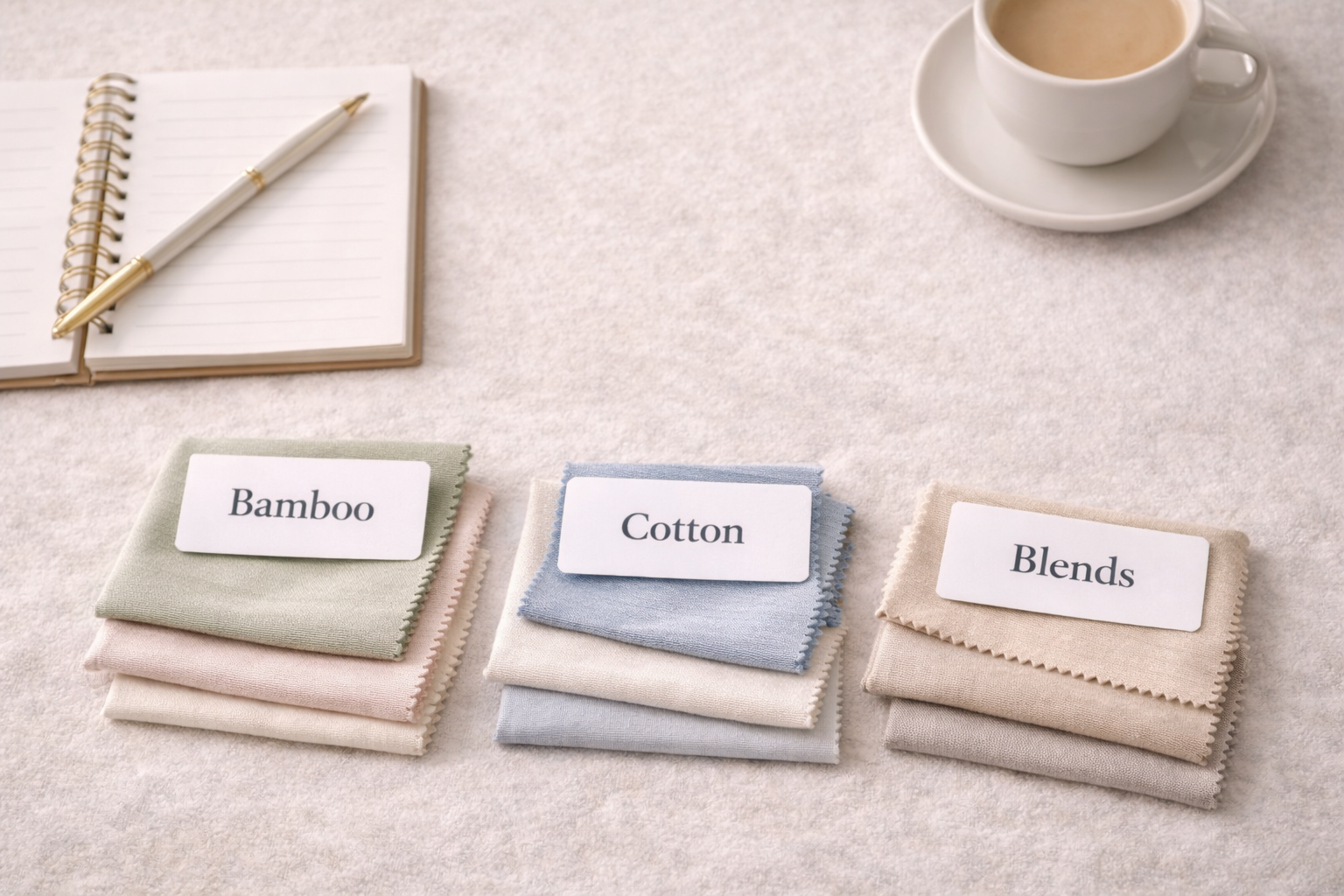
Consider blending: some of the most successful sleepwear brands use bamboo/cotton blends or bamboo/spandex blends that offer a balance of softness, durability, and cost. A 70/30 bamboo/cotton blend, for example, gets you most of bamboo's softness at a lower price point than 95/5 bamboo/spandex. Some brands also explore essential-oil treated rayon as a third option, particularly for allergy-conscious and sensitive-skin sleepwear collections that benefit from anti-mite performance and botanical fabric treatments.
The Bottom Line
There's no wrong answer here. Both bamboo and cotton make excellent sleepwear when sourced well and manufactured properly. The right choice is the one that aligns with your brand, your customer, and your financial model.
What we recommend: if you're undecided, request fabric swatches and a sample garment in both. Hold them. Wear them. Wash them three times. The answer usually becomes obvious once you've experienced the fabrics firsthand.
FAQ
Are bamboo pajamas better than cotton?
Bamboo pajamas are softer and more breathable, while cotton is more durable and affordable. The better choice depends on your target market and price point.
Are bamboo pajamas more expensive than cotton?
Yes. Bamboo fabrics typically cost 30 to 50 percent more than cotton, which increases production cost but allows for higher retail pricing.
Is bamboo fabric better for sensitive skin?
Bamboo rayon is often preferred for sensitive skin because of its softness and moisture-wicking properties, making it popular for children's sleepwear.
Which is more sustainable, bamboo or cotton?
It depends. Bamboo grows quickly with low resource use, but processing into viscose involves chemicals. Organic cotton avoids synthetic chemicals but uses more water.
We manufacture sleepwear in bamboo rayon/spandex, organic cotton, and custom fabric blends for brands across North America and Australia. We'll help you choose the right fabric for your line and produce it at scale.