
8 Things Race Directors Forget When Planning Marathon Merchandise
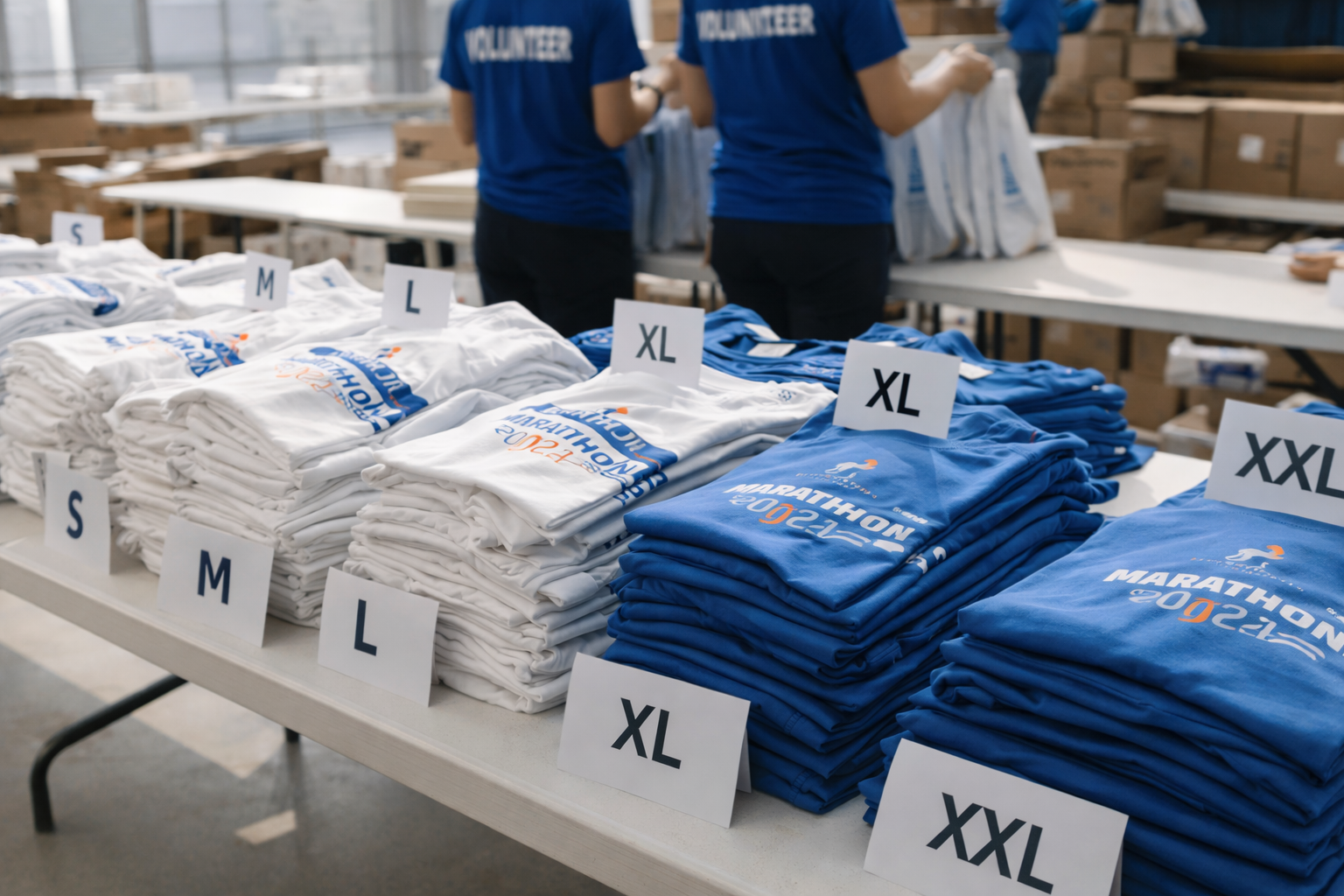
You've locked down permits, sponsors, course logistics, and volunteer staffing. The merch feels like the easy part — order some shirts, slap the logo on, done.
Then race day arrives and you're short on XL finisher shirts, the fabric clings to runners in the heat, and a title sponsor is upset because their logo is the wrong shade of blue.
After manufacturing apparel for running events of all sizes, here are the eight details that race directors consistently overlook — and simple fixes for each one.
1. Starting the Merchandise Timeline Too Late
Custom race apparel needs 4 to 6 months of production lead time, minimum. Factor in fabric sourcing, sampling, sponsor approvals, and shipping, and you should be starting the conversation 8 to 12 months before race day. Directors who start 3 months out end up choosing from limited stock options with rush fees on top.
Fix: Put merchandise on your planning calendar alongside course permitting and sponsor outreach. First production conversations should happen the moment your event date is confirmed.
2. Getting the Size Distribution Wrong
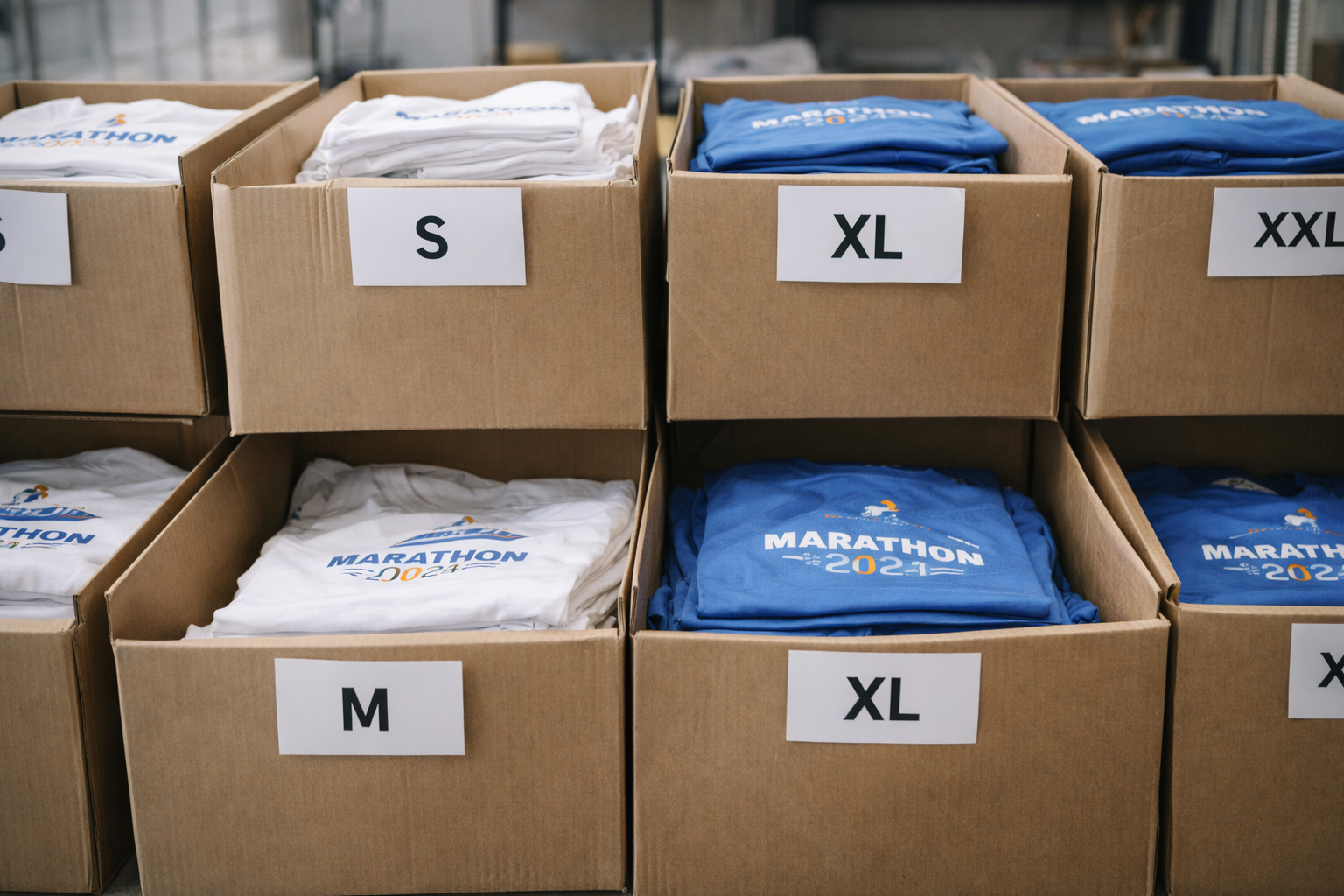
This is the most expensive mistake in race merchandise. If you order 40 percent medium, 30 percent large, 20 percent small, and 10 percent XL — but your actual runner population is 25 percent large, 25 percent XL, 20 percent medium, and 15 percent XXL — you'll have boxes of unsold mediums and angry runners who can't get their size.
Fix: Use registration data to drive your size split. If you don't have historical data, survey runners during registration. For North American running events, err toward larger sizes — the median has shifted up over the past decade.
3. Choosing the Wrong Fabric for the Season and Climate
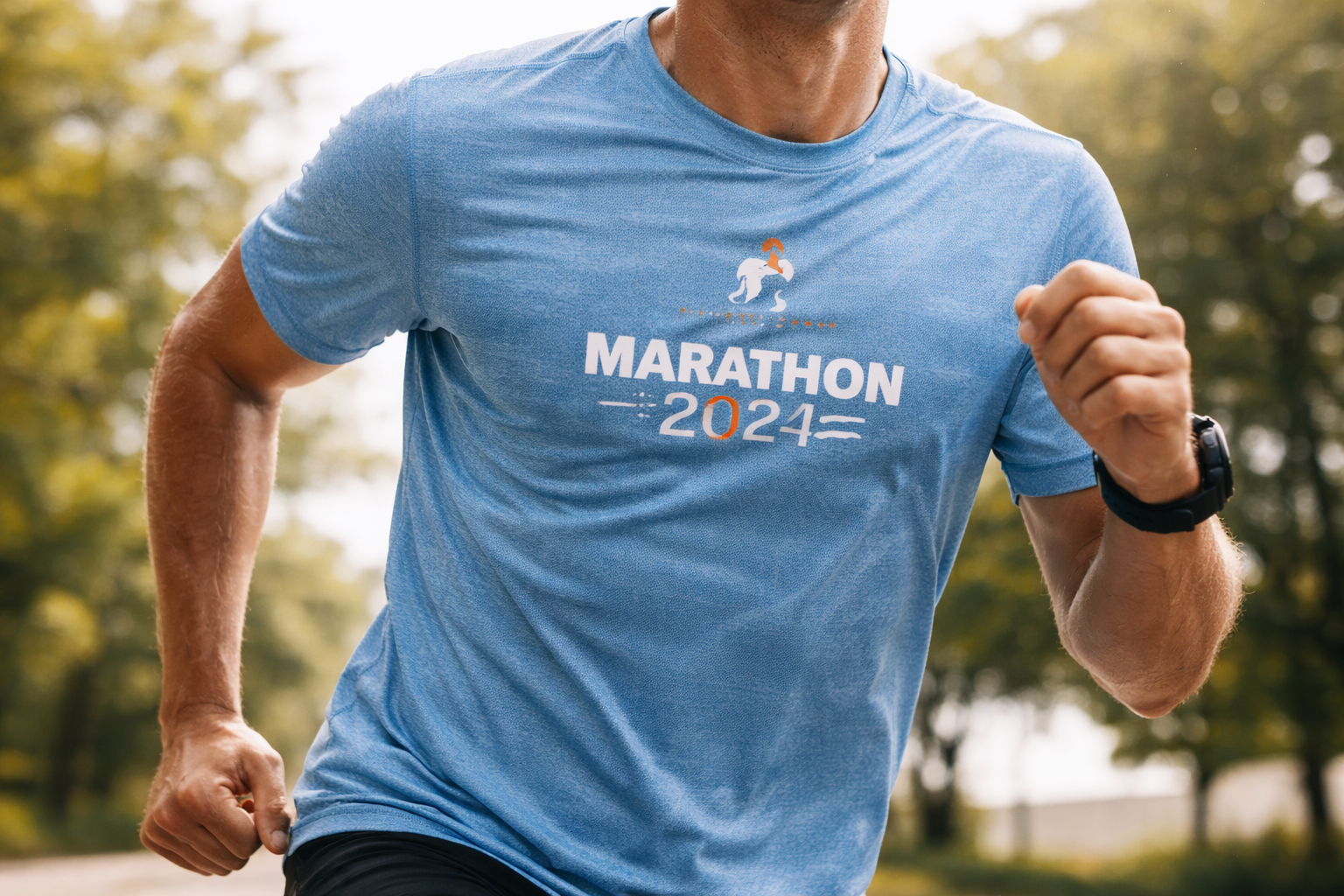
A 200 GSM cotton-poly blend is fine for an October half-marathon in Oregon. It's miserable for a July 5K in Texas. Race-day apparel needs to match the conditions runners will actually face, not what looks good in a product catalog.
Fix: For warm-weather events, use lightweight polyester performance fabric (130 to 150 GSM) with moisture-wicking properties. For cool-weather events, a heavier performance fabric (160 to 200 GSM) or a poly-cotton blend works well. For any event, avoid pure cotton — it absorbs sweat, gets heavy, and chafes.
4. Forgetting to Budget for Finisher, Staff, and Volunteer Shirts Separately
Most race budgets account for participant shirts but underestimate the volume needed for finisher gear, staff uniforms, volunteer tees, and sponsor gifts. You need clearly differentiated apparel for each group — different colors or designs — and the quantities add up fast.
Fix: Budget separately for each category. A rough rule of thumb: finisher shirts at 90 percent of registration count (not everyone finishes, but plan for most), staff and volunteer shirts at actual headcount plus 10 percent buffer, and sponsor gifts and media samples at 3 to 5 percent of your total participant count.
5. Not Getting Sponsor Logo Approvals in Writing
Sponsors have strict brand guidelines — specific Pantone colors, minimum logo sizes, clear space requirements, and approved file formats. Printing a sponsor's logo in the wrong shade of blue or at the wrong size can trigger a contract dispute that overshadows an otherwise successful event.
Fix: Collect vector logo files (AI or EPS format) from every sponsor at the start of the planning process. Send a digital mockup showing logo placement, size, and color for written approval before production. Build 2 to 4 weeks into your timeline for this approval cycle — sponsors are slow.
6. Ordering Exactly the Right Quantity (With No Buffer)
If 2,000 runners register and you order exactly 2,000 shirts, you'll come up short. Manufacturing has a standard tolerance of plus or minus 5 percent, which means you might receive 1,900. Add in last-minute registrations, on-site volunteers who need shirts, sponsor representatives, media, and your own event team, and you need more than you think.
Fix: Order 10 to 15 percent above your registered participant count. The cost of 200 extra shirts is far less than the cost of 200 disappointed runners telling everyone on social media that they didn't get their race shirt.
7. Ignoring the Post-Race Wearability Factor
Runners keep race shirts they're proud of and donate the ugly ones. If your shirt is poorly designed, uses a stiff fabric, or is covered edge-to-edge in sponsor logos, it goes straight to the thrift store — and your event loses years of walking brand impressions.
Fix: Design shirts that runners want to wear to the grocery store. Keep the design clean, make the event name prominent, group sponsor logos on the back or sleeves, and use fabric that feels good enough for everyday wear. The best race shirts become a runner's favorite casual tee.
8. Not Thinking About Merchandise as a Revenue Stream
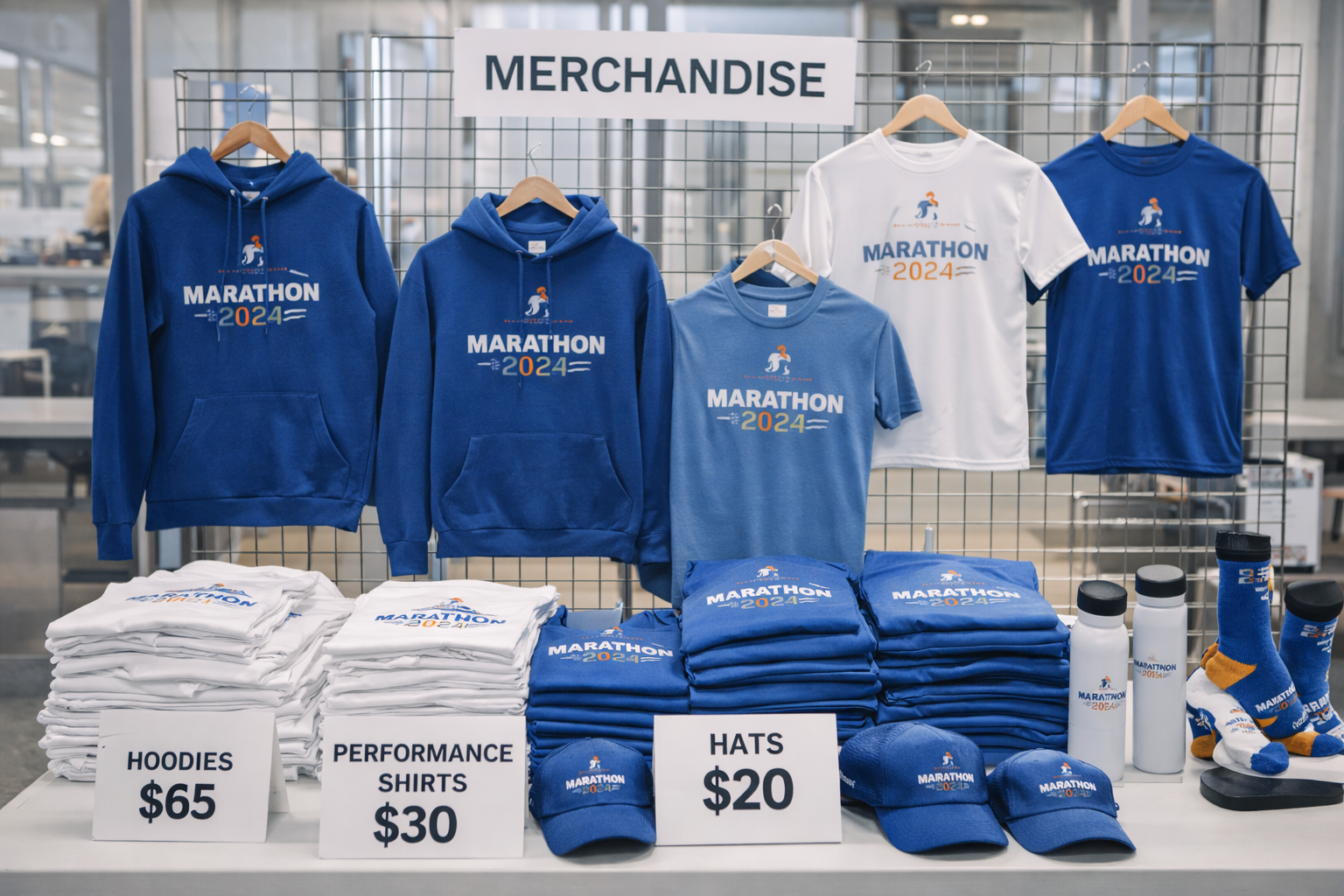
Most race directors treat merchandise as a cost center — a line item that eats into the event budget. Smart directors treat it as a revenue center by offering premium merchandise for sale: hoodies, long-sleeve performance shirts, hats, and running accessories branded to the event.
Fix: Beyond the included participant and finisher shirts, produce a small run of premium items available for purchase at packet pickup and the finish line. A branded performance hoodie that costs $15 to $20 to produce can sell for $45 to $65. Even a small premium merch program can turn your merchandise budget from a cost into a profit center.
The Difference Is in the Planning
Every one of these mistakes comes from the same root cause: treating merchandise as an afterthought instead of a core part of the event experience. The events with the best merch aren't the ones with the biggest budgets — they're the ones that started planning early, chose the right production partner, and sweated the details.
Get a quote for your race merchandise — we handle everything from design to race-day delivery
We manufacture custom apparel for running events, marathons, and sports organizations. Performance fabrics, full design support, and production timelines built around your race calendar.