
Bamboo Sleep Sacks vs Cotton Sleep Sacks: A Manufacturer's Honest Comparison
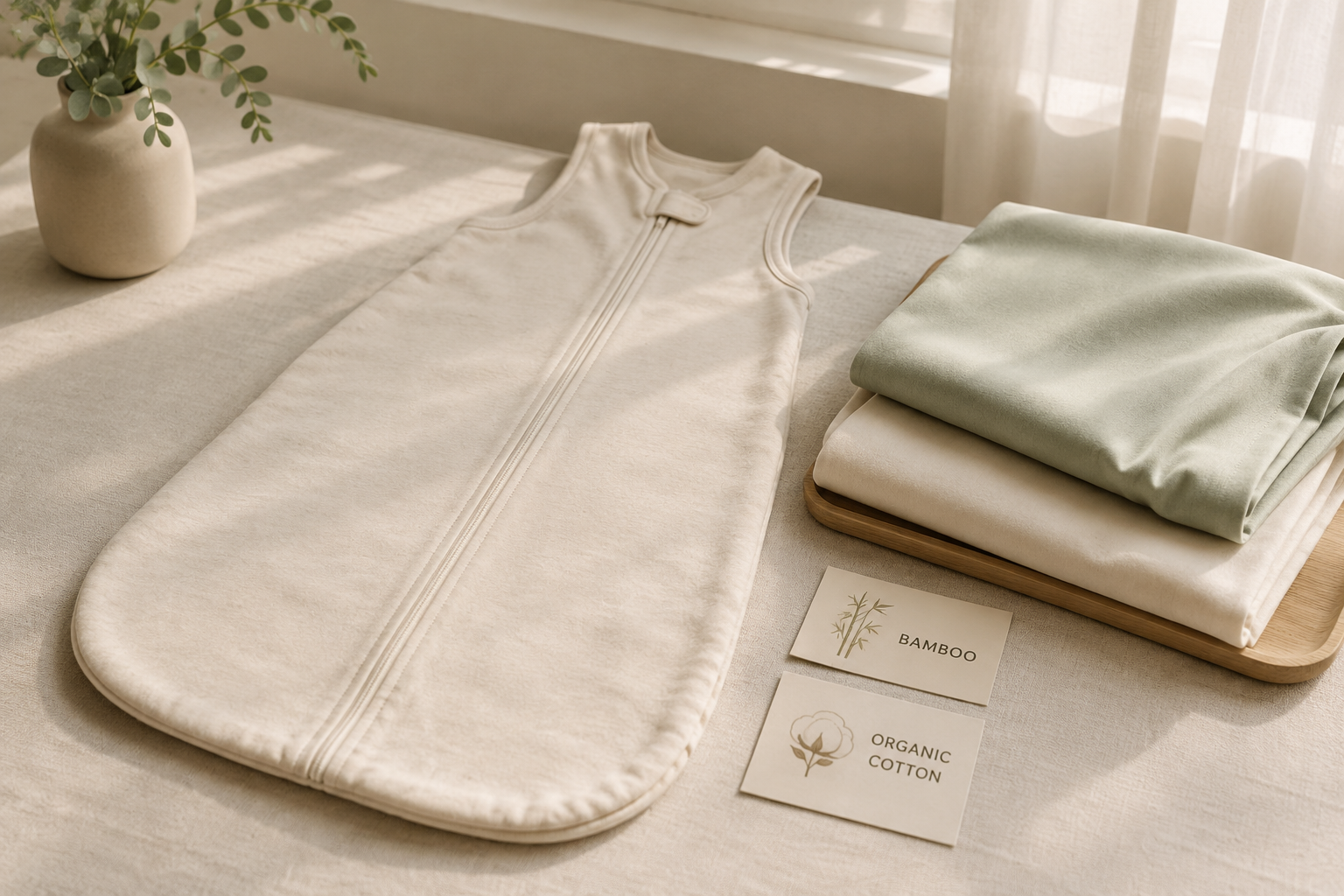
What a sleep sack is, and why fabric choice matters
A sleep sack (also called a wearable blanket or sleeping bag) is a sleeveless or short-sleeved garment that replaces a loose blanket in an infant's crib. Most pediatric sleep guidance has moved away from loose bedding in the first 12 months because of suffocation risk. Sleep sacks are the standard alternative.
Two factors drive the fabric decision: thermal regulation (will the baby overheat or get cold) and CPSIA flammability compliance (the U.S. legal standard for any garment marketed as infant sleepwear). Both bamboo viscose and organic cotton can be made compliant. They behave differently in nearly every other way.
Bamboo sleep sacks. The case for them
Bamboo viscose is a regenerated cellulosic fibre. The bamboo plant itself is grown without pesticides in most production regions. The fibre is created by dissolving bamboo pulp in a solvent and extruding it through a spinneret.
The properties that matter for sleep sacks:
- Higher breathability than the equivalent GSM cotton
- Heavier drape and a "buttery" hand feel that parents respond to in the first three seconds of touching the product
- Strong moisture wicking, useful in warmer climates and summer use
- TOG range typically 0.5 to 1.0 in single-layer construction, suiting spring and autumn nursery temperatures
The honest tradeoffs:
- Bamboo viscose cannot carry a GOTS certification. GOTS only applies to natural fibres processed through approved chemistry. Bamboo lyocell (the closed-loop solvent variant) can carry OEKO-TEX Standard 100 and FSC for the cellulose source, but not GOTS.
- Solvent recovery varies by mill. The closed-loop lyocell route recovers 99% plus of the solvent. Open-loop conventional viscose recovers far less. The fibre on the spec sheet doesn't tell you which one your manufacturer is using. You have to ask.
- Pilling resistance is moderate. A loose-gauge knit will pill faster than a comparable cotton interlock.
Cotton sleep sacks. The case for them.
Organic cotton (and increasingly recycled cotton blends) remains the default fibre for natural-fibre sleep sacks. The advantages:
- GOTS certification is available end-to-end, from farm to finished garment.
- Long-staple cotton (Pima, Supima, Egyptian) softens with washes rather than pilling
- Stable shrinkage when pre-washed correctly (3 to 5% after pre-shrink)
- Familiar to parents. The brand story is easier to tell. There is no "is bamboo really sustainable" footnote.
The honest tradeoffs:
- Cotton runs warmer per GSM than bamboo viscose. A single-layer cotton sleep sack typically lands at TOG 1.0 to 2.5, which can be too warm in summer or in well-heated nurseries.
- Less drape. Cotton interlock holds a slightly crisper shape, which can affect the unboxing impression even though it doesn't change function.
- Cotton needs more care in the early washes. Without proper pre-shrinking, post-wash dimensions can move 5 to 8%.
Bamboo viscose vs organic cotton sleep sacks. Side by side.
| Property | Bamboo viscose sleep sack | Organic cotton sleep sack |
|---|---|---|
| TOG (single layer, typical) | 0.5 to 1.0 | 1.0 to 2.5 |
| Breathability | Higher | High |
| Drape / hand feel | Heavier, fluid drape | Crisper, softens after washes |
| Pilling resistance | Moderate | High (long-staple cotton) |
| Shrinkage after wash | 3 to 5% | 5 to 8% if not pre-shrunk |
| Top sustainability cert available | OEKO-TEX 100, FSC | GOTS, OEKO-TEX 100 |
| Typical MOQ at Tobimax | 400 units per style and colour | 400 units per style and colour |
| Sample to FOB lead time | 8 to 10 weeks | 8 to 10 weeks |
| FOB unit cost range (estimate) | $7.80 to $11.20 | $6.50 to $10.40 |
| CPSIA flammability path | Snug-fit (16 CFR 1615.4) | Snug-fit, FR treatment also available |
CPSIA flammability rules for sleep sacks
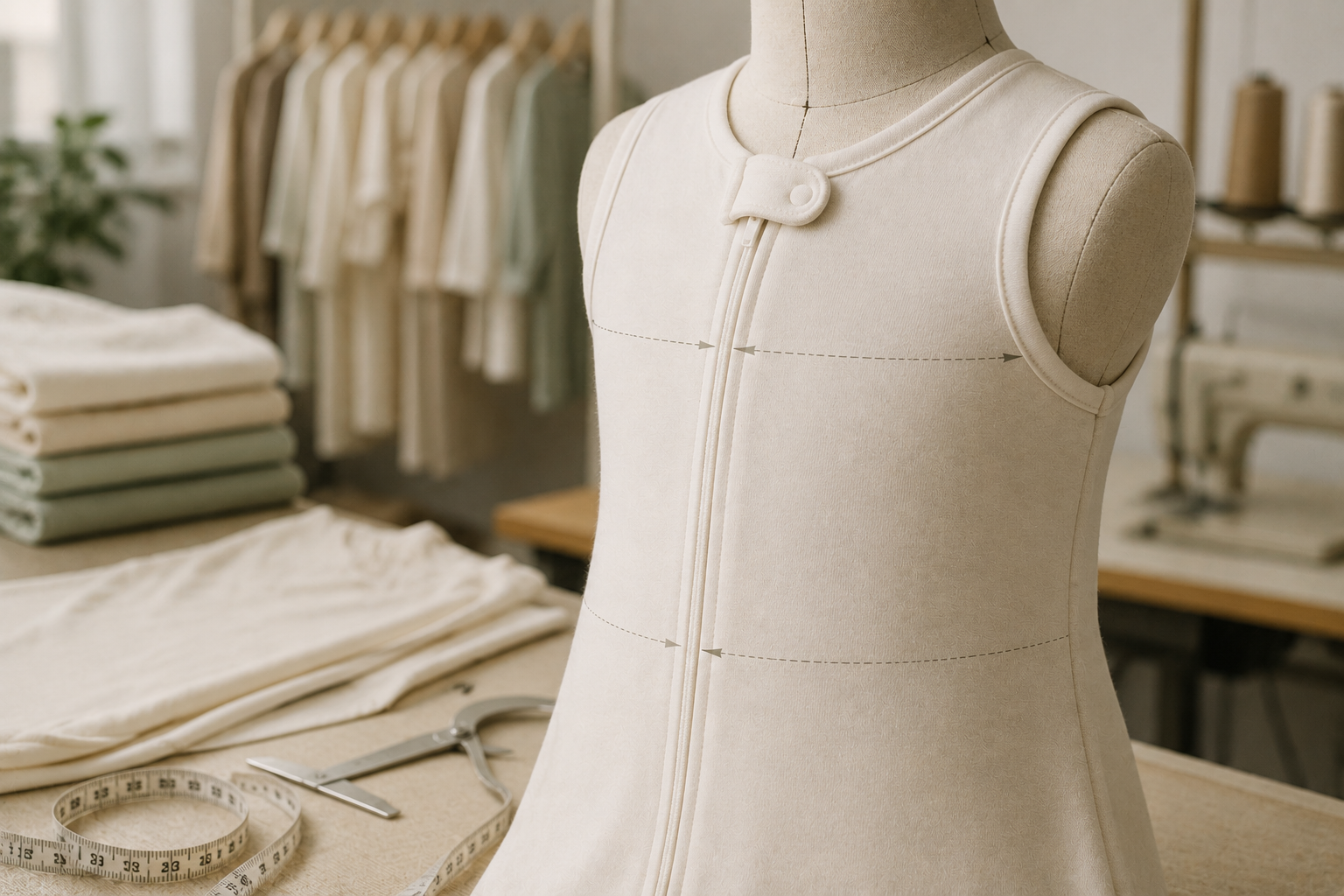
Sleep sacks marketed as infant sleepwear in the U.S. must comply with one of two CPSIA paths.
Path 1: snug-fit construction (16 CFR 1615.4). The garment passes flammability rules through dimensional construction. The fabric and seams must sit close to the body within specific measurement tolerances at chest, waist, hips, thigh, and arm openings. No flame-resistant chemistry is required. This is the path most ethical manufacturers use because it removes the question of FR chemicals entirely.
Path 2: flame-resistant treatment (16 CFR 1615.3). The fabric is treated with FR chemistry that meets the burn-rate requirements. This pathway is legal but increasingly avoided because of consumer concern about FR chemistry residue.
For a sleep sack specifically, the snug-fit path almost always applies because sleep sacks are body-skimming by design. A loose, flowing sleep sack would fail dimensional rules.
Which one should you choose for your brand
The honest answer depends on three things:
1. Brand story. If your story is "GOTS organic, fully traceable, simple," cotton is the cleaner narrative. If your story is "buttery soft, drape-forward, summer-weight," bamboo wins on the unboxing.
2. Climate. Hot or humid markets pull bamboo. Cooler or four-season markets pull cotton.
3. MOQ flexibility. Both fibres start at 400 units per style and colour at Tobimax. The MOQ doesn't differentiate.
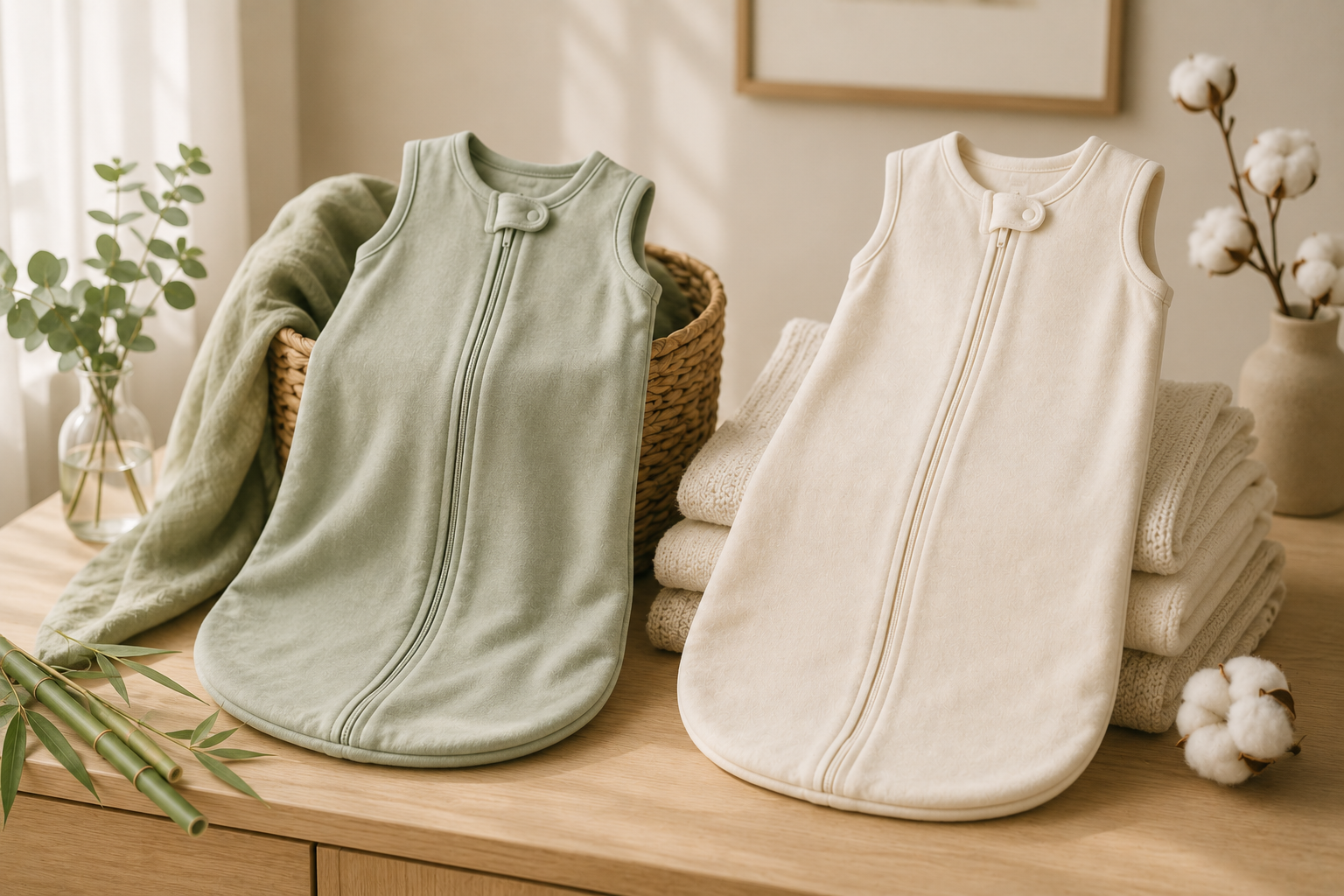
Many brands run both. A bamboo summer-weight sleep sack and an organic cotton transitional or winter sleep sack covers the year and gives the customer a reason to repeat-purchase.
FAQ
Are bamboo sleep sacks safer than cotton ones?
Both meet CPSIA flammability rules when constructed snug-fit (16 CFR 1615.4). Neither fibre is inherently safer. The safety question is about construction and FR chemistry, not the fibre itself.
Is bamboo sleep sack fabric actually sustainable?
It depends on the chemistry route. Closed-loop bamboo lyocell recovers over 99% of the solvent and is genuinely low-impact. Open-loop conventional viscose recovers far less. Always ask your manufacturer which route they use, and request the OEKO-TEX certificate.
What TOG should a bamboo sleep sack be?
Single-layer bamboo viscose typically lands at TOG 0.5 to 1.0, which suits nursery temps of 18 to 24°C. For colder rooms, double-layer construction or a cotton sleep sack is more appropriate.
Can I do organic cotton sleep sacks with low MOQ?
Tobimax's MOQ for GOTS-certified organic cotton sleep sacks starts at 400 units per style and colour. Below that minimum, fabric mill costs and pattern setup don't pencil out for either side.
Do bamboo sleep sacks need flame-resistant chemical treatment?
Almost never. The snug-fit pathway under 16 CFR 1615.4 typically applies to sleep sacks because of their body-skimming construction. This pathway exempts the garment from FR chemistry. Confirm specific compliance with your CPSC-accepted testing lab.