
How to Start a Sleepwear Brand in 2026: The Complete Guide From a Manufacturer's Perspective
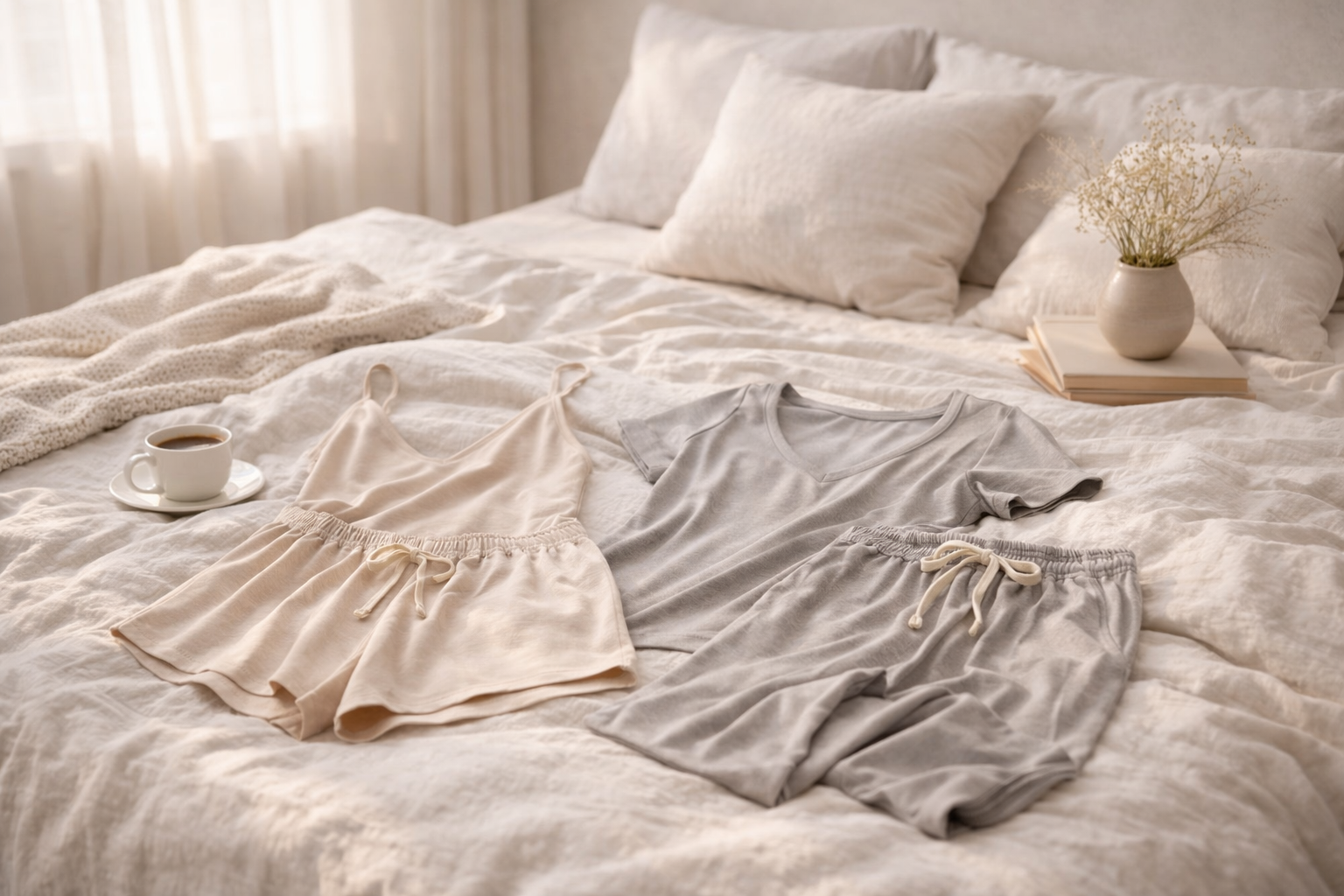
To start a sleepwear brand in 2026, you need to define your niche, choose the right fabric, find a reliable manufacturer, understand your cost structure, and ensure compliance with regulations like CPSIA. Most successful brands start with a small production run, test their market, and scale based on real customer demand.
But there's a gap between having a vision for your pajama line and actually getting product into customers' hands. Most founders hit the same walls — fabric confusion, manufacturer ghosting, compliance blind spots, and cost math that doesn't add up.
This guide is written from the manufacturer side. We've helped dozens of sleepwear brands go from a sketch on a napkin to a full production run, including some of the fastest-growing children's sleepwear labels in North America. Here's what we wish every founder knew before they started.
Step 1: Define Your Niche Before You Touch Fabric
The sleepwear market is broad. Before you start sourcing fabric or reaching out to manufacturers, get specific about who you're making pajamas for and why they should care.
The brands that succeed fastest tend to pick a clear lane. That might be bamboo sleepwear for babies with sensitive skin, matching family pajama sets for holidays, or organic cotton loungewear for eco-conscious millennials. The ones that struggle try to be everything — men's, women's, kids', all fabrics, all price points.
Questions to answer before you move forward: Who is your target customer, and what problem does your sleepwear solve for them? What's your price positioning — accessible, mid-range, or premium? Are you starting DTC, wholesale, or both? What makes your brand different from what's already on the shelf?
Your answers to these questions will drive every decision that follows, from fabric to minimum order quantities to packaging. Before committing to production, founders should compare manufacturer options based on MOQ flexibility, compliance support, sourcing transparency, and sustainability standards.
For a deeper look at manufacturer selection, product development timelines, costing, and launch planning, see our guide on how to start a pajama business.
Step 2: Understand Your Fabric Options
Fabric is the single biggest decision you'll make. It determines your cost structure, your brand positioning, your compliance requirements, and how your customers feel when they put on your pajamas.
Here are the fabrics we see most often in sleepwear manufacturing, along with the trade-offs. The compliance and sizing requirements become more detailed for children's sleepwear specifically because CPSIA regulations apply to both fabric performance and garment construction.
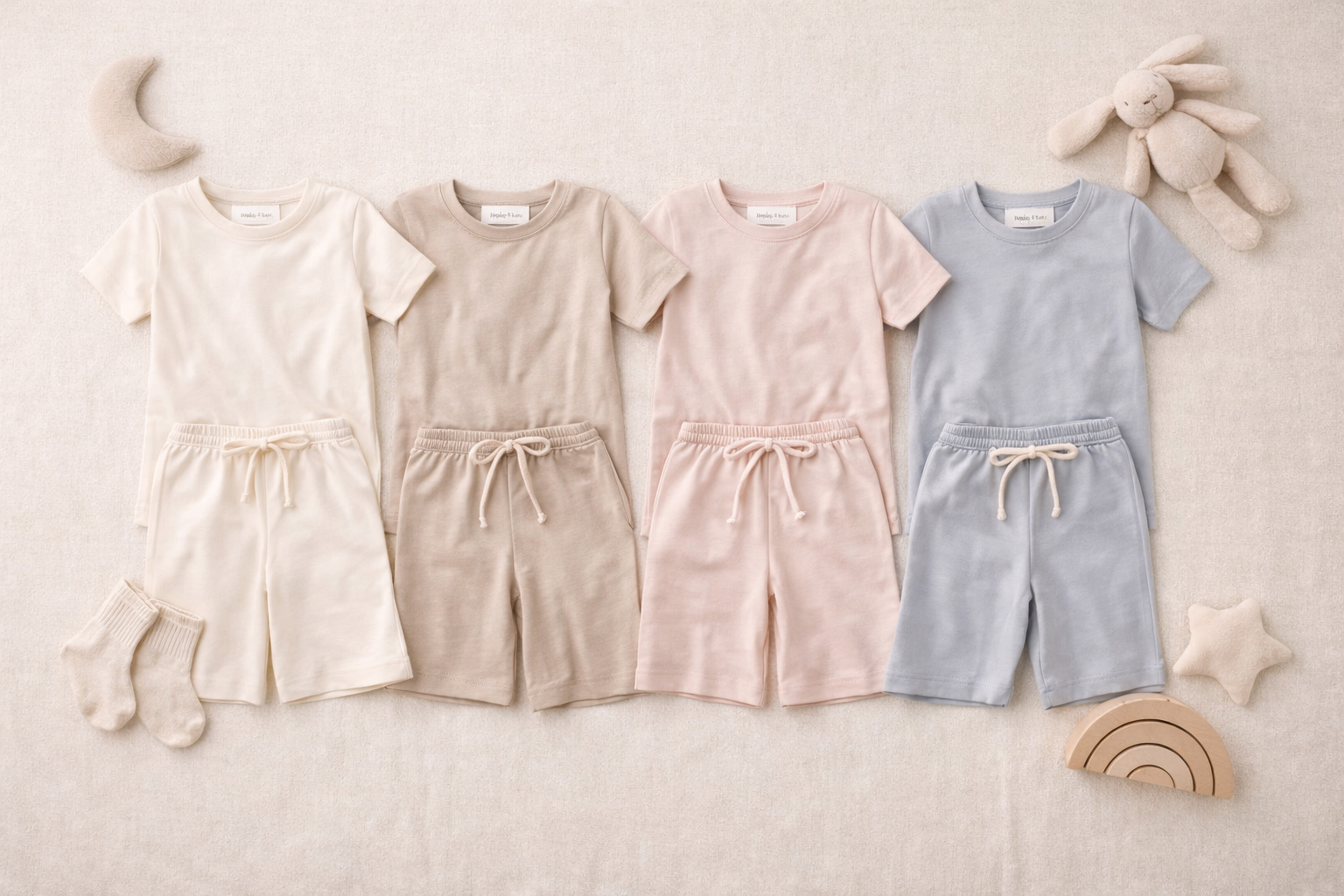
Bamboo Rayon/Viscose is the fastest-growing choice in children's and premium adult sleepwear. It's incredibly soft, temperature-regulating, and naturally hypoallergenic. Some of the fastest-growing children's sleepwear brands — including one with over 500K Instagram followers — built their entire identity on bamboo. The trade-off is cost — bamboo fabric runs higher than conventional cotton, and the rayon conversion process means it's technically a semi-synthetic fiber, which matters for some eco-positioning. A typical bamboo rayon/spandex blend (like 95/5) gives you stretch and recovery that pure cotton can't match.
Organic Cotton is the go-to for brands that want a clean, natural story. GOTS certification adds credibility but also adds cost and audit requirements to your supply chain. Cotton pajamas are familiar to consumers and relatively easy to manufacture. The downside is that cotton doesn't have the same buttery softness as bamboo, and it wrinkles more.
Modal and Tencel are gaining ground in the premium loungewear space. Both are derived from wood pulp (beech and eucalyptus, respectively), and they offer a silky hand-feel with good sustainability credentials. They're often blended with spandex for stretch.
Polyester and Fleece still dominate the budget end of the market, especially for holiday and novelty pajamas. For performance-focused pieces, recycled polyester for performance pieces is worth considering.
Our recommendation for new brands: start with one fabric and own it. The brands that try to launch with bamboo, cotton, and modal lines simultaneously spread their sampling budget thin and confuse their positioning. Pick the fabric that matches your customer and your story, then expand later.
Step 3: Find the Right Manufacturer
This is where most founders get stuck. Finding a sleepwear manufacturer who actually responds to your emails, can handle your volume, and delivers quality is harder than it should be.
There are a few paths to consider.
Overseas factories (China, Vietnam, Bangladesh) offer the lowest per-unit costs, especially at high volumes. Minimum order quantities typically start at 500 to 1,000 pieces per style. The trade-offs are communication challenges, longer lead times (60 to 90 days), and less flexibility on revisions. Quality can be excellent or terrible depending on the factory — vetting is critical.
Domestic manufacturers (USA, Canada) offer faster turnaround, easier communication, and shorter supply chains. Costs are higher per unit, but you save on shipping and duties. Some offer lower minimums, which is helpful for testing the market.
Hybrid models are what many successful emerging brands use. A North American-based manufacturer manages the production relationship with overseas factories, handling quality control, sampling, and logistics. You get competitive pricing with the communication and oversight of a local partner.
When evaluating a manufacturer, ask these questions: What is your minimum order quantity per style, per color? Can you source fabric, or do I need to bring my own? Do you handle pattern-making and grading, or do I need a separate pattern maker? What's your lead time from sample approval to delivery? Can you show me examples of children's sleepwear you've produced? Are you familiar with CPSIA and flammability testing requirements?
That last question is a litmus test. If a manufacturer doesn't know what CPSIA is, they shouldn't be making children's sleepwear.
Step 4: Understand the True Cost Structure
One of the most common mistakes we see is founders underestimating the total landed cost of their product. The fabric cost and sewing cost are just the beginning.
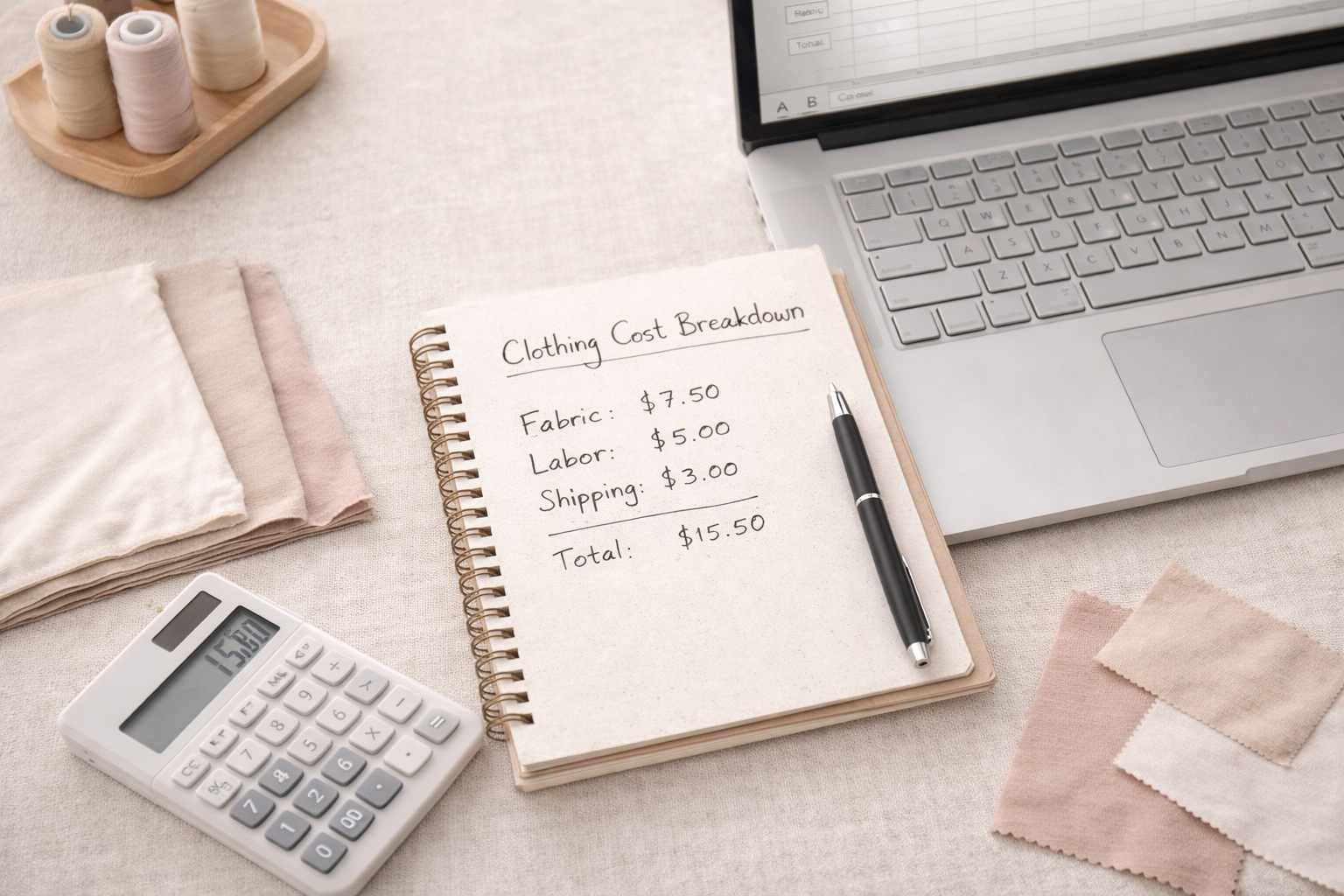
Here's what actually goes into your per-unit cost for a children's bamboo pajama set: fabric cost (typically the largest component, often 40 to 50 percent of total), cut and sew labor, trims (elastic, labels, hang tags, care labels, zipper if applicable), packaging (poly bag, tissue paper, branded box if applicable), compliance testing (CPSIA, flammability — this is per-colorway, not per-style), sampling (expect to pay for 2 to 3 rounds of samples before production), shipping and freight, customs duties (if importing — for example, 18 percent MFN for China-origin knitted synthetic garments entering Canada), and warehousing and fulfillment.
A rough benchmark: for a children's bamboo rayon pajama set manufactured overseas and landed in North America, expect a total landed cost somewhere in the range of $8 to $15 per unit depending on complexity, fabric quality, and order volume. Your retail price needs to support a healthy margin on top of that — most successful sleepwear brands target a 60 to 70 percent gross margin at retail.
For a 500-unit first production run of a single style in 3 to 4 colors, you're looking at a total investment of roughly $5,000 to $10,000 including sampling, production, testing, and freight. That's a realistic starting budget.
Step 5: Get Compliance Right From Day One
If you're making children's sleepwear (anything marketed for sleep for children ages 9 months to size 14), you must comply with CPSIA and the flammability standard 16 CFR 1615/1616. This is not optional. Retailers won't carry your product, and you face legal liability if you sell non-compliant children's sleepwear.
There are two paths to compliance. Your sleepwear can either pass the flammability test (which means using flame-resistant fabric or treatments), or it can be "tight-fitting" — meaning it meets specific dimensional requirements that reduce the risk of ignition. Most modern children's sleepwear brands go the tight-fitting route.
You'll need to test each colorway with an accredited lab. Testing typically costs $200 to $500 per colorway and takes 2 to 3 weeks. Your manufacturer should be guiding you through this process — if they're not, that's a red flag.
We've published a separate detailed guide on CPSIA compliance for children's sleepwear that walks through every requirement.
Step 6: Start Small, Learn Fast
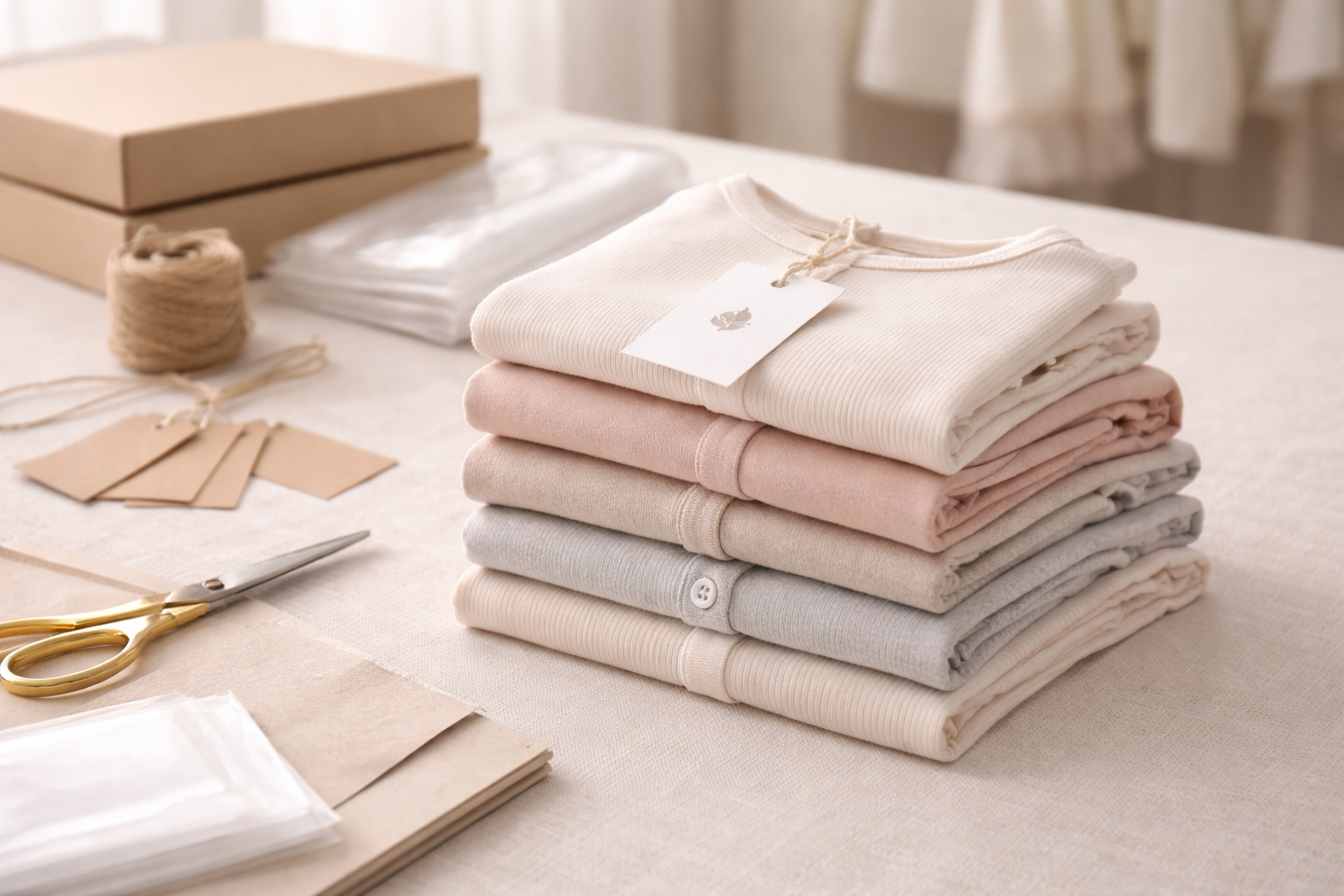
The brands we've seen succeed don't try to launch with 20 SKUs. They start with 2 to 4 styles, nail the fit and quality, build a customer base, and expand from there.
A smart first order looks something like this: one core style (like a two-piece pajama set) in 3 to 4 prints or colors, ordered at or near the manufacturer's minimum order quantity. Use that first run to learn everything — how your customers respond to the fit, which prints sell and which don't, what your actual sell-through rate looks like, and how your fulfillment process handles real orders.
The data from your first 500 units is worth more than any market research you could pay for. Protect your capital for that learning phase.
Step 7: Build Your Sales Channels
Most new sleepwear brands start with DTC via your own ecommerce store, which gives you the highest margins and direct customer relationships. As you scale, wholesale (boutiques, specialty retailers) and marketplaces and wholesale platforms open up additional volume.
A few things to keep in mind on the sales side: pre-launch marketing matters more than most founders think — build an email list and a social following before you have product to sell. Sleepwear is highly visual and giftable, which makes it perform well on social media. Subscription and repeat purchase rates in sleepwear are strong, especially in children's (kids grow, parents re-buy). Holiday seasons (especially Q4) drive a disproportionate share of sleepwear sales — plan your production calendar accordingly.
What's Next
Starting a sleepwear brand is absolutely doable with the right preparation. The founders who succeed are the ones who get specific about their niche, choose the right fabric, find a manufacturer who understands their vision, and start lean.
If you're at the stage where you're looking for a manufacturing partner — especially for bamboo or organic cotton children's sleepwear — we'd be happy to talk through your project. We work with emerging brands at minimums as low as 500 units and handle everything from fabric sourcing to CPSIA-compliant production.
FAQ
How much does it cost to start a sleepwear brand?
Most new brands start with $5,000 to $10,000 for a first production run, including sampling, manufacturing, testing, and shipping.
What is the minimum order quantity for sleepwear manufacturing?
Most manufacturers require 500 to 1,000 units per style, though some offer lower minimums at higher per-unit costs.
What fabric is best for sleepwear brands?
Bamboo rayon is best for premium and performance-focused brands, while organic cotton is ideal for natural positioning and lower cost structures.
Do I need CPSIA compliance for children's sleepwear?
Yes. Any children's sleepwear sold in the U.S. must comply with CPSIA and flammability standards.
Can I start a sleepwear brand with low inventory?
Yes. Many brands start with a single style in a few colors at minimum order quantities to test demand before scaling.
Get a free quote for your sleepwear line
We are a textile manufacturer specializing in children's sleepwear, bamboo rayon garments, and custom apparel for emerging and established brands across North America, Australia, and beyond.