
7 Fabric Mistakes New Pajama Brands Make (And How to Avoid Them)
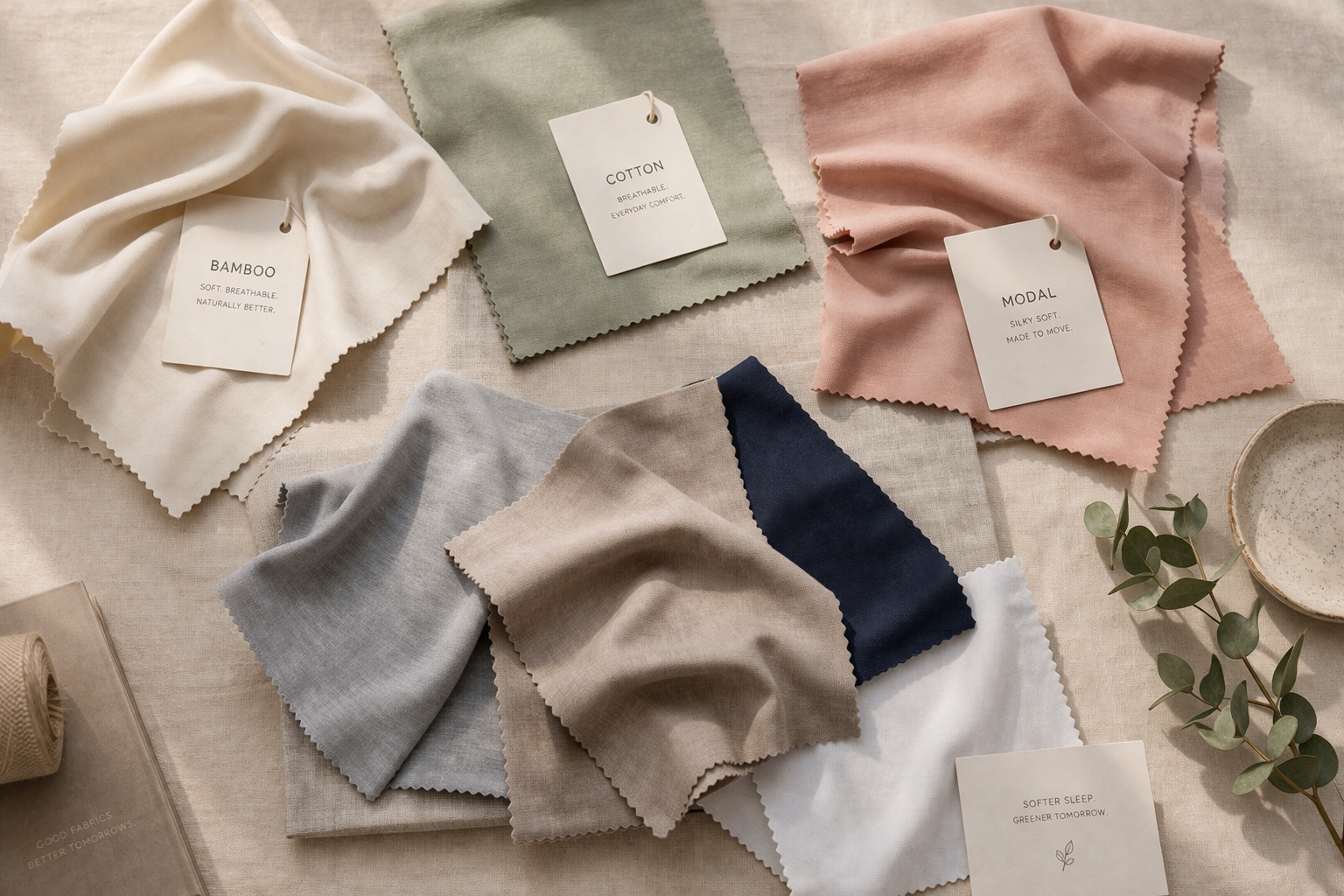
Fabric is where sleepwear brands win or lose. It determines your cost structure, your return rate, and whether customers reorder or move on. After working with dozens of emerging pajama brands, we see the same fabric mistakes come up again and again — most of them completely avoidable.
Here are the seven that cost brands the most money and time.
1. Choosing Fabric Based on Feel Alone, Not Performance
A swatch that feels incredible in your hand might perform terribly after five washes. Softness matters, but so does shrinkage, pilling resistance, colorfastness, and stretch recovery. We've seen brands fall in love with a modal blend at a trade show, only to discover it pills after three washes and their customers are furious.
Before committing to any fabric, request a wear-and-wash test. Have your manufacturer produce a sample garment, then wash it 5 to 10 times at home. Check for pilling, shrinkage, color fading, and whether the elastic still recovers. This one step prevents more returns than anything else you can do.
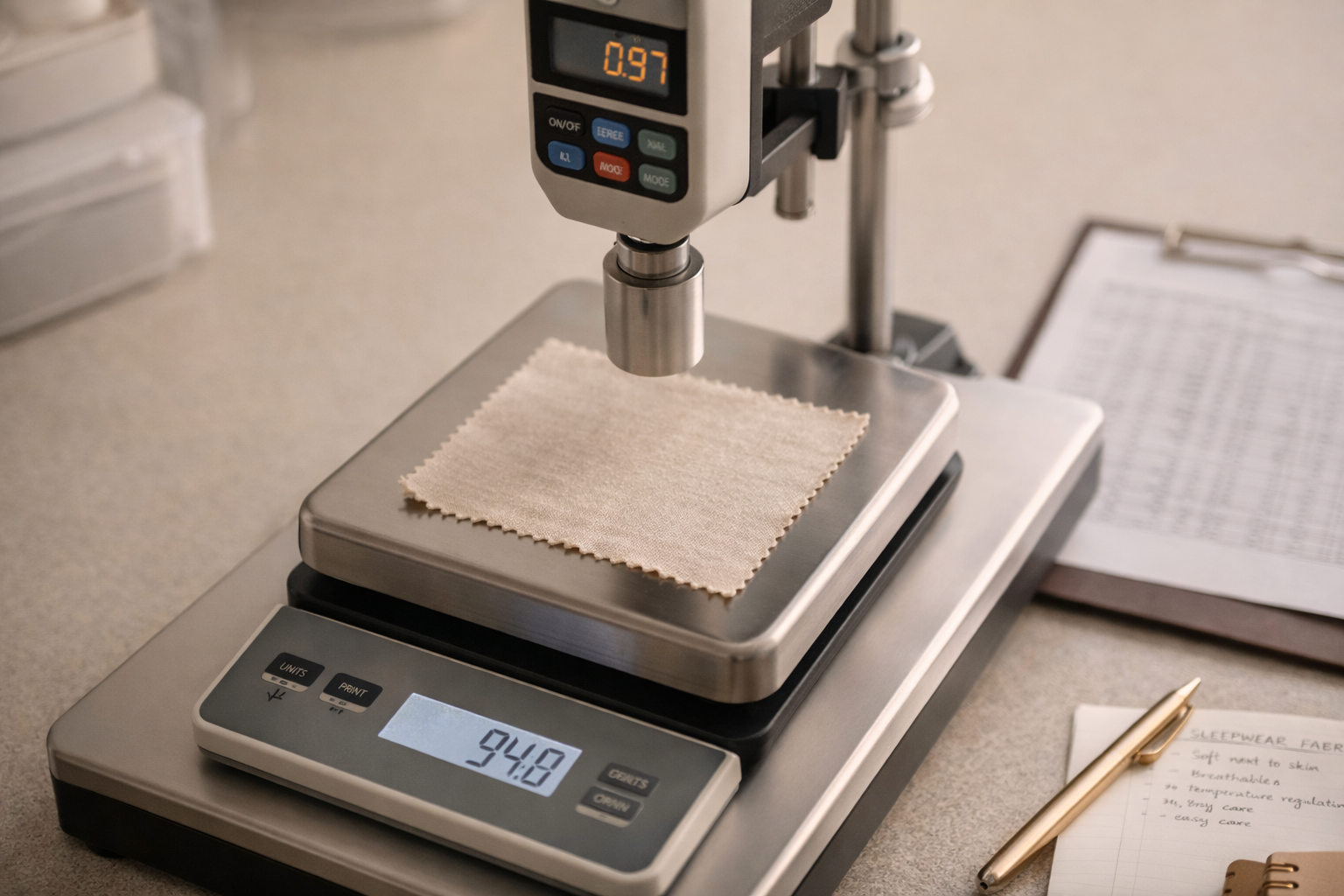
2. Specifying the Wrong GSM Weight for the Product
GSM (grams per square meter) determines how your fabric feels, drapes, and wears — and getting it wrong creates a product that looks cheap or feels heavy. For children's sleepwear in bamboo rayon, the sweet spot is typically 180 to 220 GSM. Below 160 GSM, the fabric feels flimsy and see-through. Above 240 GSM, it feels heavy and doesn't drape well for pajamas.
Different product types need different weights. A lightweight summer sleep set might work at 170 GSM. A cozy winter pajama set wants 210 to 230 GSM. A sleep sack or swaddle might go heavier. Tell your manufacturer what season and product type you're targeting, and ask them to recommend the appropriate weight — don't just pick a number.
3. Ignoring Shrinkage Until It's Too Late
Most natural and semi-synthetic fabrics shrink 3 to 8 percent in the first wash, and if your patterns don't account for that, your size 4T will fit like a 3T after one laundry cycle. This is the number one cause of negative reviews for new sleepwear brands: "runs small after washing."
Your manufacturer should be pre-washing or heat-setting fabric before cutting, or building shrinkage allowance into the pattern grading. Ask specifically: "How do you account for shrinkage in your patterns?" If the answer is vague, push harder. A 5 percent shrinkage on a garment that wasn't graded for it means every single size is wrong after the first wash.
4. Ordering Printed Fabric Without Testing the Print Method
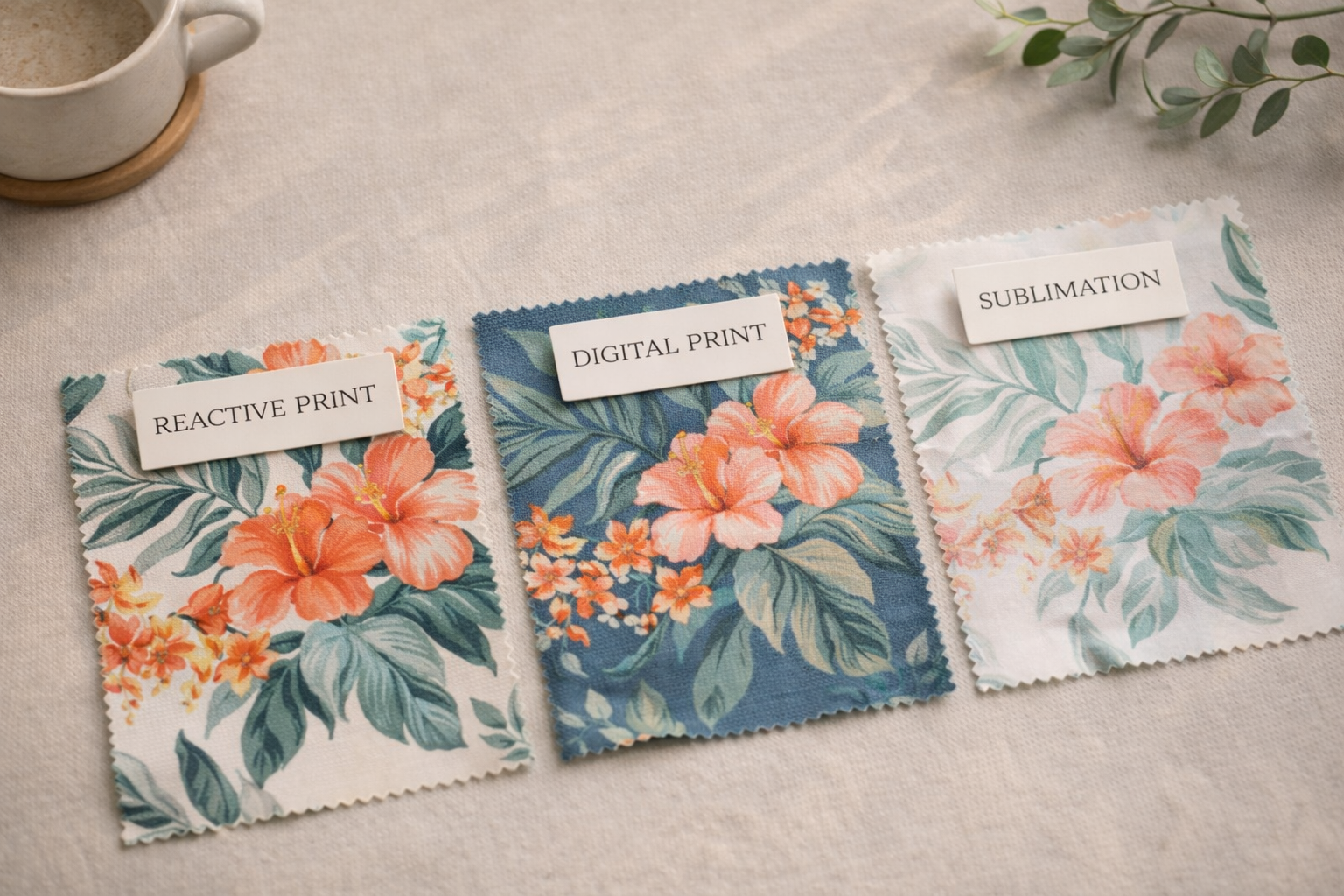
Reactive printing, digital printing, sublimation, and screen printing all produce different results on different fabrics — and the wrong match ruins your design. Reactive printing gives the best hand-feel on bamboo and cotton (the print is absorbed into the fiber, not sitting on top). Digital printing offers unlimited colors and sharp detail but can feel slightly stiffer. Sublimation only works on polyester or poly-dominant blends.
If your brand relies on distinctive prints, test your artwork on the actual fabric using the actual print method before ordering production yardage. Color accuracy varies between print methods, and a design that looks vibrant in a digital mockup might look washed out on bamboo rayon with reactive printing. Always approve a strike-off (a printed fabric sample) before production begins.
5. Not Understanding the Difference Between Bamboo Rayon and Bamboo Lyocell
These are not the same fabric, and using the wrong term in your sourcing or marketing can create real problems. Bamboo rayon (also called bamboo viscose) is produced using a chemical solvent process. It's the most common bamboo fabric in sleepwear — extremely soft, affordable at scale, and widely available. Bamboo lyocell uses a closed-loop solvent process that's more environmentally friendly but costs more and has different performance characteristics.
The distinction matters for your labeling, too. The FTC requires that bamboo viscose be labeled as "rayon" or "viscose from bamboo," not simply "bamboo." Mislabeling can result in fines. Know exactly which bamboo fabric you're using, and label accordingly.
6. Skipping the Fabric Inspection Step
Your manufacturer orders 500 yards of fabric from a mill. It arrives, gets cut, gets sewn — and then you discover there's a color variation across the roll, or a flaw in the weave that shows up as a visible line in 30 percent of your finished garments. This happens more often than it should.
A proper fabric inspection before cutting catches these problems when they're still fixable (the mill replaces the defective yardage) rather than after they're sewn into garments (you eat the loss). Ask your manufacturer whether they inspect incoming fabric for color consistency, weight consistency, defects, and width variations. A four-point inspection system is the industry standard.
7. Trying to Launch With Too Many Fabric Types at Once
Launching with bamboo, organic cotton, and modal simultaneously splits your sampling budget, complicates your supply chain, and confuses your brand positioning. Each fabric requires separate sourcing, separate sampling, separate compliance testing, and separate pricing structures. For a first collection, that's a lot of complexity that doesn't generate proportional sales.
Start with one fabric and make it your signature. The most successful emerging sleepwear brands we work with launched with a single fabric — typically bamboo rayon/spandex or organic cotton — and added additional fabrics in later seasons once they had revenue and customer feedback to guide the decision.
The Common Thread
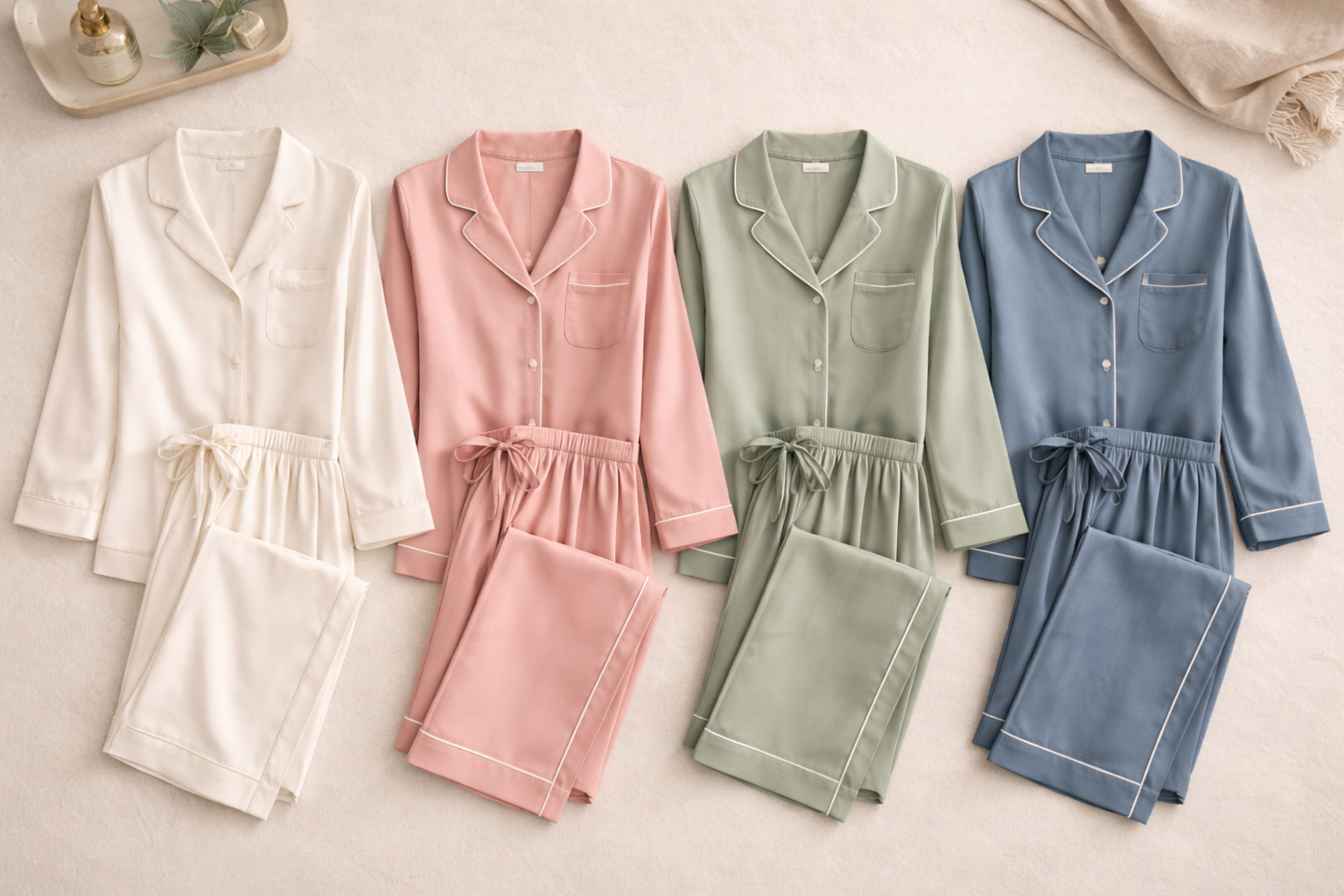
Every one of these mistakes comes from the same root cause: making fabric decisions without enough information. Your manufacturer should be your guide here. A good manufacturing partner will steer you toward the right fabric weight, print method, and composition for your product — and catch potential problems in sampling, not in production.
If your current manufacturer isn't advising you on fabric decisions, you're working with an assembly operation, not a partner.
Request fabric swatches and a consultation for your sleepwear line
We specialize in children's sleepwear manufacturing with bamboo rayon, organic cotton, and custom fabric programs. Every project starts with the right fabric — and we'll help you choose it.