
5 Signs You've Outgrown Your Current Sleepwear Manufacturer

Most sleepwear brands don't switch manufacturers because they want to. They switch because they have to — after months of declining quality, missed deadlines, or the slow realization that their production partner can't keep up with their growth.
The problem is that by the time you decide to switch, you've already lost revenue. You've shipped late, refunded unhappy customers, or turned down wholesale opportunities because you couldn't guarantee delivery.
Here are the five warning signs that your manufacturing relationship has hit its ceiling — and you're paying for it whether you realize it or not.
1. Your Lead Times Keep Getting Longer Without Explanation
When a production partner starts quoting 10 to 12 weeks for the same order that used to take 6 to 8, something is wrong. Either they've taken on too many clients and your orders are getting deprioritized, they're experiencing supply chain issues they're not disclosing, or they've outgrown their own capacity and are subcontracting without telling you.
A transparent manufacturer proactively explains delays and gives you revised timelines. An overwhelmed manufacturer goes quiet and hopes you don't notice until the ship date passes. If you're chasing updates instead of receiving them, that's not a communication style — it's a capacity problem.
2. Quality Is Inconsistent Between Production Runs
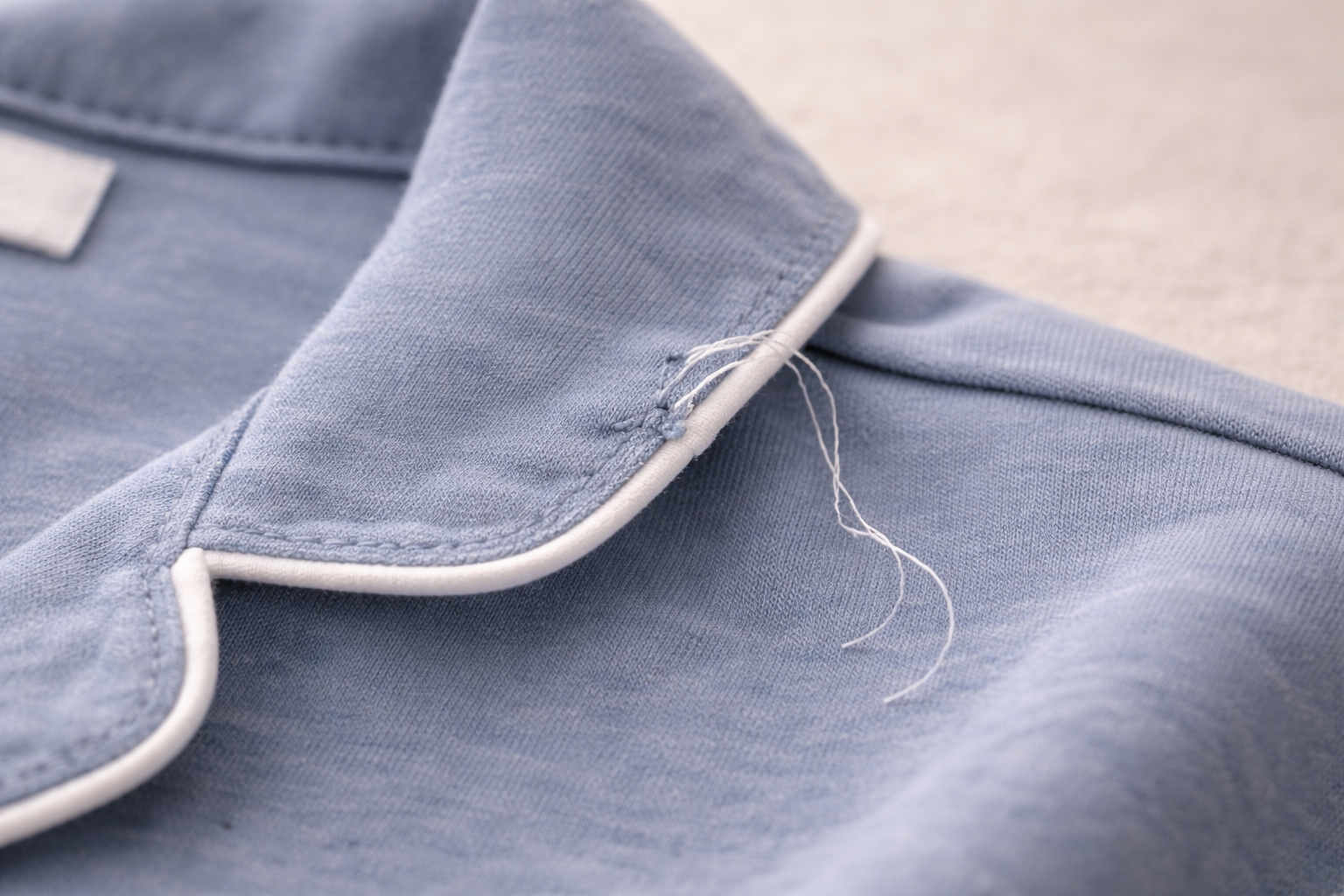
Your first three orders were excellent. Order four had loose stitching on 15 percent of units. Order five was fine. Order six had color variation across sizes. This pattern — good, bad, good, bad — is a sign that quality control is reactive instead of systematic. Someone catches problems when they're obvious and misses them when they're subtle.
Consistent quality comes from inline inspection during production, not just a final check when everything is already packed. If your manufacturer is only inspecting finished goods, defects from cutting errors, fabric flaws, or sewing issues get baked in before anyone looks.
Ask about their inspection process. If it hasn't changed since your first order, but your volume has doubled, they may be cutting corners to keep up.
3. You Can't Get Custom Fabric — Only Stock Options
You started with stock fabric because it made sense at low volume. But now you're ordering 2,000 or more units per style, and your manufacturer still can't source a specific bamboo rayon/spandex blend or a custom-weight organic cotton. This means they don't have mill relationships. They're buying whatever's available from distributors, which limits your fabric options, your pricing leverage, and your ability to differentiate your product.
At the volumes most growing sleepwear brands reach within 12 to 18 months, custom fabric sourcing should be available. If your manufacturer can only offer what's on the shelf, you've outgrown their supply chain.
4. They Can't Support Your Compliance Requirements
You started selling domestically and now you're getting interest from retailers in other countries — but your manufacturer can't coordinate testing for international markets. Or your domestic compliance process is still something you manage yourself, chasing lab reports and tracking test results on a spreadsheet.
A manufacturing partner who serves growing children's sleepwear brands should be able to coordinate CPSIA testing as a standard part of production, advise on tight-fitting dimensional requirements during pattern development, manage the CPC documentation process, and guide you through additional requirements for markets like Canada, Australia, or the EU if you're expanding.
If compliance still feels like your problem rather than part of their process, they're a production facility, not a brand partner.
5. You're Afraid to Bring Up Problems
This is the most telling sign, and it's the one founders are least likely to admit. If you noticed a quality issue on your last order but didn't bring it up because you're worried about straining the relationship or delaying your next order, the relationship is already broken.
A healthy manufacturing partnership can handle direct feedback. You should be able to say "15 percent of this run had loose stitching at the neckline — what happened and how do we prevent it?" without worrying that your next order will be deprioritized or that the conversation will be uncomfortable.
If you're managing around your manufacturer's limitations instead of growing with their support, you're spending energy in the wrong place.
Making the Switch
Switching manufacturers is disruptive, which is why most brands wait too long. But the cost of staying with the wrong partner — in missed sales, returns, and opportunity cost — almost always exceeds the cost of transitioning.
When evaluating your next manufacturing partner, look for the things your current one lacks: transparent communication, proactive quality control, custom fabric sourcing capability, built-in compliance support, and the capacity to grow with you rather than hold you back.
The best time to start that conversation is before you're in crisis mode.

Talk to us about your current production challenges
We partner with growing sleepwear brands who've outgrown their first manufacturer. Custom fabric sourcing, built-in compliance, and transparent production — from 500 units to scale.